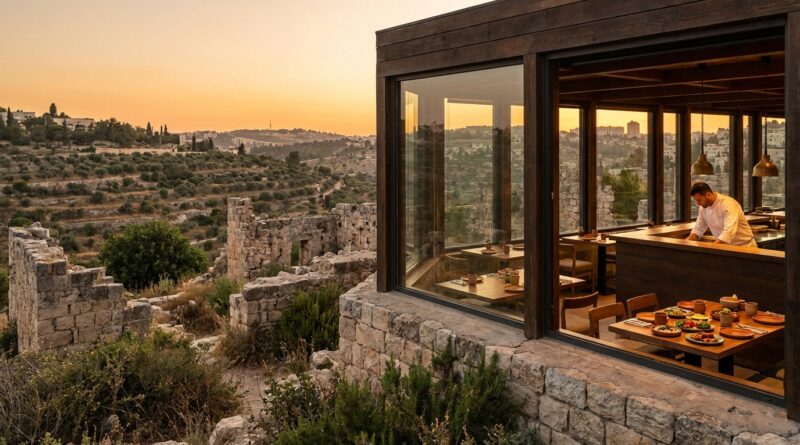
Inside Lifta: The Bold New Jerusalem Restaurant Turning a Ruined Village Into a Destination Dining Room
You know the drill. A new restaurant opens, friends start whispering, one flashy post goes up, and suddenly reservations are gone until next season. That is exactly why Lifta matters right now. Before it turns into the place everybody claims they discovered first, it is worth understanding what chef Eli Davis is actually building in Jerusalem. This is not just another polished tasting menu with local vegetables and nice ceramics. Lifta is set against one of the city’s most loaded landscapes, a ruined village on Jerusalem’s edge, and it uses that setting as part of the meal. That can sound like a gimmick. Here, it feels more serious than that. The food aims high, the room asks you to pay attention, and the whole project is trying to say something about memory, place, and modern Israeli dining. If you are wondering whether the new restaurant Lifta Jerusalem Eli Davis is worth making your one big booking this month, the short answer is yes.
⚡ In a Hurry? Key Takeaways
- Lifta is the serious new Jerusalem booking to make if you want food with ambition, context, and a real sense of place.
- Book early, go with time to spare, and treat it like an evening out, not a quick dinner before something else.
- The value here is not just the plate. You are paying for the setting, the thought behind the menu, and a restaurant that feels culturally important, not just trendy.
Why Lifta has people talking
Jerusalem does not always get covered with the same feverish attention as Tel Aviv. When it does, the story can get flattened fast. A few market favorites, a few rooftop spots, and a lot of broad “Middle Eastern food” language that misses what makes the city different.
Lifta breaks that pattern. It feels like a restaurant that could only open here, and only now. Eli Davis is not simply serving a luxury meal in a dramatic location. He is building a dining experience around Jerusalem itself, its beauty, its weight, and its unresolved stories.
That is a big swing. The good news is that the restaurant seems to understand how risky that is. If you use a place like Lifta as your backdrop, you cannot get away with shallow food or empty symbolism. People will notice. Fast.
The setting is not decoration
Lifta’s biggest advantage is also its biggest challenge. The village of Lifta carries history that is visible before you even sit down. Stonework, slopes, silence, distance from the city center but not really distance at all. It is the kind of place that can stop conversation for a minute.
Some restaurants use a historic location as branding. Here, the location seems to shape the whole evening. That changes your expectations. You notice details more. You ask harder questions. You want the meal to earn the view.
From early word of mouth, that appears to be exactly what Davis is trying to do. Not overwhelm guests with lectures. Not pretend history can be solved over dinner. Just create a space where the meal does not float free from the land under it.
Why that matters in 2026
Israeli fine dining is in an interesting phase. Many chefs are moving past the easy version of “local.” It is no longer enough to plate burnt eggplant beautifully, add fermented something, and call it identity. Diners want more honesty now. More specificity. More sense that the chef knows where they are standing.
Lifta fits that shift. It suggests that the next stage of top-end Israeli restaurants is not just better ingredients or prettier plating. It is deeper engagement with place, memory, and meaning.
What Eli Davis seems to be aiming for
The whisper network around Davis is not just about technical skill. It is about point of view. People are describing a chef who treats food almost like contemporary art, but in a way that still leaves room for pleasure. That is important. Nobody wants to pay for an edible seminar.
At Lifta, the ideal version of that balance looks like this: a menu that feels composed and thoughtful, a service style that gives enough explanation without turning every course into homework, and dishes that still deliver the basic thing diners came for. They should taste great.
That may sound obvious, but plenty of ambitious restaurants forget it. They get so busy making a statement that they neglect warmth, pacing, or appetite. The early excitement around Lifta suggests it is avoiding that trap.
Food as art, but still dinner
When people say a restaurant treats food like art, that can mean tiny portions, abstract ideas, and a waiter talking about smoke for six minutes. Sometimes that is fun. Often it is exhausting.
The better version is when the visual side, the structure of the meal, and the conceptual side all sharpen your appetite instead of replacing it. That is the promise here. Not style over substance, but style with substance.
If Davis pulls that off consistently, Lifta will be more than a hot opening. It will be one of those restaurants people use later as a marker. Before Lifta. After Lifta.
Who should book Lifta, and who maybe should not
If you love restaurants that tell a story, this is for you. If you travel for food, absolutely. If you want one Jerusalem dinner this month that feels memorable before the first course even lands, put this at the top of the list.
If you want a casual weeknight meal, probably not. If your ideal dinner is loud, fast, and forgiving of late arrivals, also not. Lifta sounds like the kind of place that asks for attention. That is part of the point.
Best reasons to go
You are curious about where Israeli fine dining is heading. You care about Jerusalem beyond the usual tourist script. You want to experience a restaurant before social media turns it into a checklist item. And you do not mind paying for ambition.
Reasons to think twice
If you are only interested in portion size, if you hate tasting-menu pacing, or if heavy historical context makes you uncomfortable in a dining setting, then Lifta may not be your best fit. None of those reactions are wrong. They just point to a different kind of night out.
How to approach the meal so you get the most from it
First, book as soon as reservations open. That sounds basic, but this is exactly the kind of place that goes from insider favorite to impossible booking in a blink.
Second, do not stack your evening too tightly. Give yourself time to arrive, settle in, and take in the surroundings. Rushing through a place like this defeats half the value.
Third, go with someone who enjoys talking about what they are eating. Lifta sounds like a conversation restaurant. The meal will likely land better if you are open to discussing the food, the room, and the bigger ideas behind both.
Finally, keep your expectations calibrated. Do not expect a simple “best meal ever” checklist. Expect thought, craft, and maybe a little tension. That is often where the most memorable restaurants live.
What makes Lifta different from overhyped openings
Plenty of buzzy openings feel interchangeable after the first photo set. Nice lighting. clever plates. expensive wine. End of story.
Lifta seems different because the concept cannot be detached from Jerusalem. The location is not portable. The emotional charge is not generic. The chef’s project appears tied to real questions about this city and this moment.
That does not automatically make it good. But it does make it matter. And when a restaurant matters, coverage should slow down long enough to ask why.
Not just another Instagram backdrop
That is the key test. Will people leave talking about the meal, or just the photos? The strongest sign in Lifta’s favor is that the conversation so far has centered on the whole experience. The setting, yes. But also the seriousness of the cooking and the intelligence of the idea.
That is usually what separates a quick-hit sensation from a restaurant with staying power.
So, is Lifta worth it?
If you only have room for one serious new restaurant in Jerusalem this month, Lifta is the one to book.
Not because it is fashionable. Because it appears to be trying something harder. It wants to be excellent, of course. But it also wants to be grounded in where it is. In a dining scene where hype often races ahead of meaning, that alone is refreshing.
You are not just buying dinner here. You are buying access to a moment in Jerusalem food culture that feels alive and unsettled in the best way.
At a Glance: Comparison
| Feature/Aspect | Details | Verdict |
|---|---|---|
| Setting | A destination dining room built around the loaded, historic landscape of Lifta near Jerusalem. | Exceptional. The location gives the restaurant real identity. |
| Food Direction | Chef Eli Davis appears to be aiming for fine dining with an artistic, thoughtful point of view rooted in place. | Promising and important, especially for diners seeking more than trend-driven cooking. |
| Booking Value | Best for diners choosing one major Jerusalem meal and wanting substance as well as buzz. | Strong yes. Book early and make a full evening of it. |
Conclusion
Lifta feels like the rare opening that can genuinely move the conversation back toward Jerusalem. That is what makes it worth paying attention to now, before the hype machine smooths out everything interesting about it. At a time when so much Israel food coverage gets stuck on Tel Aviv buzz or vague trend language, this restaurant offers something sharper and more rooted. It asks what fine dining can do with place, memory, and identity in 2026, and it seems willing to risk real answers. If you are asking yourself, “If I only book one serious new restaurant in Jerusalem this month, where should it be and why,” Lifta is the clear answer. Book it for the food, stay alert to the setting, and go before everybody else catches up.