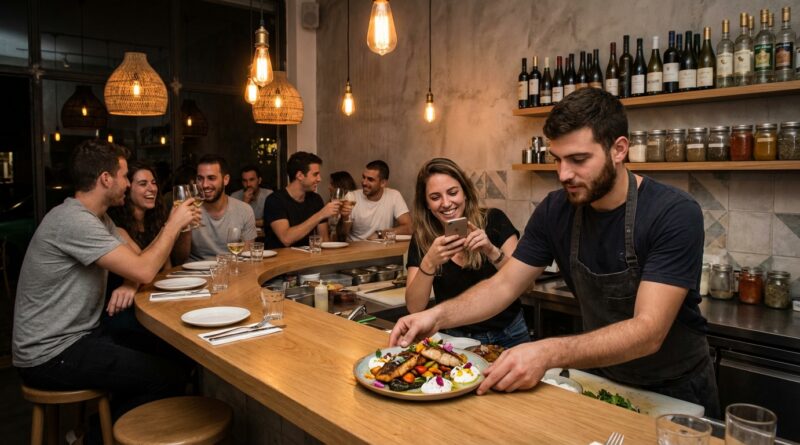
Israel’s Hottest New Tasting Menus: The Small-Counter Kitchens Quietly Redefining Fine Dining Right Now
You know the feeling. A friend whispers about a tiny new counter in Tel Aviv, you finally look it up, and every seat is gone for the next six weeks. By the time a tasting-menu place gets big on Instagram, it is not really a discovery anymore. It is a waiting list. That is why the most useful dining guide right now is not another roundup of famous chef restaurants. It is a practical look at the small rooms, chef’s counters, and under-the-radar tasting menu spots that are opening now, before the hype machine fully kicks in. If you are searching for the most interesting new tasting menu restaurants in Israel 2026, this is where to start. The short version is simple. The best new action is happening in intimate spaces with 8 to 20 seats, flexible seasonal menus, and chefs who are cooking close enough to hear your reaction to the first bite.
⚡ In a Hurry? Key Takeaways
- The strongest new tasting menu restaurants in Israel 2026 are mostly tiny counters in Tel Aviv, Jerusalem, and a few coastal cities, not splashy hotel dining rooms.
- Book early, follow chefs directly, and aim for weekday seatings if you want a real shot at reservations before these places blow up.
- Not every new launch is worth the money. The best signs are a focused menu, a clear cooking point of view, and service that feels calm rather than performative.
Why the small-counter format is suddenly the most interesting part of Israeli dining
Big restaurant openings still get the headlines. But the more exciting story is happening in the smaller rooms.
These places usually have one thing in common. They are built around a chef, not a brand. That changes everything. The menu is tighter. The cooking is more personal. The ingredients can shift daily without a PR campaign explaining why the fish changed.
For diners, that often means better meals and fewer empty theatrics. You are not paying for a giant lobby, imported lighting, or a famous name attached to a hotel. You are paying for a chef with a sharp idea and very few seats to fill.
If you have already read Israel’s Next Michelin Darlings: 5 New Restaurants Locals Say Are ‘Stars in Waiting’, this is the next layer down. Not the obvious contenders everyone is discussing, but the places that may become impossible to book the moment more people catch on.
What counts as a tasting-menu room worth chasing
Not every restaurant calling itself a chef’s table deserves your time or money. Some are just regular restaurants with smaller portions and bigger speeches.
Look for a clear point of view
The best new counters are not trying to do everything. They might focus on local seafood, open-fire cooking, deep fermentation work, market vegetables, or a stripped-back Jerusalem style that mixes regional tradition with modern technique.
If the menu reads like it came from five different restaurants, that is usually a warning sign.
Look for scale that makes sense
Eight to twenty seats is the sweet spot. Small enough to feel personal, large enough that service does not become awkwardly slow. Once a place gets much bigger, it often starts acting like a conventional fine-dining restaurant, with all the usual padding.
Look for seasonal flexibility
The strongest tasting menus in Israel right now are not rigid. They move with the market. That matters even more in a country where weather, supply, and regional produce can change quickly.
Where the new tasting menu restaurants in Israel 2026 are showing up
Tel Aviv
Tel Aviv remains the busiest engine for new chef-driven openings, especially in compact spaces hidden behind wine bars, inside renovated storefronts, or tucked into side streets that still feel local after dark.
The style here tends to be sharper and more experimental. You will see more seafood-led menus, more fermentation, more natural wine pairings, and more chefs willing to rewrite a dish between one week and the next.
The upside is energy. The downside is speed. Good places here get booked fast, often before they have polished their websites.
Jerusalem
Jerusalem is quieter on the surface, but the city is producing some of the most thoughtful tasting-menu cooking in the country. The best new rooms here often feel less showy than Tel Aviv. More grounded. More ingredient-driven. Sometimes more emotional, too.
You are more likely to find chefs building menus around memory, regional pantry staples, and seasonal produce rather than flash. If you want a meal that feels serious without feeling trendy, Jerusalem is worth watching very closely.
Coastal cities and smaller markets
Do not skip the coast beyond Tel Aviv. A few of the most interesting openings are appearing in smaller seaside cities where rent is lower, local fish is close, and chefs have room to try something personal without instant national scrutiny.
These are often the hardest places to track because they open quietly. Sometimes they start as limited nights, pop-up counters, or invitation-only runs before becoming proper restaurants.
What the best new openings are doing differently
They are shrinking the room and raising the standard
In the old fine-dining model, size was part of the prestige. Today, many of the smartest chefs are doing the opposite. Smaller room. Smaller staff. Better control.
That means more consistency on the plate and usually a stronger connection between kitchen and diner.
They are dropping some of the old luxury signals
White tablecloths are optional. Heavy silverware is optional. Scripted service is definitely optional.
The new luxury is confidence. A chef who knows exactly why a dish is on the menu. A server who can explain it without sounding rehearsed. A room that feels calm instead of stiff.
They are treating local ingredients as the headline
The strongest new tasting menu restaurants in Israel 2026 are not chasing imported prestige ingredients just to prove they can. They are getting more interesting with local fish, regional herbs, peak-season vegetables, olive oil, dairy, and pantry staples used with precision.
That makes the food feel rooted, which matters more than ever.
How to tell hype from the real thing
This is the part that saves you from spending a lot of money on a meal that looks better online than it tastes in real life.
Green flags
A short menu. A chef present in the room. Thoughtful pacing. Dishes that sound simple but arrive with detail and balance. Wine pairings that support the food instead of trying to steal the show.
Red flags
Too many courses with no rhythm. Overdescribed dishes. Menus built around buzzwords. A room designed for photos more than comfort. Service that explains every plate like it is a museum exhibit.
If every early review mentions “experience” but says little about flavor, be careful.
How to actually get a reservation before everyone else does
Follow the chef, not just the restaurant
Many small openings announce soft launches, added seatings, or one-off tasting nights through the chef’s own social accounts before the restaurant account posts anything useful.
Book weekdays
Tuesday and Wednesday are your best friends. If a place is still settling in, these nights often give you a better version of the meal too. The room is calmer, and the team is less crushed.
Use opening windows to your advantage
The first month after launch can be messy, but it is also when seats are most available. The trick is not to go on day two. Aim for weeks three to six, when the menu has tightened but the full hype wave has not hit yet.
Call if online booking fails
This sounds old-fashioned, but it still works. Tiny restaurants often hold back a couple of seats, manage cancellations manually, or have last-minute openings that never reach the reservation platform.
What you should expect to pay
The small-counter format does not always mean cheap. It often means better value.
In general, these new rooms sit in a more interesting middle ground. More ambitious than a standard dinner out, less bloated than classic luxury tasting menus. You are usually paying for skill, intimacy, and ingredients, not for a giant operation.
That said, value depends on focus. A ten-course menu can feel like a bargain if every course earns its place. A sixteen-course marathon can feel overpriced by course five if the kitchen is just showing off.
Who these restaurants are really for
They are ideal for diners who care more about cooking than status. People who like being surprised, but not manipulated. People who want a memorable dinner, not a four-hour social media set.
They are not always the best choice for big celebrations with picky eaters, early bedtimes, or a need for total menu control. Small tasting-menu kitchens work best when you show up curious and let the chef lead.
Why this matters right now
Israel’s restaurant scene changes quickly. Small places open quietly. Some become landmarks. Some disappear before national media catches up. That is exactly why paying attention now matters.
The under-the-radar chef’s counter you try this season may be the place everyone fights over six months from now. Or it may be the short-lived room people talk about years later, wishing they had gone when it was still intimate and hungry.
At a Glance: Comparison
| Feature/Aspect | Details | Verdict |
|---|---|---|
| Best format right now | Small chef’s counters with 8 to 20 seats, seasonal menus, direct chef involvement | Most exciting and most worth booking early |
| Best cities to watch | Tel Aviv for experimentation, Jerusalem for depth and restraint, coastal cities for quiet standouts | Do not focus only on Tel Aviv |
| Booking strategy | Follow chefs directly, book weekdays, target weeks three to six after opening, call for cancellations | Best way to beat the Instagram rush |
Conclusion
With big-name hotel restaurants and celebrity-chef spots already covered everywhere, what diners really need now is a clear, ground-level guide to the intimate new counters and tasting-menu rooms opening quietly across Tel Aviv, Jerusalem, and the coast. That is where the real movement is. These are the places where chefs are still taking risks, where the cooking can still surprise you, and where your reservation actually means something to the people in the room. If you want to discover serious food before it hardens into a luxury package, this is the moment to pay attention. Skip some of the noise. Back the smaller rooms doing honest, focused work. You will eat better, spend smarter, and help the right chefs build an audience while it still matters most.