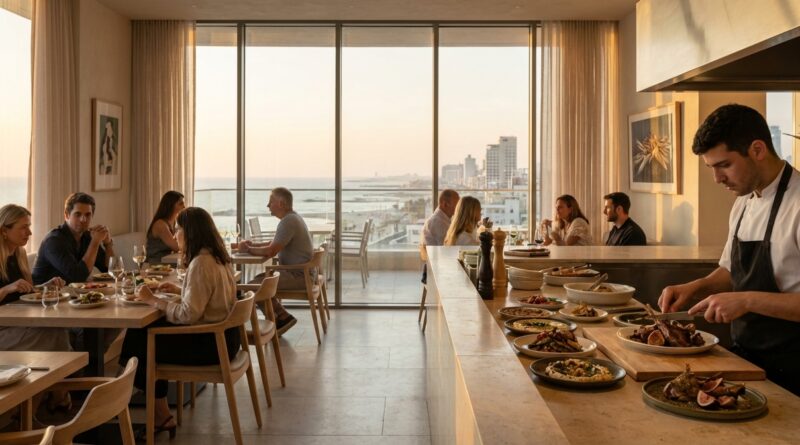
Israel’s New Hotel Restaurants Are Quietly Becoming the Country’s Most Interesting Kitchens
You search for new places to eat in Israel and somehow end up with the same old lists. The same Tel Aviv bistros. The same Jerusalem favorites. The same “hidden gems” that have been written about for five years. It gets frustrating fast, especially when some of the most interesting kitchens in the country are now tucked inside hotels that look, from the outside, completely forgettable. That shift is not random. In the current travel wave, hotel projects and relaunches are where money feels safest, so ambitious chefs are taking those offers and building serious restaurants behind lobby doors. For locals, that is actually good news. These places often have better booking availability, cleaner service, and more room to experiment than standalone spots fighting impossible rents. If you want a smarter way to track the new hotel restaurants in Israel 2026, start by looking past the room keys and focusing on who is cooking, who the dining room is built for, and whether locals are actually showing up.
⚡ In a Hurry? Key Takeaways
- Some of the most interesting new hotel restaurants in Israel 2026 are inside recently opened or relaunched hotels, not the usual standalone hotspots.
- Check the chef, the crowd, and the reservation pattern before you book. A good hotel restaurant should feel like a real destination, not just a breakfast room with mood lighting.
- These spots can offer better value and easier access than overhyped city favorites, but it still pays to confirm kosher status, opening hours, and whether non-guests are welcome.
Why hotel restaurants suddenly matter again
For years, “hotel restaurant” was almost a warning label. You pictured an overpriced club sandwich, a tired fish fillet, and a dining room full of people who did not mean to eat there.
That picture is now badly out of date.
In Israel, hotels have become one of the safest places for hospitality investment. New builds, soft relaunches, and upgraded boutique properties are opening in Tel Aviv, Jerusalem, Haifa, and the Galilee. When money goes there, kitchens follow. Good chefs follow too.
The result is simple. Some of the country’s freshest cooking is now happening in spaces attached to reception desks.
And because many food sites still treat hotel dining like a side note, these places can stay oddly under the radar. That is your opening.
What makes a hotel restaurant worth your time
Not every dining room in a nice building is suddenly exciting. You need a few filters.
Look at the chef first
If a hotel is serious, it will put a real chef front and center. Not just “culinary consultant” in a press release. You want to know who runs the kitchen day to day, what they cooked before, and whether the menu has a point of view.
Check whether locals are eating there
This is the biggest clue. If the room is mostly tourists on their first night in town, it may be fine, but it probably is not where the sharpest cooking is happening. If local diners are booking it for birthdays, business dinners, and random Tuesday nights, pay attention.
See if the menu fits the city
A good Tel Aviv hotel restaurant should not feel like a copy of Jerusalem. A Galilee property should not serve the same safe Mediterranean menu you can get anywhere on the coast. The best new places use the hotel as funding, not as a personality.
Notice availability
This may sound boring, but it matters. One reason these spots are so useful is that they can still have tables when the obvious places are packed for weeks. That does not mean they are second-tier. Sometimes it means the internet has simply not caught up yet.
Where to look for the most promising new hotel restaurants in Israel 2026
Tel Aviv
Tel Aviv is still the loudest food city in the country, but it is also the easiest place to get trapped in recycled recommendations. New hotel restaurants here tend to split into two groups.
First, there are polished rooftop or design-heavy rooms near the beach that aim for international travelers with money to spend. These can be slick, but some feel generic. Second, and often more interesting, are the smaller boutique hotel projects where a chef gets real room to build a menu that locals might actually chase.
In Tel Aviv, look for places with short, seasonal menus, strong wine lists from Israeli producers, and a crowd that is not dressed like they just checked in from the airport. If the menu reads like it was written for everyone, it is probably for no one.
Jerusalem
Jerusalem hotel dining is changing in a more layered way. You still have luxury properties serving formal meals, but newer or refreshed hotels are starting to pull in chefs who understand that the city’s diners want more than “elevated Middle Eastern” as a vague concept.
The strongest hotel kitchens in Jerusalem right now tend to do one of two things well. They either lean into the city’s mix of old-world ingredients and modern technique, or they go simple and very precise, letting excellent produce and smart service carry the meal.
This is especially useful if you are tired of fighting for tables around the usual market orbit and want something that feels calmer without being dull.
Haifa
Haifa has long had the talent, but not always the national attention. That makes hotel dining there especially worth watching. As the city gets more design-conscious properties and smarter hospitality investment, its hotel restaurants have a chance to become real players rather than backup options.
Here, the sweet spot is often a restaurant that reflects Haifa’s mixed food culture without turning it into a branding exercise. If the menu feels rooted, and not overexplained, that is a good sign.
The Galilee
The Galilee may be the most exciting area for this shift. When a hotel or rural resort gets the money to reopen or relaunch, it can do something city restaurants often cannot. It can build around nearby farms, local wine, and a slower style of hospitality.
The catch is that quality can vary wildly. Some places really do have serious cooking. Others just have a beautiful view and homemade jam. Nice, but not the same thing.
If you are planning a northbound food trip, hotel restaurants can help anchor it. Book one standout dinner and let the smaller village stops fill in around it.
How to spot the difference between a serious kitchen and a tourist trap
This is the part most guides skip.
A tourist trap hotel restaurant usually has at least three of these signs:
- An oversized menu that tries to cover breakfast, sushi, pasta, steak, and local cuisine all at once.
- No clear chef identity.
- More focus on the lobby scent and Instagram corners than on the food.
- Prices that feel imported from London, with cooking that feels imported from nowhere.
- Reviews that praise the location more than a single dish.
A serious kitchen usually looks different:
- A tighter menu that changes.
- One or two dishes people mention by name.
- Staff who can explain the food without sounding scripted.
- A room with both guests and people who came only to eat.
- Reservations that are available, but not suspiciously empty.
Why these places stay under the radar
Part of it is branding. Hotels are often bad at talking like restaurants. They advertise “an unforgettable culinary journey” when they should just tell you who is cooking the lamb and why it is worth driving across town.
Part of it is media habit. Big travel sites still focus on famous names, old favorites, and the easiest neighborhoods to package. Hotel restaurants get treated as amenities, even when they are doing stronger work than trendier independent spots.
And part of it is simple bias. Many locals still assume hotel dining is for tourists, so they never check.
That is exactly why this category is worth watching now.
Practical tips before you book
Call and ask one basic question
Ask whether most of their dinner guests are hotel guests or outside diners. You will learn a lot from the answer, and even more from how quickly they answer it.
Check the menu date
If the menu online looks untouched for months, be careful. Active kitchens usually update something, even if only a few dishes.
Confirm entry rules
Some hotels have security procedures, parking limits, or guest access rules that can make a casual dinner more annoying than expected. Better to know before you go.
Ask about kosher status
In Israel, this can shape the menu in major ways. It is not just a technical detail. It affects whether meat and dairy are served, what the wine program looks like, and how the kitchen works on weekends and holidays.
Book early for weekends, but use weekdays to your advantage
One of the best things about hotel restaurants is weekday access. If you want to try somewhere new without the usual table drama, Tuesday night can be your best friend.
What this means for local diners
There is a nice irony here. A shift driven partly by tourism may end up helping locals most.
When hotel owners invest in serious dining rooms, cities get more options. Chefs get better-equipped kitchens. Diners get tables they can actually reserve. And neighborhoods get a little relief from the endless pressure on the same handful of headline restaurants.
That does not mean every hotel opening deserves your money. It means this category should no longer be dismissed.
If you have been burned by stale recommendation lists, this is one of the easiest ways to reset your search.
At a Glance: Comparison
| Feature/Aspect | Details | Verdict |
|---|---|---|
| Chef quality | Many new hotel restaurants now recruit established or rising chefs with more budget and better facilities than standalone spaces. | Often stronger than expected. Worth checking chef credentials before dismissing the venue. |
| Availability | These restaurants often have easier reservations than famous city hotspots, especially on weekdays. | A major advantage for locals and short-notice travelers. |
| Value for money | Prices can run high, but service, comfort, and overall experience are often steadier than overhyped tourist spots. | Good value if the kitchen has a clear identity. Less so if you are paying mainly for the address. |
Conclusion
If you want a better way to find the new hotel restaurants in Israel 2026, stop treating hotels like the boring part of the food map. Right now, that is where some of the smartest money is going, and where some of the sharpest kitchens are quietly taking shape. For readers in Tel Aviv, Jerusalem, Haifa, and the Galilee, this matters because it cuts through the same recycled recommendations and points you toward places that still feel fresh. It also helps you avoid stale tourist traps and find restaurants with actual table availability. The lobby may look generic. The branding may be forgettable. But behind those room-key desks, there is often a chef doing serious work. That is good for travelers, even better for locals, and exactly the kind of shift worth paying attention to now.