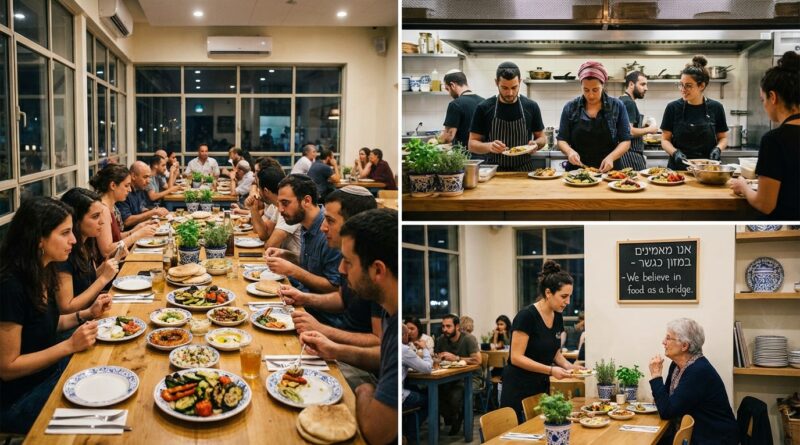
Israel’s New Wave of Social-Impact Restaurants: Where Dining Out Actually Feeds Someone Else Too
You can feel the awkwardness of it, can’t you. You want a great meal in Israel. You also know this is not a normal moment, and dropping money on dinner can feel strange when families, evacuees, farmers and small food businesses are still under pressure. That is why people keep asking for something more useful than another shiny “best restaurants” list. They want new places that are actually exciting, but also doing some real good. The good news is that a small but meaningful wave of new social impact restaurants in Israel is making that choice easier. These are spots where the food is the draw, not the guilt, and the giving-back piece is built into how they hire, source, cook or distribute meals. If you want your table booking to support vulnerable youth, struggling producers or community kitchens at the same time, start here. Think of this as a practical guide for eating well without switching off your conscience.
⚡ In a Hurry? Key Takeaways
- Some of the most interesting new social impact restaurants in Israel now pair strong cooking with clear community support, from youth training to meals for evacuees.
- Before you book, check a restaurant’s social pages or ask staff one simple question: how does dining here give back right now?
- Look for places with a specific model, not vague promises. The best options are transparent about where the money, food or jobs actually go.
What counts as a social-impact restaurant right now?
Not every place that donates once in a while belongs on this list.
For this guide, the bar is higher. A restaurant needs to be both new or newly reworked, and built around a real social mission. That could mean employing at-risk youth, running a pay-it-forward meal system, buying heavily from damaged farming communities, or using profits and kitchen capacity to feed people hit by the crisis.
That matters because diners are tired of feel-good marketing. Fair enough. If you’re spending real money, you want to know the impact is real too.
The new social impact restaurants in Israel worth knowing
1. Community-driven neighborhood kitchens with a second service mission
One of the clearest trends is the hybrid model. By day or during off-hours, the kitchen produces meals for evacuees, soldiers’ families, elderly residents or nearby shelters. By evening, it operates as a polished restaurant for paying guests.
This model works because it avoids the usual charity trap. The same kitchen, same staff and often the same suppliers power both sides. Your dinner helps keep the whole machine running.
What to look for:
- Set numbers of meals donated each week
- Visible partnerships with local councils, volunteer groups or aid networks
- A menu that makes smart use of seasonal and donated produce without feeling patched together
If a restaurant explains this clearly on the menu or through staff, that is a very good sign.
2. Restaurants training vulnerable youth for real hospitality careers
This may be the most quietly important group in the country right now.
Several new openings and relaunches are built around training teens and young adults who have had a rough start, including youth leaving care, young people from low-income backgrounds, or those who have struggled to stay in school or work. Instead of token roles, they get paid kitchen or front-of-house training in a real service environment.
For diners, this often means a warmer, more human experience. Service may sometimes be a touch slower. That is not a flaw. It is the point. You are supporting a place where learning is part of the evening.
The best versions of this model still keep standards high. Food should be good enough that you would return even if there were no social mission attached.
3. Farm-first restaurants helping small producers stay alive
A lot of Israeli food starts long before the stove. It starts in fields, dairy farms, vineyards and small workshops that have had an incredibly hard stretch.
Some of the most compelling new social impact restaurants in Israel are choosing to support communities upstream. They build menus around produce from affected regions, spotlight small wine makers, or commit to buying from growers who lost labor, access or regular buyers.
This kind of support is less visible than a donation jar, but it can be just as important. A restaurant that buys steadily from a fragile producer is giving that business something it badly needs, which is continuity.
For travelers, this often leads to the best food anyway. Menus rooted in local supply tend to be more seasonal, more specific and less generic.
4. Pay-it-forward cafes and casual spots
Not every meaningful place is a tasting-menu destination. Some of the smartest ideas are happening in smaller cafes, bakeries and lunch spots where guests can add a meal, coffee or pantry item for someone else.
The strongest examples make the system simple. You can see the extra line on the bill. You know who receives the support. The venue works with a school, shelter, municipality or aid group so the food reaches real people, not just a nice idea.
If you want a lower-cost way to dine with purpose, these places are often the easiest entry point.
How to tell if a restaurant’s impact is real
This does not need detective-level research.
Use a simple three-part test before you reserve.
Specific mission
Can the restaurant explain its model in one or two plain sentences? “We train at-risk youth.” “We fund 200 community meals a week.” “We source from farms near the border.” Clear beats emotional.
Visible proof
Look for names of partner organizations, staff profiles, event photos, or regular updates showing what the restaurant is doing. If the mission disappears the moment you ask for details, move on.
Food first
You are still going out to eat. The cooking should stand on its own. Social value is not a free pass for bland food or sloppy service.
Where these places are showing up
Tel Aviv still gets the most attention, of course, but this story is much broader than Tel Aviv.
Jerusalem has long had mission-driven hospitality projects, and the current moment is pushing more of them into sharper focus. Haifa and the north are especially worth watching for places tied to coexistence work, regional sourcing and community rebuilding. In the south, social impact often shows up through direct support for farmers, displaced residents and smaller local ecosystems that need steady business.
So if you are planning a food-focused trip, it is worth widening your map. The most meaningful meal may not be at the trendiest address.
What kind of dining experience should you expect?
Usually, something more personal.
These places often have staff who can actually tell you where the produce came from, who trained in the kitchen, or what happened with the extra meals funded last week. That creates a different mood. Less performance. More connection.
It does not mean the experience is heavy or joyless. Quite the opposite. Some of the best social-impact restaurants feel more alive because they are tied to a real community, not floating above it.
Still, go in with the right expectations. A mission-led venue may prioritize fair hiring, local sourcing or training over ultra-luxury polish. For many diners, that trade is more than worth it.
How to spend your shekels wisely
If you want your meal to do the most good, a few small choices help.
Book directly
Use the restaurant’s own website, Instagram booking link or phone number if possible. That helps them avoid extra commissions.
Ask about house specials
Special menus often highlight produce from partner farms or dishes linked to the restaurant’s support work.
Go on quieter nights
A Tuesday dinner can matter more to a small mission-driven restaurant than a packed Saturday lunch.
Buy something extra if it makes sense
A loaf of bread, a bottle of wine from a small producer, a jar of pantry goods, or an added donated meal can increase the impact without a huge jump in spend.
Why this matters more than a normal restaurant roundup
A standard restaurant list tells you where to eat. A useful list for this moment should also tell you what your meal supports.
That is the shift people are asking for. Not a lecture. Not performative guilt. Just honest guidance on where pleasure and principle meet.
When a restaurant can offer a memorable dish and keep a vulnerable young worker in training, or help a farmer get through another month, that is not a side note. It is part of what makes the place worth your time.
At a Glance: Comparison
| Feature/Aspect | Details | Verdict |
|---|---|---|
| Community impact | Best venues clearly link each meal to youth training, donated meals, or steady buying from affected producers. | Choose places with a concrete, easy-to-explain model. |
| Food quality | The strongest new social impact restaurants in Israel are good enough to visit for the food alone. | If the mission is strong and the cooking is strong, that is the sweet spot. |
| Value for travelers | These spots offer a more grounded, less tone-deaf way to explore Israel’s food scene in a difficult period. | Excellent option for visitors who want their spending to mean something. |
Conclusion
Right now, a lot of people want more from a restaurant than a pretty plate and a clever wine list. They want to know their money is landing somewhere useful. That is exactly why this new wave matters. A focused guide to new social impact restaurants in Israel helps you find genuinely exciting openings, direct your dining budget toward teams feeding evacuees, training vulnerable youth or supporting small producers, and move through a sensitive moment with more care and less guesswork. The best part is that you do not have to choose between ethics and enjoyment. The strongest places offer both. So if every shekel should matter, let it matter somewhere delicious.