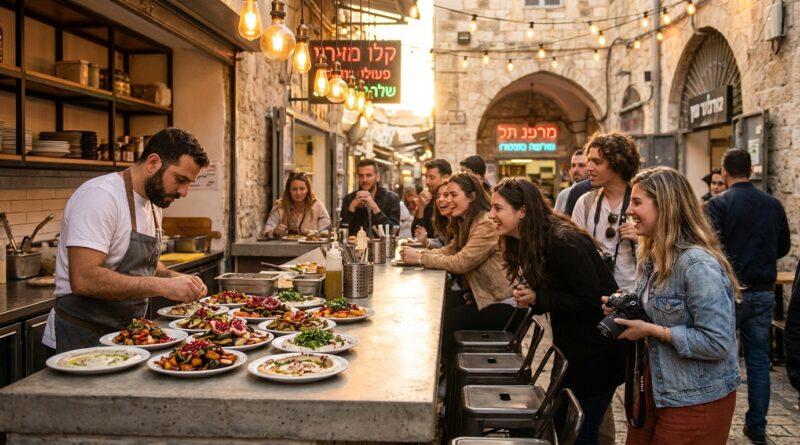
Israel’s Next Big Restaurant Story Is Hiding in the Shuk: The New Market Kitchens Turning Shopping Trips Into Night Out Destinations
Trying to find genuinely new restaurants in Mahane Yehuda and Sarona Market is weirdly harder than it should be. You hear about a “must-try” place, trek over, wait in line, and end up with food that is fine but not exactly worth planning your night around. Meanwhile, the most interesting things happening in Israel’s food scene are often tucked inside the shuk itself. Small counters. Chef pop-ups. Market kitchens with six stools, one hot plate, and a menu that changes faster than Instagram can keep up.
That is where the smart money is going right now. In both Jerusalem’s Mahane Yehuda and Tel Aviv’s Sarona Market, chefs are using compact market spaces to test ideas before signing leases for full dining rooms. For diners, that is good news. You get lower-risk, more creative food, and often a more personal experience too. The trick is knowing what kind of place to look for, when to go, and how to spot the stalls that are actually exciting this week instead of living off last year’s buzz.
⚡ In a Hurry? Key Takeaways
- The best new restaurants in Mahane Yehuda and Sarona Market are often tiny chef-run counters, not the biggest names with the longest lines.
- Go early in the evening, ask what is new this week, and be willing to skip the famous stall next door if the menu feels stale.
- Hours can change quickly, so check same-day social posts or call ahead before making a special trip.
Why the shuk is suddenly the most interesting place to eat
Markets have always been part shopping trip, part snack run. What has changed is the ambition. More chefs are treating market kitchens like test labs. That means smaller menus, sharper ideas, and less pressure to please everyone.
After months of disrupted routines, shifting tourism, and uneven restaurant traffic, a full-scale launch can feel risky. A counter in the market is simpler. Lower overhead. Faster feedback. If one dish is working, it stays. If it is not, it is gone by next week.
For diners, this is a sweet spot. You are catching ideas early, before they get polished into something safer and more expensive. You also have a better chance of eating somewhere that still feels alive, not just heavily marketed.
What “new” really means in Mahane Yehuda and Sarona
Here is the part that trips people up. In a market, “new” does not always mean a grand opening with a ribbon and press photos. It can mean a chef taking over a stall for dinner service. It can mean a bakery adding a nighttime sandwich counter. It can mean a produce stand turning into a wine-and-small-plates spot after dark.
So if you are searching for new restaurants in Mahane Yehuda and Sarona Market, stop thinking only in terms of traditional restaurants. Some of the best meals right now come from places that barely look like restaurants at all.
Signs a market kitchen is worth your time
Look for a short menu. That is usually a good sign. Five to eight items often means the kitchen knows exactly what it wants to do.
Look for movement. A stall with people standing, talking, and ordering second rounds is usually more promising than a place with a beautiful sign and no energy.
Look for seasonality. If the menu changes with what is in the market that week, someone is paying attention.
And ask a simple question: “What is new here?” Staff will often tell you right away if there is a special dish, a visiting chef, or a menu they just started testing.
Mahane Yehuda right now: where to focus
Mahane Yehuda still has the heavy hitters everybody knows. Some are good. Some are coasting. The better play right now is to look around the edges of the busiest lanes and side passages, especially as day turns into evening.
What is working in the market
The strongest new openings and newer concepts tend to fall into a few groups. First, there are chef counters doing one thing really well. Think grilled fish in pita, hand-cut tartare, Iraqi comfort food with a modern touch, or tiny tasting plates built around market vegetables.
Second, there are hybrid spots. A bakery by day becomes a wine bar with hot sandwiches at night. A spice or deli stand adds a few stools and starts serving plates that show off what it already sells.
Third, there are late-night stalls that feel more relaxed than formal restaurants. They are ideal if you want a night out without committing to a two-hour reservation.
Best strategy for Mahane Yehuda
Show up before the main dinner crush, around 6:30 to 7:30 p.m. Walk one full loop before you sit anywhere. That sounds basic, but it saves you from settling for the first place with a free stool.
If a stall has a tiny menu, visible prep, and a cook who seems focused, stop there. If the menu is giant and reads like it is trying to satisfy every tourist in the city, keep moving.
Also, do not ignore breakfast and lunch operators that have quietly added dinner service. Some of the most exciting market kitchens started exactly that way.
Sarona Market right now: different mood, same opportunity
Sarona works differently. It is more polished, more structured, and easier for first-time visitors to navigate. That can make it feel less spontaneous than Mahane Yehuda, but it also means newer concepts can sharpen their offering fast because foot traffic is steady and mixed.
What stands out in Sarona
The newer places worth watching in Sarona are often the ones that resist being all things to all people. The strongest counters are usually chef-led fast-casual spots, high-quality street food concepts, and specialty stalls that build a menu around one ingredient or one regional style.
Think fresh pasta made in small batches, seafood-focused counters with a changing daily board, premium skewers, creative desserts, or compact wine-and-small-plate kitchens. If a place looks designed mostly for photos, be careful. If it smells amazing and the menu is short, that is a better clue.
Best strategy for Sarona
Go on a weeknight if you can. It is easier to see which stalls have actual repeat local traffic. Lunchtime is also a smart test. If a newer stall is busy with workers and neighborhood regulars, that usually means it is not surviving on hype alone.
Sarona is also a good place to split your meal. Start with one savory dish at a new counter, then move to another stall for dessert or wine. You do not need one reservation to make it feel like a proper evening out.
How to tell hype from the real thing
This is the part locals and travelers both wrestle with. A line does not always mean quality. It can just mean the stall has one viral dish, limited seating, or a lot of influencer attention.
Three quick filters
Filter 1: Check the menu size. Smaller is usually better in a market kitchen.
Filter 2: Watch what people leave with. If every table has the same one dish and nobody orders anything else, the place may be a one-hit wonder.
Filter 3: Notice the turnover. If locals greet the staff by name or linger after eating, that is a strong sign.
One more thing. If you can smell grilling, baking, or frying from a few stalls away, that matters. Freshly cooked food in a market has a kind of honesty to it. You can tell when the kitchen is doing the work right in front of you.
A simple plan for a better market night out
If you want one standout meal
Pick one market. Arrive early. Do a full lap. Choose the stall with the clearest point of view and the shortest menu.
If you want the full night-out feeling
Start with a glass of wine or beer at one counter. Share two small plates at another. Finish with dessert or coffee from a third. That format often suits market dining better than trying to force one stall to do everything.
If you are visiting from abroad
Do not rely on old travel lists. Markets change quickly. Something that was essential eight months ago may now be tired, closed, or inconsistent. Same-week checking is your friend.
What to check before you go
Hours. Always. Some market kitchens open only on certain nights. Some close early if they sell out. Some switch from day mode to night mode with a completely different menu.
Instagram is often more useful than a website here. Look for same-day stories, posted specials, or a quick photo showing people actually there. If the latest update is from weeks ago, do not build your evening around it.
If you are going during a tense or uncertain period, call ahead when possible. Market businesses can change service patterns fast, and a quick check can save a frustrating trip.
Why these small places matter more than they used to
There is also a bigger story here. Supporting a new market kitchen is not just about getting a good plate of food. It is one of the most direct ways to support Israel’s food scene while it is still adjusting, experimenting, and trying to rebuild confidence.
A chef who can fill ten stools in the shuk this month may be the chef opening the city’s next great full restaurant next year. A bakery trying nighttime service might become a serious dinner spot. These places are not side notes. They are the early draft of what comes next.
At a Glance: Comparison
| Feature/Aspect | Details | Verdict |
|---|---|---|
| Mahane Yehuda vibe | More chaotic, more intimate, better for unexpected finds and tiny chef counters. | Best for diners who enjoy wandering and discovering something unplanned. |
| Sarona Market vibe | More polished and easier to navigate, with newer concepts often presented in a cleaner fast-casual format. | Best for a low-stress night out and easy stall-hopping. |
| How to find the best new spot | Look for short menus, visible cooking, same-week social updates, and steady local traffic. | Much more reliable than following old “best of” lists or chasing the longest line. |
Conclusion
If you are tired of wasting a night on overhyped reservations, the good news is that Israel’s most interesting food story is often hiding in plain sight, right between the produce stands and spice shops. With tourism and local going-out habits shifting after months of tension and disrupted service, open-air markets have quietly become the places where chefs try their smartest ideas first. Paying attention to the newest market kitchens in Mahane Yehuda and Sarona Market helps you eat better right now, supports small operators who are actually open and thriving this week, and gives the wider food scene a real boost. Show up curious. Do a lap. Ask what is new. Then order the thing the cook seems most excited about. That is usually where the night starts getting good.