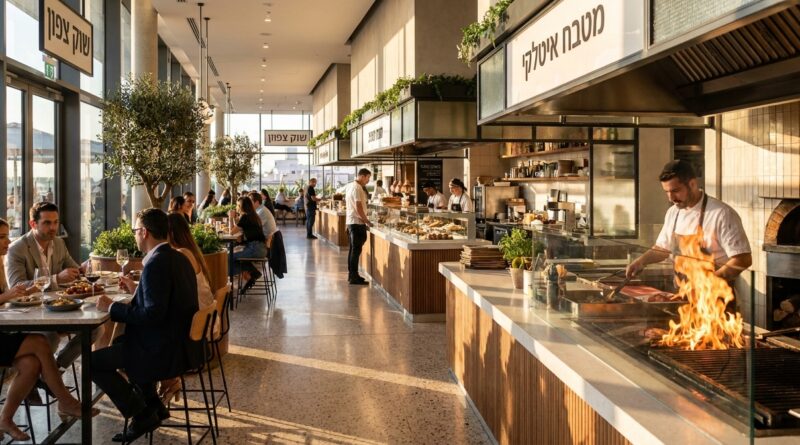
Inside Tel Aviv’s New 100‑Million‑Shekel Food Floor: The Five Restaurants Changing How Israelis Eat at the Mall
You are not imagining it. “Mall food” still sounds like a sad tray of fries, a dry schnitzel, and the vague feeling you paid too much to eat too little. So when people started saying the best new meal in Tel Aviv might be inside Ramat Aviv Mall, plenty of us rolled our eyes. Fair enough. The difference now is scale. The mall’s new 100-million-shekel food floor is not a routine food court refresh. It is a serious restaurant play, built to keep people in the building long after shopping hours, with chef names, proper design, and places that actually justify planning a night around them.
If you have been hearing bits and pieces but cannot tell what is real and what is PR glitter, here is the useful version. These are the five spots changing the conversation, who each one suits, what is actually worth ordering, and where you should book ahead so you do not waste a night or a budget on the wrong table.
⚡ In a Hurry? Key Takeaways
- The new restaurants Ramat Aviv Mall food floor Tel Aviv story is real. This is one of the city’s biggest new dining hubs, and at least two or three places are worth a dedicated trip.
- Book the chef-led, dinner-first spots ahead, especially for Thursday nights and weekends. Use the more casual counters for walk-in meals or a pre-cinema bite.
- Value matters here. Not every shiny opening is special, so build your evening around one standout meal and avoid ordering blindly just because the room looks expensive.
What this new food floor actually is
Think less “food court,” more compact restaurant district with air conditioning and parking. The mall’s upgrade was designed to fix the old problem. People would come, shop, eat something forgettable, and leave. Now the pitch is different. Come for dinner first. Stay for dessert, drinks, or a movie. Treat the place like an evening destination.
That matters because Tel Aviv diners have become more selective. If you are spending real money, you want clarity. Is this a proper restaurant or a polished mall concept with good lighting? The answer, in this case, is mixed. Some places are destination-worthy. Some are only convenient. Knowing the difference is the whole game.
The five restaurants getting the most attention
1. The chef anchor spot
Every big opening needs one place that signals seriousness. On this floor, that role belongs to the chef-driven restaurant meant for actual dinner plans, not shopping breaks. This is where the room feels composed, the menu is tighter, and the service usually starts stronger than at the faster, counter-style places.
If you are booking one meal to test whether the hype is justified, start here. Go at night, not at lunch. Order across the menu instead of playing it safe with one main. These are the places that show their quality in starters, sauces, bread, and pacing. If those are good, the kitchen is probably for real.
Best for: date night, out-of-town guests, people who want one meal that feels like an occasion.
2. The crowd-pleasing brasserie
This is the place most likely to become the “let’s just meet there” option. Big menu. Broad appeal. Comfort dishes with enough polish to feel current. This is often where families, mixed-age groups, and people who do not want to overthink ordering will feel happiest.
The upside is reliability. The downside is that broad menus can drift into safe territory fast. If you go here, avoid the most generic item on the page. Look for the dish that gives the kitchen a chance to show some personality.
Best for: group dinners, low-risk meals, people who want something familiar but better than standard mall fare.
3. The buzzy Asian or pan-Asian concept
Every new restaurant cluster in Tel Aviv seems to need one. Usually it has dramatic plating, cocktails, and a soundtrack that tells you this is where the younger dinner crowd will gather first. When it works, it is fun and energetic. When it doesn’t, it is just expensive soy sauce under mood lighting.
This is where you should order selectively. Pick the dishes the kitchen turns over fast. Raw starters, dumplings, skewers, or a signature rice or noodle dish often beat the long list of fusion experiments. If the room is packed, that can be a good sign. It can also mean slower service, so patience helps.
Best for: lively nights out, sharing plates, people who care as much about atmosphere as the food.
4. The all-day bakery or cafe counter
Do not ignore this one. In many new openings, the bakery-style concept ends up being the sleeper hit. Better value. Lower commitment. Easier access. If the pastries are fresh, the coffee is dialed in, and there is one or two savory items worth repeating, this can become the place locals use most.
It may not be your special-night destination, but it could be your smartest stop. Especially if you are mall-skeptical and want to test the new floor without dropping dinner-level money.
Best for: solo stops, morning or late afternoon visits, budget-conscious diners.
5. The dessert or drinks closer
This is the detail that makes the whole upgrade smarter than older mall food plans. A cluster works when you can build a sequence. Dinner, then something sweet. Or a quick drink before heading home. If one of these spots has a real pastry program, a wine list with some thought behind it, or late-night energy, it helps the whole floor feel less transactional.
Best for: extending the evening, splitting your spending across two stops, rescuing a mediocre dinner with a strong finish.
Which one is actually worth dressing up for?
The short answer is the chef-led anchor restaurant. That is the one most likely to justify crossing town. It has the most to prove, and usually the most focused kitchen. If you only have one shot, make it that.
The second-best bet is the buzzy concept, but only if you are going for atmosphere as much as food. If your goal is purely “best meal,” pick substance over scene. If your goal is “fun night with friends,” the louder room may win.
The cafe or bakery counter is the best value test run. If you want to check out the space before committing to dinner prices, start there, walk the floor, and see where the energy actually is.
How to plan the evening without wasting money
Book ahead for the obvious stars
Any chef-branded place or stylish dinner room will likely fill first on Thursday nights, Saturday nights, and during the first weeks after opening. If you hate waiting, reserve. This is not the part of the night to leave to chance.
Do one “main spend” and one lighter stop
Don’t try to do a full feast at every place. Pick one restaurant for the serious meal. Then add drinks, coffee, or dessert elsewhere. That way you get the feel of the whole floor without paying for too many average dishes.
Go later if you want the place at its best
Some new restaurant clusters feel oddly flat during mall peak hours and come alive only after the shopping crowd thins. If the goal is to see whether this really functions as a nightlife spot, dinner service is the test.
Use lunch to judge value
If you are cautious with money, lunch is your friend. You can test kitchen quality, portion size, and service before committing to a full evening spend.
What makes this opening different from older mall dining in Israel?
Two things. First, curation. The point is not just to offer options. It is to create a food identity. Second, design. These places are being built to compete with city restaurants, not just with the shawarma stand one floor down.
That does not mean every place will succeed. New openings often look polished before the kitchens settle in. Menus can tighten, service can improve, and some early crowd magnets can fade once the novelty wears off. But the bigger shift is real. Israeli diners are more open than ever to eating “inside a mall” if the experience no longer feels like mall food.
It is the same reason intimate chef spaces have caught on. People want a meal that feels intentional, whether it is in a hidden room or a glossy commercial complex. If that is your thing, you might also like Israel’s Tiny Tasting Rooms: The 10‑Seat Chefs Quietly Redefining Fine Dining After Dark, which shows the opposite end of the same trend.
Who should skip it, at least for now?
If you want cheap, filling, no-fuss food, this is probably not your best night out. The whole concept is built around aspiration, convenience, and a bit of theater. Also, if opening-week crowds make you miserable, wait. New places often need a few weeks to smooth out booking systems, staff rhythm, and kitchen timing.
And if you are expecting every restaurant in the cluster to be excellent, lower that expectation a notch. Big launches create stars and passengers. Your goal is not to try everything. Your goal is to find the two or three places worth repeating.
Best strategies for different diners
If you are planning a date
Book the chef spot. Sit down properly. Add dessert elsewhere if you want a second location without a second full bill.
If you are meeting friends after work
Choose the lively concept or brasserie. Shared plates, easier menus, and a room where nobody feels rushed usually work best.
If you are careful with spending
Start with the bakery or cafe in daytime, then return only if the quality feels convincing. This is the easiest way to avoid paying opening-hype prices for a place that is all style and no repeat value.
If you want to stay current in Tel Aviv’s food scene
This opening matters. Even if you do not become a regular, it will shape where people meet, what chefs try next, and how malls across Israel rethink dining.
At a Glance: Comparison
| Feature/Aspect | Details | Verdict |
|---|---|---|
| Best first pick | The chef-led anchor restaurant is the safest bet for a meal that feels destination-worthy, especially at dinner. | Book this first if you only have one night. |
| Best value move | Try the bakery or cafe concept during the day to test quality without committing to a full evening spend. | Smart entry point for cautious diners. |
| Best use of the whole floor | Do dinner at one standout place, then move to a second stop for dessert or drinks instead of over-ordering in one room. | Best way to get the full experience without overspending. |
Conclusion
The point of this new restaurants Ramat Aviv Mall food floor Tel Aviv opening is not just that there are more places to eat. It is that one of the city’s most familiar shopping centers is trying to become a serious dining address. For readers, the useful part is simple. You do not need to guess which place is actually special, which ones need a reservation, or how to turn the whole thing into a good night instead of an expensive shrug. Start with the chef-driven spot if you want the strongest meal. Use the bakery or casual concepts to test value. Build the evening in stages. That way, a vague “100-million-shekel upgrade” turns into practical choices that save you money, time, and disappointment, while keeping you current with where Tel Aviv’s fast-moving food scene is really heading.