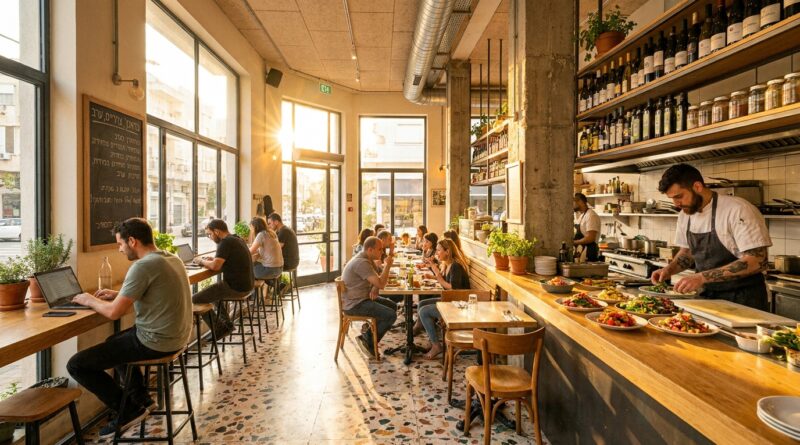
Israel’s New Neighborhood Chef Cafés: The All‑Day Spots Quietly Replacing Fancy Reservations
You should not need military planning just to eat a decent dinner on a Wednesday. A lot of people in Tel Aviv and Jerusalem are fed up with the same routine. Either you fight for a late reservation at some buzzy place across town, or you settle for a chain café that looks nice enough but serves dry pastries, limp salads and coffee that tastes like regret. What many diners actually want is much simpler. One reliable neighborhood spot. Good espresso in the morning. A proper lunch you would happily order twice. Then, later on, a glass of wine and a chef-made plate that feels special, but not anniversary-level expensive. That is exactly why the rise of new neighborhood chef cafes Tel Aviv Jerusalem 2026 matters. These places are quietly changing how Israelis eat on regular days, not just on birthdays. And for busy locals, parents, freelancers and office workers, that is very good news.
⚡ In a Hurry? Key Takeaways
- Israel’s smartest new dining trend is the all-day neighborhood chef café that works from morning coffee to evening wine and dinner.
- Look for places with a short menu, strong coffee program, flexible seating and a crowd that changes through the day. That is usually a good sign.
- The best value is not the cheapest dish. It is a spot that gives you quality, comfort and consistency without forcing a reservation or a dress code.
Why these places are showing up now
People still love a big night out. That has not changed. What has changed is how often they want the hassle that comes with it.
After years of tasting menus, packed host stands and prices that can ruin your mood before the first bite, diners are pulling back toward something more useful. They want quality without theater. They want places close to home. They want to walk in wearing normal clothes and still eat food made by someone who clearly knows what they are doing.
For chefs, the model also makes sense. A smaller neighborhood café is often cheaper to run than a high-wire fine dining room. It can earn money all day instead of only during lunch and dinner rushes. Coffee in the morning, pastries at 11, business lunch at 1, snacks and wine at 8. That is a steadier business.
If this shift sounds familiar, it lines up with what we already saw in Israel’s New Chef-Cafés: The Casual All‑Day Spots Where Top Chefs Are Sneaking Back Into the Kitchen. The big difference now is location. More of these places are popping up where people actually live and work, not only in the usual nightlife corridors.
What makes a neighborhood chef café different from a regular café
At first glance, the difference can be easy to miss. The room may still have a pastry case, sidewalk tables and a chalkboard menu. But the details give it away.
The food has a chef’s brain behind it
You can tell when a menu was built by someone who cares. The tomato tart is balanced. The roast chicken sandwich has proper texture. The lunch fish plate is something you would order at night too. There is restraint. Not twenty-seven random items. Just enough, done well.
The place works at different hours
A real all-day spot feels natural at 9 am and 8 pm. It does not become awkward once laptops disappear and wine glasses come out. The lighting shifts a bit. The menu gets a little deeper. But it still feels like the same place.
It feels local, not performative
You see neighbors, parents with strollers, freelancers on calls, people grabbing a solo lunch, then couples coming in later for a quick dinner. That mix matters. It usually means the café is built for repeat visits, not social media drive-bys.
What to look for before you commit to a new spot
If you are trying to find the best new neighborhood chef cafes Tel Aviv Jerusalem 2026, do not just scan the plated desserts on Instagram. Check the basics first.
Coffee quality
If a place says it is all-day, the coffee has to be real. Not an afterthought. Good beans, proper milk texture, and a barista who does not look personally offended by your cappuccino request at 10:30 am.
Lunch seriousness
This is a big test. Anyone can make evening small plates sound fancy. Lunch reveals everything. Is there a dish you would genuinely want on a workday? Is it fast enough? Filling enough? Fresh enough?
Evening mood
Does the place shift gracefully into night service, or does it still feel like you are eating dinner in a breakfast room? The best spots dim things slightly, open more wine, and bring in a tighter evening menu without losing the relaxed neighborhood feel.
Wi‑Fi and seating comfort
Not glamorous, but important. If the café wants daytime regulars, it should understand basic realities. Reliable Wi‑Fi. Enough plugs. Chairs you can survive for more than 35 minutes. Shade outside helps too.
Stroller tolerance and general human warmth
This is one of those small details locals remember. Can someone roll in with a stroller at 4 pm and feel normal? Can a solo diner sit at the bar without getting ignored? The best neighborhood places pass this test easily.
Why Tel Aviv and Jerusalem are both ripe for this trend
The two cities are different, but the need is the same.
Tel Aviv
In Tel Aviv, people are tired of crossing the whole city for a meal that starts too late and costs too much. Dense neighborhoods are perfect for all-day chef cafés because the audience is already there. Remote workers, parents, office people, creatives, dog walkers, everyone wants one nearby place they can trust.
Jerusalem
Jerusalem has its own version of the same hunger. Residents often want something polished but comfortable. Good enough for a date, easy enough for a weekday lunch. The city’s mixed rhythm also suits all-day venues. Morning coffee crowd, midday meetings, then a calmer evening service that still feels accessible.
That is why the search for new neighborhood chef cafes Tel Aviv Jerusalem 2026 is less about trend-chasing and more about daily life. These places solve a real problem.
How to tell if a place is worth becoming your regular
A useful neighborhood café does not need to wow you once. It needs to work again and again.
Check the second-order test
After your first visit, ask yourself one thing. Would you come back next week for a different reason? Morning coffee. Lunch meeting. Casual dinner. If the answer is yes, that is the kind of place worth keeping.
Notice the menu pricing
You want fair pricing, not bargain-bin pricing. A chef-driven place that sources better ingredients and keeps standards high will not be the cheapest option on the block. That is fine. What you are watching for is whether the experience matches the bill.
Watch the room, not just your table
Are people lingering comfortably? Are staff greeting regulars? Does the room feel calm, even when busy? A good neighborhood spot has rhythm. It does not feel like it is barely holding itself together.
Why this trend matters more than another “best restaurants” list
Big destination restaurants get attention because they are dramatic. But most people do not eat dramatic meals most days. They eat near home, near school pickup, near work, between errands, before the train, after a long meeting.
That is why this shift matters. These cafés improve ordinary life. They make better food feel more reachable. They also support independent owners who are putting real skill into places with lower ego and higher usefulness.
And honestly, many diners are happier for it. There is a special pleasure in finding a place nearby that can handle your whole day. Espresso in the morning. A lunch that does not feel sad. A glass of wine and a smart plate at night. No drama. No months-ahead reservation strategy.
At a Glance: Comparison
| Feature/Aspect | Details | Verdict |
|---|---|---|
| All-day usefulness | Strong spots serve quality coffee, serious lunch options and an evening menu with wine or cocktails. | Best sign that a café is built for real neighborhood life. |
| Price versus value | Usually pricier than a chain café, but cheaper and easier than a destination restaurant. | Worth it if the quality is consistent and the place works for repeat visits. |
| Neighborhood comfort | Look for Wi‑Fi, flexible seating, friendly staff and a room that welcomes solo diners, parents and casual drop-ins. | Often the deciding factor between a trendy stop and a true regular spot. |
Conclusion
The most interesting change in Israel’s food scene is not happening behind velvet ropes or on hotel rooftops. It is happening on quieter streets, near offices, apartment blocks and local parks, where small all-day cafés run by real chefs are giving people something they have wanted for years. A place nearby that is actually good. If you start paying attention to these new neighborhood chef cafes Tel Aviv Jerusalem 2026, you will likely eat better on normal weekdays, not just on special occasions. You will also help the kinds of independent owners who are betting on quality, warmth and consistency instead of flash. And that is useful for everyone. Better coffee, better lunch, better dinner, less hassle. That is not a minor dining trend. That is a better way to live.