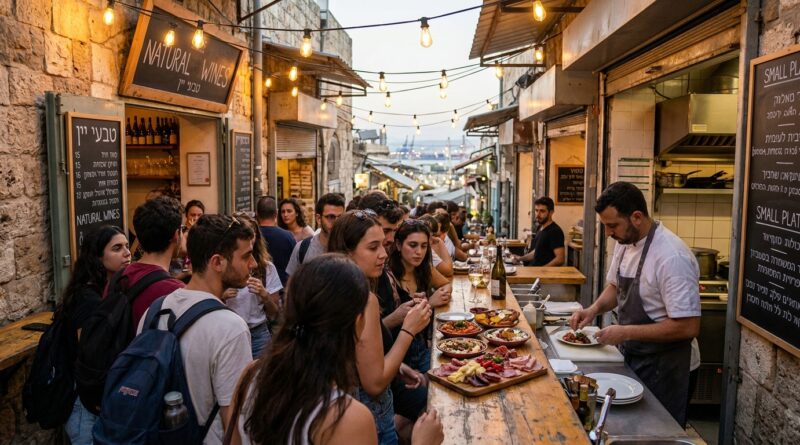
Israel’s New Northern Wine‑Bar Kitchens: The Haifa and Galilee Counters Food People Are Quietly Chasing
You are not imagining it. Try searching for the best new wine bars and restaurants in Haifa and the Galilee 2026, and you keep running into the same Tel Aviv lists with one token “worth the drive” pick up north. That gets old fast. Especially now, when some of the most interesting food in Israel is happening in small rooms with 12 seats, short wine lists, handwritten menus and chefs cooking close enough to explain the plate. Haifa, the Jezreel Valley and the Western Galilee are full of places like that right now. The hard part is not finding one good spot. It is connecting them into a night, or better, a full weekend that makes sense. So here is the practical guide people actually need. Where to book, what kind of place each stop is, how to string them together by area, and how to support northern businesses without spending half the trip stuck in the car.
⚡ In a Hurry? Key Takeaways
- The best way to do northern dining right now is by cluster, not by one big “must-book” restaurant. Build around Haifa, the Jezreel Valley or the Western Galilee.
- Book chef counters for early seating, then keep one flexible wine-bar stop for later. That gives you the best shot at trying more than one place in a night.
- Check Instagram or call the same day. Menus, hours and even openings can shift quickly, especially at tiny post-war businesses.
Why the north is suddenly where food people are looking
The change is easy to miss if you only read big travel roundups. Tel Aviv still gets the headlines. Jerusalem still gets the legacy coverage. But the north has something the center cannot fake right now. Fresh energy, smaller rents, more personal rooms and chefs willing to build places around a point of view instead of around scale.
That shows up in the format. Less white-tablecloth theater. More counters, bottle shelves, seasonal plates and staff who know exactly why a crisp Galilee white is on the list next to a snack of cured fish or charcoal-roasted vegetables.
It also shows up in the mood. These are not “destination restaurants” in the old-fashioned sense. They are places you can actually use. A Thursday night in Haifa. A Friday lunch in the valley. A Saturday bottle in the Western Galilee after a slow drive and a sea view.
How to plan this without turning it into a logistics project
The trick is simple. Pick one base per day.
Option 1: Haifa night out
Best if you want walkability, a real bar scene and more than one stop without constant driving. Haifa works especially well for people coming from the center by train and taxi.
Option 2: Jezreel Valley food day
Best if you like winery stops, rural settings and lunch that rolls into a long afternoon. This is the easiest route for people who want scenery with their meal.
Option 3: Western Galilee weekend
Best if you want the full reset. One serious dinner, one relaxed wine stop, one morning market or bakery stop, then home.
If you try to do all three in 24 hours, you will spend more time parking than eating. Keep it tight.
Haifa: the easiest entry point for the new northern scene
Haifa is the city people used to skip over on the way somewhere else. That makes less and less sense now. The interesting spots are not trying to copy Tel Aviv. They feel local, coastal and a little scrappier in a good way.
What to look for in Haifa right now
Look for tiny dining rooms with natural or low-intervention wine, a short menu that changes often and a kitchen that can move between bar snacks and serious plates without fuss. In Haifa, the best new places often sit somewhere between a wine bar and a restaurant. That middle ground is exactly the point.
Best use of your evening
Start with a counter seat at a chef-driven kitchen. Book the earliest seating you can tolerate. Think 7:00 or 7:30, not 9:30. You will actually taste more, talk to the staff and still have room for a second stop.
Then move to a wine bar for one more glass and two small plates. This works far better than trying to squeeze two full dinners into one night.
What kind of food to expect
The strongest northern menus right now tend to mix Mediterranean instincts with a lighter wine-bar format. Raw fish. Good bread. Fire-cooked vegetables. Smart use of herbs, citrus and pickles. Local cheeses. Plates that feel chef-led but not precious.
And yes, this matters if you are tired of menus that read like they were designed for photos first and dinner second.
Jezreel Valley: where lunch can quietly become the whole day
The Jezreel Valley is not one street with ten obvious choices. It is a spread-out food region. That sounds less convenient, but it is actually why it works so well for a food day. You are not chasing hype. You are building a route.
How to do it properly
Start with a late breakfast or pastry stop. Add one winery or bottle-focused venue around midday. Then anchor the day with a chef counter or small restaurant for lunch. If the place has outdoor seating and a short local wine list, even better.
This area rewards slowing down. You are here for producers, small kitchens and the kind of meal where nobody rushes you off the table after 90 minutes.
What stands out here
The valley often gives you a stronger farm-to-table feel than the cities do, without turning the whole meal into a lecture about sourcing. Ingredients show up with confidence. Tomatoes taste like tomatoes. Herbs smell alive. Wines feel chosen because they fit the plate, not because they fill a category.
Western Galilee: the strongest weekend play
If Haifa is your easy night out, the Western Galilee is your weekend answer. This is where the tiny wine-bar kitchen setup feels most complete. You can do one serious dinner, sleep nearby, then spend the next day moving between coastline, village spots and bottle-driven places with almost no pressure.
What makes this area special
Scale. In the best way. The rooms are often small enough that every table feels intentional. The list may have 20 bottles instead of 200, but somebody actually thought about all 20. The menu may have eight dishes instead of 28, but they are there for a reason.
How to build the weekend
Friday afternoon, check in and keep dinner as your one fixed reservation. Saturday, leave the rest flexible. The north changes fast. A pop-up, a bakery window, a seasonal kitchen night, a winemaker pouring by the glass. That is part of the appeal.
What “new” really means here
Not every place on your radar will be brand new in the strict sense. Some are recent openings. Some are established chefs in a new format. Some are older spaces with a new kitchen identity that only now feels worth chasing.
That is normal in this scene. The useful question is not “Did this open last month?” The useful question is “Does this feel like part of the new northern wave?” If it is intimate, wine-led, ingredient-focused and built for repeat visits, the answer is usually yes.
How to spot the places worth your time
When you are scanning recommendations, these signs usually point to a good bet:
1. Short menu, updated often
If the menu changes with the market and the catch, that is usually a good sign. It means the kitchen is cooking in real time, not just repeating a launch menu forever.
2. Wine is part of the identity, not an afterthought
You want a place where the wine list clearly belongs to the food. It does not need to be huge. It needs to be cared for.
3. Counter seating or a small room
Small often means focused. Not always, but often. It is easier for a compact kitchen to keep quality high and the experience personal.
4. Locals are going back
The strongest sign is repeat local traffic. If nearby diners are treating it as their place, not just a one-off destination, that tells you a lot.
A practical itinerary you can actually save
One-night Haifa plan
6:30 pm: Arrive and park once, or come by train and use taxis.
7:00 pm: Chef-counter booking. Order 3 to 5 shared dishes, not a full spread.
9:00 pm: Walk to a wine bar for one glass each and one snack.
10:30 pm: If the energy is right, add a nightcap. If not, you are done without feeling wrecked.
Jezreel Valley day plan
10:00 am: Bakery or coffee stop.
12:00 pm: Winery or bottle-focused visit.
1:30 pm: Long lunch at a small chef-led spot.
4:00 pm: Scenic stop, farm shop or drive onward.
Western Galilee weekend plan
Friday: Check in, beach or village stroll, one booked dinner.
Saturday: Casual breakfast, one flexible lunch or wine stop, one early dinner on the way back.
Booking tips that save headaches
Small places run differently. A few practical rules help a lot.
Book direct when possible
Instagram and WhatsApp are often more current than reservation platforms. That may feel messy, but for tiny places it is often the real system.
Ask where to sit
Counter, bar, terrace or regular table can change the whole experience. At some of these places, the counter is the reason to go.
Check opening days twice
Do not assume standard hours. Some northern spots open only on certain nights, or shift service around local conditions, private events or staffing.
Have one backup nearby
This is especially smart in the Galilee. If one place is full or closes early, you do not want your whole evening to collapse.
Budget reality: this can be more affordable than the center, but not always cheap
The good news is that many northern wine-bar kitchens still price below big-name central Israel rooms. The less good news is that “small plates plus wine” can add up faster than you think.
A smart approach is to choose your splurge. Either do a more ambitious food order with one bottle, or keep the meal lighter and continue drinking elsewhere. Trying to do both at every stop gets expensive fast.
Why this matters beyond just finding a good meal
There is a real community angle here. Many of these businesses are operating in a region that has had a rough stretch. Showing up matters. Not in a performative way. In the plain, useful sense of filling seats, buying bottles and helping good places build regular momentum again.
That is another reason this guide is built around workable itineraries, not abstract praise. People need plans they can use now.
What to expect in 2026
If current momentum holds, the best new wine bars and restaurants in Haifa and the Galilee 2026 story will be less about one breakout star and more about a dense little network of places. That is healthier anyway. A scene gets interesting when it has depth. One place for a serious dinner. One for late glasses. One for lunch the next day. One worth a detour on the drive home.
That is exactly what the north is starting to offer.
At a Glance: Comparison
| Feature/Aspect | Details | Verdict |
|---|---|---|
| Best area for one-night trip | Haifa has the easiest mix of chef counters, wine bars and walkable follow-up stops. | Best for first-timers. |
| Best area for slow food day | The Jezreel Valley is ideal for a bakery, winery and long lunch route. | Best for daytime planning. |
| Best area for a full reset weekend | The Western Galilee offers the strongest mix of intimate dining, scenery and flexible next-day stops. | Best overall if you can stay overnight. |
Conclusion
If you have felt stuck with the same central-Israel restaurant lists, this is your nudge to head north with a real plan. Israel’s restaurant energy is quietly shifting to Haifa, the Jezreel Valley and the Western Galilee, and the best part is that it still feels discoverable. Not polished into sameness. Not overexplained. Just lively, local and worth the drive. Use this as a save-and-go itinerary, book one anchor meal, leave room for one spontaneous stop, and you will get something most roundups miss completely. A chance to support small post-war businesses, skip the usual center-city circuit and taste where the country’s next food wave actually lives this week.