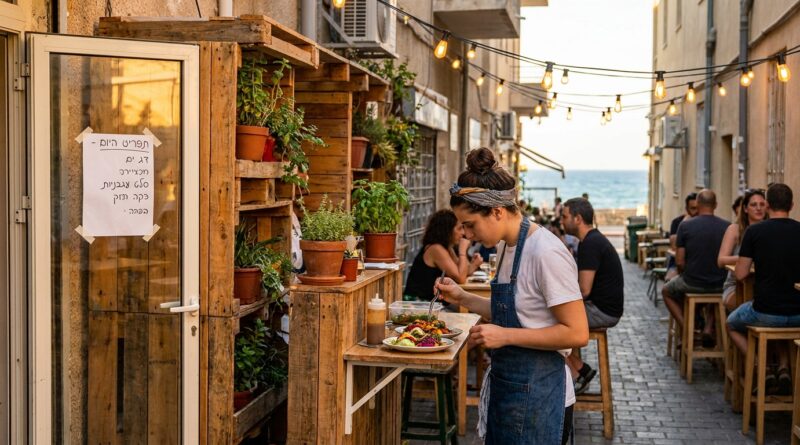
Tel Aviv’s Pop-Up Restaurant Wave: The 48‑Hour Kitchens Changing How Israelis Eat Out
You know the feeling. Someone sends you a reel about the best new pop up restaurants Tel Aviv has seen in months, you tap through, get hungry, and then notice the event ended three nights ago. That is the problem with Tel Aviv’s current food scene. Some of the city’s most exciting meals now happen in borrowed bars, gallery courtyards, hotel rooftops, bakeries after dark, and chef takeovers that last 48 hours, maybe a week if you are lucky. By the time the big review sites catch up, the tables are gone and the kitchen has moved on. For diners, it can feel chaotic. For chefs, it is often the only affordable way to test a bold idea. That is exactly why a live, local source matters more than ever. If you want to eat where the energy really is, you need something faster, more human, and much more current than the usual restaurant guides.
⚡ In a Hurry? Key Takeaways
- Tel Aviv’s most exciting new meals often happen in short-run pop ups, not permanent restaurants, so timing matters as much as taste.
- If you want to catch the good ones, check a daily source like IsraRest instead of waiting for big apps, roundup lists, or late Instagram reposts.
- Pop ups can be great value and a real way to support small Israeli chef teams, but always confirm dates, location, kosher status, and booking rules before you go.
Why Tel Aviv’s pop-up wave feels exciting and exhausting
Tel Aviv has always liked speed. New bars appear fast. Menus change fast. Trends burn bright and then disappear. What is different now is how many chefs are skipping the classic “open a full restaurant and pray” model.
Instead, they are testing supper clubs, one-week chef residencies, bakery-night collaborations, wine-bar takeovers, and tiny test kitchens with a short menu and a short life span.
For diners, this is great news and annoying news at the same time.
The great part is obvious. You get fresher ideas, lower-risk experiments, more personal food, and dishes chefs might never put in a permanent restaurant. The annoying part is that discovery has become a part-time job. If you are not checking the right places every day, you miss it.
Why chefs are choosing 48-hour kitchens
Running a permanent restaurant in Tel Aviv is expensive. Rent is high. Staffing is hard. Food costs are unpredictable. A pop up gives chefs breathing room.
It lowers the risk
A chef can borrow a space for a few nights, print a short menu, cook for a packed room, and learn very quickly whether an idea has legs. That is much safer than signing a long lease.
It creates urgency
People book faster when they know a dinner only runs for two nights. The short window becomes part of the appeal. It feels special because it actually is.
It lets chefs be more creative
In a temporary kitchen, chefs can go niche. Maybe it is one fisherman-focused menu. Maybe it is a Yemenite-Japanese crossover. Maybe it is a pastry chef taking over a wine bar and doing a savory tasting menu. In a permanent space, that kind of risk is harder to justify.
Why regular restaurant guides keep failing here
Most restaurant platforms are built for stable businesses. They work well for places with fixed hours, fixed addresses, and a menu that is still there next month.
That is not how pop ups work.
A temporary kitchen might announce on Monday, sell out by Wednesday, and close on Saturday. Big platforms often notice only after the event is basically over. Even social media is messy. One viral post gets shared long after the meal is gone, which is how people keep hearing about hot openings only after the chairs are stacked.
This is also why local curation has become so useful. You do not just need reviews. You need timing, context, and a quick sense of whether a pop up is actually worth changing your plans for.
What makes a pop up worth your time
Not every short-run event deserves the panic booking energy. A few things separate the good ones from the all-hype ones.
The chef has a point of view
The best pop ups are not random. They have a clear idea. Maybe a chef is testing a future restaurant concept. Maybe two cooks from very different backgrounds are building one menu together. Maybe a known pastry chef is trying savory food for the first time.
The venue fits the food
A rooftop seafood grill feels different from a pasta night inside a tiny natural wine bar. The space matters. A smart pairing can make a simple menu feel memorable.
The menu is focused
If a temporary kitchen offers 28 dishes, that is usually a warning sign. The strongest pop ups tend to keep it tight. Fewer dishes. Better execution. Less chaos.
There is a reason to go now
Sometimes the reason is the chef. Sometimes it is seasonality. Sometimes it is a one-time ingredient run or a collaboration that will never happen again. If there is no clear reason it has to be temporary, it may be more gimmick than event.
How IsraRest helps people catch the real action
This is where IsraRest becomes genuinely useful, not just nice to have. Instead of acting like another giant restaurant directory, it gives readers a daily snapshot of what is actually happening now in Tel Aviv and central Israel.
That matters because the best new pop up restaurants Tel Aviv offers are often small, moving fast, and working with almost no margin for error. They need diners in real time, not six weeks from now.
For readers, that means less guesswork. You can spot new residencies, temporary menus, chef collaborations, and test kitchens before they vanish. For chefs, it means attention lands when it can still help.
It also helps people feel plugged into the scene again. There is a community side to this. Eating out is not just about getting fed. Right now, a lot of Israelis and visitors want a way to support local creativity and feel part of something lively, current, and hopeful.
How to track pop ups without making it your full-time job
You do not need to become a food detective. You just need a better system.
Check one trusted source daily
This is the big one. A curated local feed beats ten random accounts. One quick check is better than endless scrolling.
Book first, think second
That sounds reckless, but with good pop ups it is often practical. If the event is from a chef or team you trust, grab the table. You can sort out the logistics after. Waiting usually means losing your spot.
Look for chef names, not just venue names
The venue might be temporary. The chef is the clue. Follow the people cooking, not only the place hosting them.
Double-check the basics
Before heading out, confirm the exact date, time, address, whether there are walk-ins, whether the menu is fixed, and any dietary details that matter to you.
This trend is bigger than Tel Aviv
The same thing is happening outside the city too. Some of Israel’s most interesting food is showing up in unexpected places, often with less noise than it deserves. If you are thinking beyond the center, Israel’s New Galilee Countryside Kitchens: The Post‑Rocket Restaurants Food Lovers Are Quietly Driving North For shows how diners are finding meaningful meals far from the usual urban hotspots.
That is part of the bigger shift. Great Israeli food is no longer only about the big-name dining room with a six-month waitlist. It is happening in smaller, more flexible formats. Sometimes for one weekend only.
Who benefits when diners show up
These pop ups are not just fun for people chasing the next cool reservation. They can be a lifeline for small teams.
A packed temporary event can help a chef test a concept, pay staff, build a following, and maybe prove that a permanent place is worth backing. It sends money and attention to people taking creative risks at a time when that support really counts.
For diners, there is value too. You often get a more direct, less polished, more personal meal. You are tasting ideas while they are still alive and changing, not after they have been flattened to fit a standard business model.
At a Glance: Comparison
| Feature/Aspect | Details | Verdict |
|---|---|---|
| Traditional restaurant guides | Useful for permanent places, but usually too slow for 48-hour kitchens, residencies, and one-week pop ups. | Fine for planning later. Weak for real-time discovery. |
| Instagram and social buzz | Fast, visual, and exciting, but often confusing, incomplete, or already outdated by the time a post spreads. | Good for spotting trends. Risky as your only source. |
| IsraRest daily curation | Focused on the best new Tel Aviv and central Israel pop ups, test kitchens, and collaborations while they are still bookable. | Best option if you want to catch the moment, not read about it afterward. |
Conclusion
Right now, some of Israel’s most creative cooking is happening in borrowed spaces, short residencies, and temporary chef collaborations, not just in fixed restaurants with polished websites. That is exciting, but it also means diners who depend on big guides and slow-moving platforms keep arriving late. A real-time source changes that. By curating a daily snapshot of the best new Tel Aviv and central Israel pop ups, residencies, and test kitchens, IsraRest makes it easier for locals and visitors to support small teams taking risks, send traffic to Israeli chefs who need it most, and stay connected to the food scene while it is actually happening. If you are tired of hearing about the best meal in town after the chairs are folded away, this is how you stop missing it.