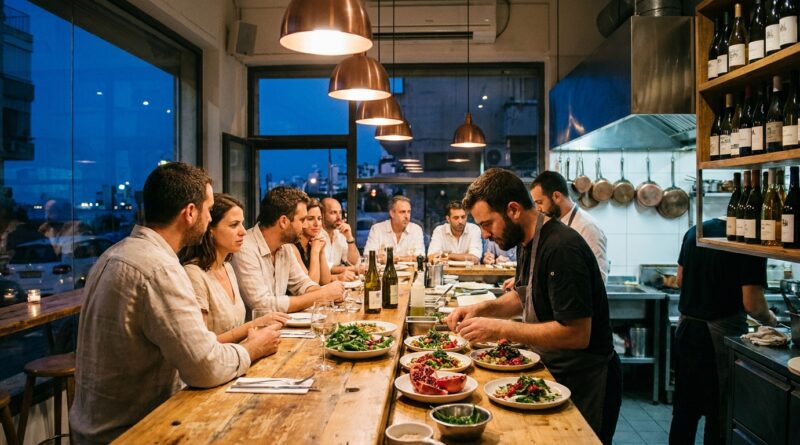
Tel Aviv’s New Tasting-Counter Boom: The Tiny Chef Bars Redefining Israel’s Fine Dining
You know the routine by now. A flashy new Tel Aviv opening gets crowned “the table to book,” you finally score a seat, and then the night feels oddly distant. Packed room. Loud playlist. Plates designed for phones before forks. If what you actually want is a meal that feels personal, the city’s newest answer is much smaller. A new wave of chef counter restaurants in Tel Aviv is turning fine dining into something more direct, more human and frankly more memorable. These tiny tasting bars, often with just a handful of seats, put you right in front of the action. You can watch sauces get finished, ask why a course changed that morning and get the kind of pacing that works for a real evening, not a rushed reservation grid. For diners who want intimacy over hype, this is where the energy is right now, and it is redefining what a special night out in Israel can feel like.
⚡ In a Hurry? Key Takeaways
- Tel Aviv’s most exciting new dining trend is the ultra-small chef counter, where a few guests sit close to the kitchen for a more personal tasting experience.
- If you want the best chance at a seat, look for very recent openings, follow the chefs directly and try weeknights or late seatings before the wider food crowd catches on.
- These counters often offer better value than big-ticket fine dining because the experience feels custom-built, but always check cancellation policies and dietary flexibility before booking.
Why tiny chef bars are suddenly such a big deal
The appeal is simple. Less room, more focus.
Instead of a 70-seat restaurant trying to be everything at once, these counters are built around one idea. A chef, a compact menu, a tight service rhythm and direct contact with the people eating. It feels closer to being invited into a studio than going to a standard restaurant.
That is a big part of why new chef counter restaurants Tel Aviv diners are talking about right now feel different from the usual “it” openings. They are not trying to win on size or scene. They win on access. You see the hands doing the work. You hear the story of the dish without a speech. You notice details that disappear in a louder room.
For a city that loves restaurant buzz, this is a smart correction. Smaller places can move faster, change menus more often and create the sort of night people actually remember.
What makes a great chef counter, and what to watch for
1. The room should feel close, not cramped
Small is good. Squashed is not.
The best counters use their size well. Seats face the action clearly. You can talk without shouting. Lighting helps you see the food. Service feels calm, even when the kitchen is moving fast. When a place gets this right, the intimacy feels intentional rather than accidental.
2. The chef should be present in more than name
A chef counter only works if the chef’s point of view is visible. That does not mean the chef must narrate every plate. It means the menu should feel alive, specific and responsive. Maybe a course changes because the fish that arrived that morning looked better than expected. Maybe a garnish is added tableside with a quick explanation. Those little moments matter.
3. The menu should reward attention
At these counters, diners are often paying for focus as much as food. You want dishes with contrast, pacing and a sense of progression. Not just a line of pretty plates. The strongest places understand that a tasting menu is a story, not a slideshow.
4. Booking should still be realistic, at least for now
One reason this boom matters right now is timing. Some of these places are so new that they have not yet hit the major travel lists and reservation platforms in a big way. That gives locals and visitors a short window to try them before the long waits begin.
How this trend is changing fine dining in Israel
It is making it feel less formal and more direct.
For years, fine dining often came with a certain distance. Big rooms. Heavy choreography. A feeling that the guest should sit back and receive the performance. These tiny counters flip that. You are still getting ambition and technique, but the tone is looser and more personal.
That matters in Tel Aviv, where people tend to prefer warmth over stiffness. The city’s best hospitality has always had some life in it. These counters keep the standards high while cutting away some of the theater that can make expensive meals feel cold.
They also create space for chefs to test ideas fast. In a small format, a chef can introduce a dish, watch how people react and change it by the next service. That kind of feedback loop is hard in a bigger operation. It is one reason the food often feels more current at the counter than in larger dining rooms.
If you also like dining in smaller, ingredient-driven spaces beyond the classic fine dining setup, it is worth reading Israel’s New Market-Counter Restaurants: The Tiny Counters Inside Markets That Are Quietly Serving the Country’s Most Exciting Food. It tracks a related shift toward compact, high-impact places that skip the noise and go straight to flavor.
Who these new chef counters are best for
Not every diner wants the same thing, and that is fine.
These places are ideal for small groups, couples and solo diners who actually enjoy paying attention. If you like watching a kitchen work, asking a quick question about a dish or settling into a meal with real pacing, you will probably love this format.
They are also great for visitors who want a strong memory of Tel Aviv without getting trapped in the city’s most overhyped rooms. You often come away with a better sense of the chef, the produce and the local mood than you would from a bigger restaurant that could be anywhere.
If your main priority is a loud night out, a big group dinner or a huge menu with lots of last-minute substitutions, a tiny chef bar may not be the best fit. These spaces are intimate by design. The point is to surrender a little and let the evening unfold.
How to book before everyone else does
Follow the chefs, not just the apps
This is the biggest practical tip. Many new chef counter restaurants Tel Aviv diners want to find appear first on Instagram, through word of mouth or via direct messaging before the big booking systems fully catch up. If a place is very new, the fastest route to a seat may be a direct message, a phone call or a link in the chef’s profile.
Try midweek
Tuesday and Wednesday often give you the best shot. The room is calmer, and you may get even more interaction simply because the service is not as compressed as on Thursday night.
Ask about the format before you confirm
Some counters offer a fixed tasting menu. Others are more flexible. Some run one seating, others two. Ask how long the meal lasts, whether drinks pairing is built in and how dietary requests are handled. That avoids surprises later.
Move quickly on brand-new openings
The sweet spot is often the first few weeks. The buzz is building, but the system has not hardened yet. That is when you can still get a coveted seat without planning your life three months out.
What “value” really means at a tiny tasting counter
These meals are not always cheap, but price is only part of value.
A larger fine dining restaurant may offer more square footage, more staff and more spectacle. A tiny chef counter offers something different. Attention. Precision. Memory. If the chef is genuinely engaged and the menu is sharp, the experience can feel richer even when the spend is similar.
That said, do a quick check before booking. Look at cancellation rules. Confirm whether service charge is included. Ask if beverage pairing is optional. With such limited seating, many counters have stricter policies, and that is understandable. You just want clarity upfront.
What to expect from the best nights
The strongest chef counter evenings tend to share a few traits.
You sit down and feel the pace settle almost immediately. The first bites arrive with confidence. The chef and team seem busy but not frantic. There is enough conversation to feel warm, not enough to interrupt the flow. Courses build naturally. You leave full, but more than that, you leave feeling that the meal could only have happened in that room on that night.
That is the magic these places are chasing. Not just excellence. Presence.
At a Glance: Comparison
| Feature/Aspect | Details | Verdict |
|---|---|---|
| Atmosphere | Tiny rooms, limited seats, direct view of plating and cooking, easier conversation with chef and staff. | Best for diners who want intimacy over scene. |
| Booking Difficulty | Still more accessible than headline-grabbing big openings if you book early, use direct channels and aim for midweek. | Good short-term opportunity before the trend gets crowded. |
| Dining Experience | Tighter menus, more chef interaction, stronger sense of occasion, less noise and less “Instagram first” energy. | Often a better pick for a memorable special night out. |
Conclusion
Tel Aviv’s tiny tasting-counter boom is worth paying attention to because it solves a real problem. It gives people an alternative to the crowded, over-publicized restaurant cycle and points them toward something more personal. For locals, it is a way to stay close to where the city’s cooking is actually moving. For visitors, it is a chance to experience Israel’s most inventive food in rooms that still feel fresh and discoverable. That is the real value here. It cuts through the noise around every flashy opening and helps you find the small, high-impact places that can still surprise you. And because many of these ultra-small chef counters opened only in the last weeks, there is still a window to get in before the rest of the world catches up.