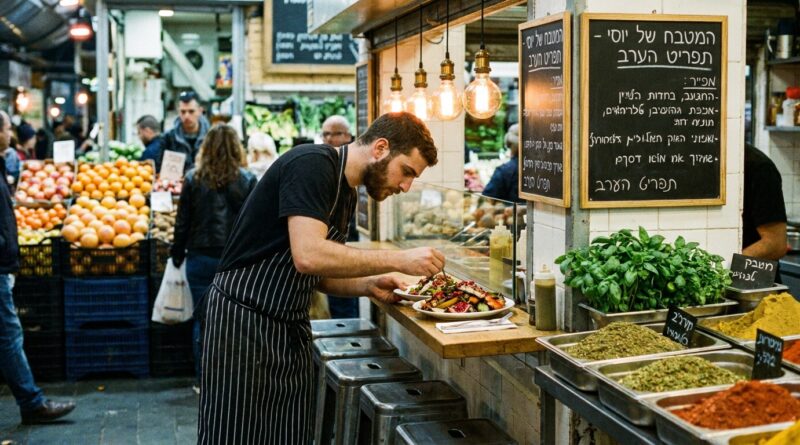
Israel’s New Market-Counter Restaurants: The Tiny Counters Inside Markets That Are Quietly Serving the Country’s Most Exciting Food
You know the feeling. You want somewhere new, actually new, not the same polished places that keep showing up on every “best restaurant in Israel” roundup. You scroll, you save a few names, and then realize you have already been to half of them, and the other half have been famous for two years. Meanwhile, some of the most exciting food in the country is being served from tiny counters tucked inside noisy markets, with six stools, no sign worth noticing, and menus that can change by the week. That is where the real action is right now. If you are looking for the best new market restaurants in Israel, start in the markets themselves. Levinsky in Tel Aviv, Carmel Market, Mahane Yehuda in Jerusalem, and Talpiot in Haifa are where first-time chefs and restless cooks are opening small, risky, thrilling places before the big guides catch on.
⚡ In a Hurry? Key Takeaways
- The best new market restaurants in Israel are often tiny chef counters hidden inside Levinsky, Carmel, Mahane Yehuda, and Talpiot, not on main dining streets.
- Go early, ask stallholders nearby for the newest counter with a short menu, and be ready for limited seating and dishes that sell out fast.
- These places usually offer better value than glossy chef restaurants, but hours can be loose, cashless policies vary, and some are hard to spot without a little patience.
Why market counters are suddenly where the good stuff is
Israel’s restaurant scene has gotten expensive, polished, and a little predictable at the top end. That is not always bad. Plenty of those places are still excellent. But if you want surprise, markets are where you start.
The reason is simple. Small counters are cheaper to open than full restaurants. A chef can rent a tiny space, keep the menu short, buy produce a few meters away, and test an idea without needing a huge dining room or a giant staff. That freedom shows up on the plate.
You are seeing cooks do things they could never get away with in a formal setting. One pan. Twelve seats. Three dishes. Total focus.
It is a different kind of excitement from the city’s shinier openings. If you are also curious about where the more polished side of the scene is heading, Israel’s New Hotel-Restaurants: The Rooftop Kitchens Turning Stays Into Serious Dining Destinations is worth a read. But right now, the markets feel more alive.
What makes a market counter worth seeking out
Not every place inside a market is exciting just because it is inside a market. Some are old favorites. Some are fine but not worth a special trip. The new stars usually share a few signs.
A tight menu
If the menu is long, laminated, and trying to do everything, keep walking. The places locals get excited about usually have a short list. Maybe five dishes. Maybe less.
A chef you can actually see cooking
At the best counters, the whole point is that nothing is hidden. You sit close enough to watch fish get sliced, flatbreads hit the heat, or sauces get finished to order.
Ingredients that make sense for the market
The strongest new counters cook like they belong there. They use what is around them. Herbs from one stall. Fish from another. Pickles, spices, breads, seasonal vegetables. The food feels plugged into the place.
A little chaos
This sounds odd, but a bit of mess is often a good sign. Not dirty. Not disorganized in a bad way. Just alive. Handwritten specials. A chef shouting that one dish is sold out. People squeezing onto stools. That is usually when you know you found the right spot.
Where to look now
Levinsky Market, Tel Aviv
Levinsky is one of the best hunting grounds for new market counters in Israel because it already has the right mix. Old spice shops, Balkan groceries, Persian influences, bakery traffic, young nightlife, and rents that have, at least in some corners, still allowed smaller operators to take a chance.
The newer counters here tend to lean personal. You get chefs cooking food tied to family backgrounds, migration stories, or a very specific obsession. Think hand-filled pastries, skewers with unusual marinades, seasonal vegetable plates with serious technique, or seafood done with a market-stall directness.
How to find them: Do not just walk the main strip once and declare victory. Loop the side lanes. Look for a place with only a few seats and a menu board in Hebrew. If you hear people talking about “the new place near the spice shop” or “the counter behind the deli,” that is usually the lead you want.
Carmel Market, Tel Aviv
Carmel has long had snacks and famous stops, but the newer wave is more chef-driven. The interesting openings are often squeezed between produce vendors and old-school juice stalls, and the best ones know how to use the market’s energy without turning into a gimmick.
Here, you are likely to find high-low food done really well. Fancy technique, casual format. A perfect sandwich with a chef brain behind it. Crudo in a market bowl. Fire-cooked vegetables that somehow taste expensive while costing less than a cocktail elsewhere.
How to find them: Go before the heavy nighttime bar crowd takes over the surrounding streets. Late morning to early afternoon is ideal if you actually want to notice what is new. Walk slowly. If a place looks too slick, it may already be past the discovery stage.
Mahane Yehuda, Jerusalem
Mahane Yehuda has always been more than a market, but right now its tiny counters are some of the most fun openings in the country. The best new ones often strike a smart balance between Jerusalem comfort food and sharper chef instincts.
You might find a counter serving one beautiful hot dish all week, then changing course the next. Or a tiny grill place doing just a few cuts, a few salads, and bread worth tearing apart with your hands. The strongest counters here feel rooted, not performative.
How to find them: Come with patience. Mahane Yehuda can overwhelm fast, especially if you are new. Pick one lane, walk it end to end, then double back. If a vendor from a produce stand is eating there on a break, pay attention.
Talpiot Market, Haifa
Talpiot still feels under-covered in English compared with Tel Aviv and Jerusalem, which is exactly why it matters. Some of the most interesting new market restaurants in Israel are popping up here because chefs can still experiment without opening in the middle of a hype storm.
The food often reflects Haifa’s natural strengths. Mixed communities. Mixed traditions. Less pressure to fit one trend. You may find Arabic influences, Eastern European touches, serious bakery work, seafood, and deeply seasonal cooking all within a short walk.
How to find them: Ask directly. Talpiot rewards conversation. Talk to coffee sellers, bakery workers, and stall owners. Ask, “What opened recently that people are excited about?” You will usually get a better answer than any map app can give you.
What chefs are cooking right now
The exact names change quickly, which is part of the point. But the style of cooking showing up at these counters is clear.
Short, sharp menus
Many new counters are built around a handful of dishes done properly. One excellent sandwich. One fish plate. One stew. Two small starters. Dessert if you are lucky.
Market-led specials
The fun is in what is available that day. Green almonds in season. First tomatoes worth caring about. A fish catch that came in strong that morning. If the chef tells you to get the special, get the special.
Food that feels casual but not lazy
This is not white-tablecloth food. But it also is not random street food with better branding. A lot of these cooks have serious training. They are just using it in a looser, more direct way.
Comfort with a twist
Yes, there are plenty of modern takes. But the better counters are not chasing novelty for its own sake. They are making food people actually want to eat more than once. Rich broths. Flatbreads. Charred vegetables. Filled breads. Skewers. Pickles. Sauces with real depth.
How to actually eat at these places without getting frustrated
Go early
This is the simplest tip and the most useful. Tiny places sell out. They run out of stools. They close when the food is gone. If you show up at peak social media hours, you may miss the best dish and blame the restaurant unfairly.
Do not over-plan
Pick a market, not just a single place. The point is discovery. If your first choice is packed, the backup might be better anyway.
Use local clues, not just apps
English-language maps and lists are usually late to this story. A place can be hot with locals for months before it appears in tourist-friendly guides. Ask. Listen. Watch where market workers are eating.
Be okay with imperfections
Some counters have no polished service script. Some have awkward seating. Some are loud. One may only have Hebrew on the menu. That is not a bug. It is the tradeoff for getting to the scene early.
How to spot the difference between a real find and an overhyped stop
There is a simple test. Ask yourself whether the place would still be exciting if nobody photographed it.
If the answer is yes, you probably found something good.
Real market gems tend to have repeat local customers, a point of view, and at least one dish people talk about in detail, not just vaguely. They will tell you what to order. They will tell you when to come back. They will mention the chef by name.
Overhyped places are easier to spot too. Big lines, broad menus, lots of branding, not much specificity. Fine for a snack. Not the same thing.
Who these places are best for
They are perfect for travelers who are tired of standard recommendation lists, locals who miss the thrill of stumbling onto something before everyone else, and anyone who cares more about flavor than formality.
They are less ideal if you want guaranteed quiet, lots of space, or a strict reservation system. These are market counters. Part of the charm is that they still feel unstable in the best way.
At a Glance: Comparison
| Feature/Aspect | Details | Verdict |
|---|---|---|
| Best places to search | Levinsky and Carmel for Tel Aviv energy, Mahane Yehuda for Jerusalem depth, Talpiot for under-the-radar discoveries | Start with the market closest to you, but Talpiot may offer the freshest surprises |
| What to expect | Tiny seating, short menus, fast sellouts, chef-driven dishes, flexible hours | Worth it if you value excitement over comfort |
| Best strategy | Arrive early, ask nearby vendors, follow local lunch traffic, stay flexible | This is the smartest way to find the best new market restaurants in Israel before they become obvious |
Conclusion
If you are bored of recycled restaurant lists, this is the reset. Israel’s most interesting new openings are no longer lining the main streets and waiting for glossy coverage. They are tucked into urban markets, where smaller spaces and lower risk still let first-time chefs try something bold. That matters right now. It means locals and travelers can still discover a place before it gets flattened into a trend. It also means the best meal you eat this week may come from a counter you almost walked past in Levinsky, Carmel, Mahane Yehuda, or Talpiot. So go tonight. Wander a little. Ask a few questions. Order the special. The guides will catch up later.