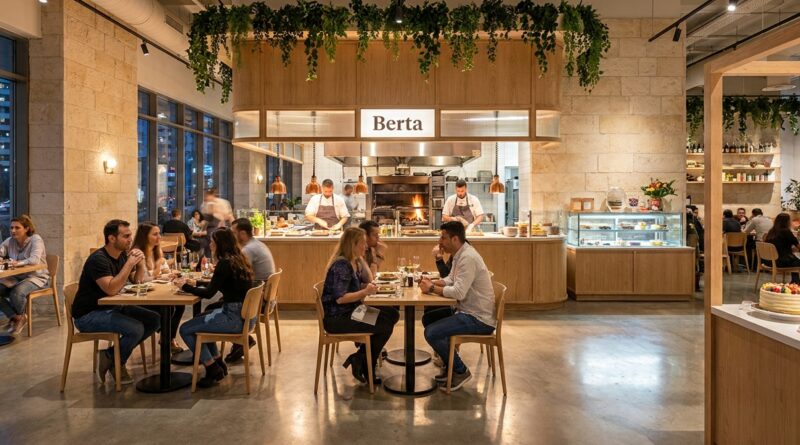
Israel’s New Mall Food Floors That Eat Like Chef Streets: Inside Ramat Aviv’s 100-Million-Shekel Culinary Upgrade
You know the feeling. Someone says, “Let’s just eat at the mall,” and suddenly you are bracing for dry schnitzel, tired pizza, and a group argument that lasts longer than lunch. That is why the new culinary floor at Ofer Ramat Aviv Mall matters. It is not just another polished food court with nicer lighting. The project reportedly cost 100 million shekels, and the goal is much bigger. Turn a shopping stop into a place where people actually want to sit down and eat. The headline draw is chef Yossi Shitrit’s Berta, joined by new concepts and a dessert pop-up, all aimed at people who want real food without needing a full city-center restaurant plan. More important, this is not a one-off stunt. Across Israel, malls are starting to act less like backup meal zones and more like compact dining neighborhoods. Some of these new spaces are the real thing. Some are hype with better branding. Here is how to tell the difference.
⚡ In a Hurry? Key Takeaways
- The new culinary floor Ramat Aviv mall restaurants push is real. This looks much closer to a restaurant hub than a standard food court.
- If you are choosing where to eat, look for chef-led kitchens, made-to-order menus, proper seating, and concepts that can survive outside a mall.
- Value check. A fancy design does not guarantee a great meal, so go for places with a focused menu and active kitchen, not just the biggest name.
Why this matters to ordinary diners
Most people do not care about retail strategy. They care about one simple thing. Can everyone eat well in one place without a fight.
That is the problem these new food floors are trying to solve. Parents want something easy. Friends want options. Visitors want a dependable meal near where they already are. And a lot of shoppers are done pretending that average mall food is “good enough.”
Ramat Aviv’s new culinary floor is a response to that frustration. Instead of treating food as a side business tucked next to escalators, the mall is betting that serious dining can be a destination on its own.
What opened at Ofer Ramat Aviv Mall
The big headline is the brand-new 100-million-shekel culinary floor at Tel Aviv’s Ofer Ramat Aviv Mall. The star attraction is Berta by chef Yossi Shitrit, a name that immediately signals this is trying to play in restaurant territory, not food-court territory.
There is also a dessert pop-up and a wider mix of concepts built to feel curated, not random. That distinction matters. A regular food court is usually about coverage. Burgers, pizza, Asian-ish bowls, coffee, done. A culinary floor is trying to create a point of view.
What makes Berta such a big signal
When a chef with a strong identity opens in a mall, it tells you the mall is chasing more than foot traffic. It wants credibility. Chef-led restaurants bring expectations with them. Better ingredients. Sharper menus. Real kitchen standards. A reason to come even if you are not buying shoes afterward.
That does not automatically make every dish amazing, of course. But it raises the floor. And in mall dining, a higher floor is half the battle.
How to tell if a mall food floor is the real deal
This is where a lot of people get burned. The design looks expensive. The PR sounds fancy. Then the food arrives and it is still basically mall food in a prettier bowl.
Here is the quick test.
1. Check whether the chefs have actual skin in the game
If the concept is tied to a known chef or experienced operator, that is a good sign. It usually means the menu was built with care, not by committee. In Ramat Aviv’s case, bringing in Yossi Shitrit gives the whole project more weight.
2. Look for menus that are focused, not frantic
A place serving forty things is often trying to please everybody and impress nobody. Better mall restaurants usually keep the menu tight. They know what they do well, and they do it fast.
3. Watch the kitchen, not the branding
If you can see fresh plating, active line cooks, and dishes going out made to order, that is encouraging. If everything is sitting under warm lights waiting for pickup, you are in old-school food-court territory.
4. Notice the seating and flow
A true dining floor is designed for staying, not just refueling. Comfortable seating, better acoustics, clear table service or organized pickup, and room for groups all matter. The whole point is to make eating feel like the event, not the break between errands.
Why malls across Israel are moving this way
This shift is not hard to understand. Shopping habits changed. People buy more online. Malls need reasons for you to show up in person. Food is one of the strongest reasons left.
But not just any food. People have gotten pickier, and frankly, smarter. They know the difference between a real restaurant and a concept built mainly for Instagram. So malls are trying to create spaces that feel like mini urban dining districts.
For locals, that can be genuinely useful. You get parking, climate control, easier logistics, and a bunch of options in one building. For chefs, it offers a different kind of audience. Less destination-only dining, more steady traffic from people who are already there.
Is this good for diners, or just good for mall owners?
Both, if it is done properly.
The upside for diners is obvious. More variety. Better quality. A realistic chance that your vegetarian friend, your meat-loving cousin, and your kid who only wants dessert can all leave happy.
The upside for mall owners is also clear. Good restaurants keep people on site longer. They turn a mall from a shopping chore into a social stop.
The catch is this. If the food is not actually good, people notice fast. Nobody returns for a second meal because the tiles were nice.
What to expect from the new culinary floor Ramat Aviv mall restaurants scene
If the floor lives up to the ambition, expect something between a polished urban food hall and a compact restaurant strip. Not every concept will be equal. That is normal. In any mixed dining space, a couple of places become the stars, a few are reliable backups, and one or two probably coast on location.
What makes Ramat Aviv worth watching is the level of investment and the chef presence. Those are not small signals. They suggest the mall understands that people want better than convenience food with a premium price tag.
Who will like it most
It is especially useful for:
Families who need choices without splitting up.
North Tel Aviv locals who want an easy meal without committing to a full night out.
Visitors who want something dependable in a familiar setting.
Friends meeting before or after errands who do not want to settle for “good enough.”
How to avoid the hype traps
If you are trying a new mall dining floor, do not just follow the biggest sign or longest launch-week buzz.
Instead, do this:
Go slightly off-peak
The best test is a calmer service window. If a place is still solid when the room is half full, that tells you more than launch-day chaos does.
Order the signature item first
Chef concepts usually have one or two dishes that define the kitchen. Start there. If those disappoint, do not assume the rest of the menu will rescue the meal.
Be careful with the “something for everyone” spots
These are often useful in a group. They are not always the most memorable. If you are there for a real meal, pick the concept with a clear identity.
Use dessert as a clue
A strong dessert pop-up or pastry counter can be more than a sweet extra. It often shows the operators are thinking about the whole visit, not just lunch turnover.
So, is Ramat Aviv a food destination now?
It is fair to say it is trying very hard to become one, and the new culinary floor gives it a much stronger case than before.
That does not mean every mall in Israel has suddenly become a must-eat destination. Some are still just polished food courts wearing restaurant clothes. But Ramat Aviv looks like part of a real shift, not a cosmetic one. The money is significant. The chef involvement is serious. The timing makes sense.
For diners, that is good news. It means “let’s eat at the mall” no longer has to sound like surrender.
At a Glance: Comparison
| Feature/Aspect | Details | Verdict |
|---|---|---|
| Chef credibility | Berta by Yossi Shitrit gives the floor real culinary weight, not just branding polish. | Strong sign this is more than a standard food court. |
| Dining experience | Built as a dedicated culinary floor with multiple concepts, seating, and destination appeal. | Promising for groups, families, and casual meetups. |
| Hype versus reality | High investment and big names help, but diners should still judge by menu focus, execution, and consistency. | Likely one of the better new mall dining bets, but not every stall will be equal. |
Conclusion
The simple version is this. A brand-new 100-million-shekel culinary floor just opened at Tel Aviv’s Ofer Ramat Aviv Mall, complete with chef Yossi Shitrit’s Berta and a dessert pop-up, and that is a pretty clear sign that mall dining in Israel is changing fast. Some of these new spaces are becoming real eating neighborhoods, not just shopping add-ons with nicer signs. If you know what to look for, chef involvement, focused menus, real kitchen work, and a space designed for staying, you can separate the genuinely good food floors from the pure hype. That means better meals in places you were already going anyway, less group debate, and more support for chefs and teams trying to build something serious inside a very practical setting. For once, “meet me at the mall” might actually be a good dinner plan.