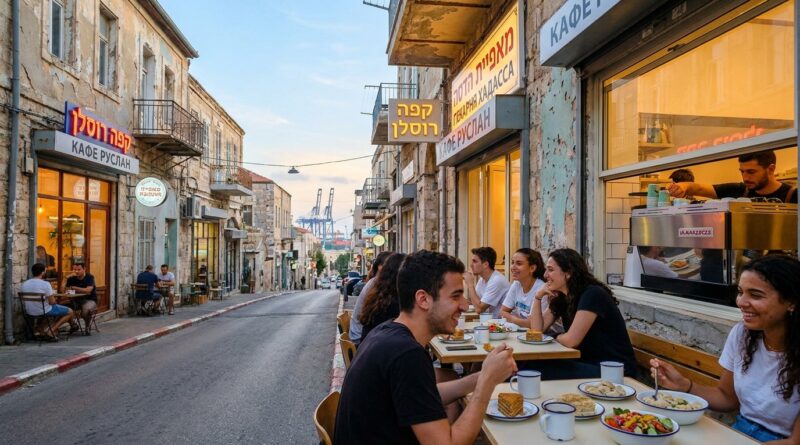
Haifa’s New Russian-Israeli Cafés: The Neighborhood Openings Quietly Turning the Port City into Israel’s Next Coffee Capital
If you are tired of every “best food in Israel” list sending you back to the same Tel Aviv brunch spots and Jerusalem institutions, you are not imagining it. Haifa is changing fast, and a lot of that change is happening quietly. Small Russian-Israeli cafés are opening in neighborhoods, not on giant lifestyle sites. Some are in Hadar, some in the Lower City, some tucked onto side streets where you would walk right past if nobody told you. That is exactly why they matter. These are not polished chains or hype machines. They are intimate places built by young Russian newcomers who want to feed people, meet neighbors, and create a little pocket of home. If you want affordable pastries, serious coffee, late-morning syrniki, piroshki, honey cake, soups, and warm service without the Tel Aviv price tag, Haifa is becoming one of the most interesting cities in Israel to eat in right now.
⚡ In a Hurry? Key Takeaways
- Haifa’s newest café story in 2026 is not about flashy openings. It is about small Russian-run neighborhood spots offering comfort food, strong coffee, and lower prices.
- Your best move is to explore by area, especially Hadar and the Lower City, and go early in the day when pastry shelves are full and owners have time to chat.
- These places often have limited seating, irregular social media updates, and small staffs, so check hours before going and bring patience. The payoff is worth it.
Why people are suddenly talking about new Russian cafes Haifa 2026
The short answer is simple. A new food scene is forming in real time.
Haifa has always had range. Arab bakeries, old-school hummus spots, port-city taverns, student hangouts, and no-nonsense neighborhood eateries have long given the city more depth than outsiders realize. But the latest shift feels different. It is smaller, more personal, and less advertised.
Young Russian immigrants and Russian-speaking Israelis are opening café-sized places that mix coffee culture with comfort food. Think cottage-cheese pancakes next to flat whites. Think puff pastry, napoleon cake, medovik, beet salads, handmade dumplings, and a soup pot quietly bubbling in the background. Some spots lean very Eastern European. Others blend Russian, Israeli, Georgian, or post-Soviet home cooking with modern espresso-bar style.
What makes this wave important is not just the menu. It is the mood. These cafés are often serving two jobs at once. They are businesses, yes. But they are also informal community centers for new arrivals, remote workers, students, and locals who want something that feels real rather than branded.
What these cafés actually feel like
Not trend-chasing, more home-building
Most of these openings are not trying to “go viral.” You will not always find slick branding, polished Hebrew marketing, or a long list of influencer posts. Sometimes you get a handwritten menu. Sometimes the owner takes your order, clears your plate, and then brings out cake because “you should try this too.”
That low-key style is part of the appeal. The food often tastes like somebody cared about it before they cared about scaling it.
The menu is usually broader than “Russian café” suggests
If the phrase “Russian café” makes you picture only heavy food and old-fashioned interiors, update that image. Many of the new spots are brighter, younger, and more mixed in style. Yes, there may be syrniki, blini, piroshki, and layered cakes. But there may also be good filter coffee, shakshuka with a twist, fresh salad, vegan soup, or a lunch special built around whatever the kitchen made that morning.
That mix is exactly why Haifa is worth watching. The city gives these businesses room to be specific without having to flatten themselves into a tourist-friendly cliché.
Where to look first in Haifa
Hadar
Hadar is one of the best places to start because it already has the right bones for this kind of scene. It is dense, lived-in, affordable by big-city standards, and full of people actually using the streets. That matters. Small cafés need repeat neighborhood traffic more than destination hype.
In Hadar, expect places that feel practical and warm. The kind of spot where someone pops in for coffee and leaves with a box of pastries for later. If you like discovering places before they become impossible to get into, this is your neighborhood.
Lower City
The Lower City has the visual appeal people expect from a “food neighborhood,” but the newer Russian-Israeli cafés here often stay just outside the loudest nightlife flow. That is good news for daytime visitors. You can build an easy walking route with coffee, a pastry stop, maybe a light lunch, and a second café if you are in research mode.
Some of the most interesting openings here appeal to both locals and newcomers. That usually means better coffee standards, longer working hours, and menus designed for people who want to linger.
Side streets near transit and student zones
Do not over-focus on only the prettiest blocks. A lot of the best finds are near bus routes, modest shopping streets, or residential corners where rent is still survivable. If a place looks too ordinary to be on a trend list, that is often a good sign.
What to order if it is your first visit
If you want a smart first order, keep it simple and judge the place by a few basics.
Start with coffee and one pastry
Order an espresso drink and one house pastry. If the coffee is balanced and the pastry tastes fresh rather than decorative, you are probably in good hands.
Look for syrniki or blini
Syrniki, soft farmer-cheese pancakes, are one of the best tells. Good ones should be lightly crisp outside, tender inside, and not too sweet. Blini can also tell you a lot. Are they made to order? Are the fillings generous? Is there balance?
Ask what is homemade today
This is the best question in the room. In small cafés, the answer often leads you to the dish the owner most wants people to notice. It could be borscht, pelmeni, buckwheat with mushrooms, medovik, or something not listed clearly on the menu.
Do not skip cake
Many of these businesses are strongest in baked goods and layered desserts. Honey cake, poppy seed pastries, curd-filled buns, and napoleon-style slices are often where the real personality shows up.
How to find these places before everyone else does
This is where many readers get stuck. You search, and all roads still lead back to the same old recommendations.
For new Russian cafes Haifa 2026, the smartest approach is not to rely on one platform.
Use map apps, but read between the lines
Google Maps can help, but very new spots may have thin profiles, old hours, or no English at all. Look at photos uploaded by customers. Check whether reviews mention Russian-speaking staff, house baking, or recent opening dates.
Search in more than one language
This makes a huge difference. Try English, Hebrew, and Russian terms if you can copy and paste them. Even simple searches for “кафе Хайфа” or Russian pastry terms can surface places that English searches miss.
Check neighborhood groups and Telegram channels
Word-of-mouth is still doing most of the heavy lifting here. Haifa neighborhood Facebook groups, local Instagram accounts, and Russian-speaking community channels often mention openings weeks or months before mainstream media notices.
Walk with a plan, but leave room for luck
Pick one neighborhood, mark three possible stops, and accept that the best place may be the one with a handwritten sign and two occupied tables. Haifa rewards curiosity more than checklist tourism.
Why this matters beyond coffee
It would be easy to treat this as just another food trend. It is more than that.
These cafés are part of how a city absorbs new people. Food businesses often become the first visible sign that a community is settling in, taking risks, and shaping the streets around them. In Haifa, that process is happening in a way that feels unusually human-scale.
That is also why your visit matters. A lot of these owners do not have marketing budgets, Hebrew PR, or polished launch campaigns. They have rent, ingredients, and hope. Turning up early, paying for coffee, bringing a friend, and posting a helpful review can make a real difference.
Practical tips before you go
Check opening hours the same day
New small businesses change hours often, especially in the first months. Do not assume a listing is current.
Go earlier rather than later
If pastries or savory bakes are made in small batches, the best selection is usually in the morning or early afternoon.
Be flexible with service style
Some spots are highly polished. Others are still figuring things out. If the food is good and the room feels welcoming, give them a little grace.
Ask before photographing everything
Many owners are happy for the attention. Some customers are there for quiet community time. A quick polite check goes a long way.
Bring cash as backup
Cards are common, but in small new places it is still smart to have another payment option.
What Haifa has that other cities do not right now
Tel Aviv is louder. Jerusalem is more covered. Haifa is freer, at least at the moment, to develop a scene before national media turns it into a formula.
That is the sweet spot for readers who actually like discovering food rather than consuming hype. Prices are often gentler. Expectations are lower. Surprises are better. And because the scene is still forming, you are not only observing it. You are participating in it.
At a Glance: Comparison
| Feature/Aspect | Details | Verdict |
|---|---|---|
| Atmosphere | Small rooms, personal service, neighborhood regulars, less polished but often more genuine than big-city café chains. | Best for readers who want warmth and character, not a staged brunch backdrop. |
| Food and drink | Strong coffee, Eastern European comfort food, pastries, cakes, and rotating homemade dishes at approachable prices. | High value, especially if you order the house specialties instead of playing it safe. |
| Ease of finding them | Still tricky. Hours may be unstable, online presence may be thin, and many of the best spots spread by word of mouth first. | Worth the extra effort. Research a little, then explore on foot. |
Conclusion
Haifa is one of the most interesting food stories in Israel right now, precisely because it is still easy to miss. Outside the Tel Aviv and Jerusalem bubble, a wave of young Russian immigrants is opening intimate cafés and snack bars across the city, from Hadar to the Lower City, and even locals are struggling to keep track. That is good news for curious readers. You can still arrive before everything gets packaged into another stale “top 10” list. Go now, and you will find affordable, deeply homey food, meet owners building community one table at a time, and get a clearer sense of how Israeli food culture keeps changing in real neighborhoods, not just headline cities. If you want a practical hit list, start with one Haifa neighborhood, follow the smell of fresh baking, ask what is homemade today, and let the city surprise you.