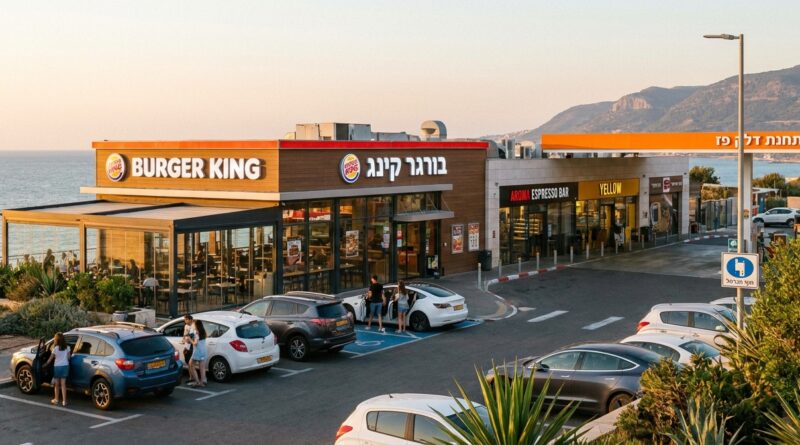
Israel’s New Fuel-Station Burger Boom: Inside the Roadside Restaurants Quietly Rewiring Where We Eat
You know the feeling. You pull off the road hungry, everyone in the car is cranky, and the choice is the same old depressing fuel-station lineup. A dry bureka, a schnitzel that has been sitting too long, or a coffee that tastes like hot cardboard. That is why Israel’s quiet burger-at-the-pump shift matters more than it sounds. While the restaurant buzz usually stays fixed on Tel Aviv and Jerusalem, the real change is happening where regular people actually stop. Burger King’s new push in Israel is not just about opening branches. It is about planting them at Delek fuel stations and nearby commercial hubs, starting with a new Haifa site and more planned for the coast road, the Krayot, and the Ono Valley. If you spend any time driving north, crossing the center, or heading out for a beach weekend, these stops could turn a tired refuel break into a proper meal without the big-city price tag or the usual roadside regret.
⚡ In a Hurry? Key Takeaways
- Israel’s new Burger King Israel fuel station restaurants are designed to make road stops better, with the first branch already open in Haifa and more planned in high-traffic driving corridors.
- If you drive regularly between the North and Center, start keeping an eye on Delek stations and adjacent retail centers. They may become your best quick-meal option.
- For families and commuters, this is mostly a value and convenience story. You get a more predictable meal, cleaner stop, and less time wasted searching while driving.
Why this matters more than it sounds
Most people do not choose where to eat on a road trip based on food fashion. They choose based on hunger, kids in the back seat, traffic, and how badly they need a clean bathroom.
That is what makes this shift interesting. Burger King’s relaunch in Israel is being built around places people already use. Fuel stations. Roadside retail. Everyday commercial centers. Not glamorous. Very useful.
According to reporting in the Jerusalem Post, the first new location has already opened in Haifa, and three more are planned along the coast road, in the Krayot, and in the Ono Valley. Each branch is expected to cost around NIS 2 million. That tells you this is not a tiny test. It looks more like a real bet on how Israelis actually move around the country.
The real pain point: roadside food in Israel often feels stuck in the past
If you are driving between Haifa and the Krayot, or crossing the Ono Valley on a hot Friday, the problem is not finding food. The problem is finding food you actually want to eat.
Too many stops still feel like they were designed for pure necessity. Harsh lighting. Limited menus. Food that looks tired before you even order it. You eat because you have to, not because it is good.
That is where the new Burger King Israel fuel station restaurants come in. They offer something very simple but very important. Predictability.
Predictability is underrated
For food critics, predictable can sound boring. For drivers, predictable is a gift.
You know roughly what you are getting. You know the menu. You know the timing. You know the kids will probably agree on something. You are less likely to waste twenty minutes pulling into one spot, rejecting it, and then searching for another while everybody gets moodier.
What Burger King is really selling here
It is not just burgers. It is relief.
The new branches seem aimed at a very specific Israeli routine. Long commutes. Weekend family drives. Beach runs. Between-city errands. The kind of travel where you want food that is quick, familiar, and better than a stale pastry under a warming lamp.
There is also a bigger retail idea here. Fuel stations are no longer just about petrol and a sad convenience shelf. More of them are trying to become mini service hubs. Food, coffee, maybe a decent place to sit, maybe easier parking, maybe cleaner facilities. That changes the psychology of the stop. It feels less like surrender and more like a planned break.
Who benefits most from these new roadside branches
Not everyone cares about this equally. But for some drivers, it could make a real difference.
Commuters
If you regularly move between the North and Center, a reliable meal option near a fuel station can save both time and patience. You do not need to detour into a city center. You do not need to gamble on a random kiosk.
Families
Parents know that “we’ll just find something on the way” often ends badly. Familiar chains are not exciting, but they reduce friction. That matters when children are tired, sandy, or hungry right now.
Weekend travelers
Beach traffic, nature trips, and summer road travel all create the same need. Fast decisions. Easy parking. Food that feels safe enough to trust.
What to watch for before assuming every station is now a dining destination
This is still an early-stage rollout. One open branch does not mean every Delek stop suddenly became a full-service meal break.
So it helps to be realistic.
Location still matters
Some stations will remain simple grab-and-go points. Others, especially those attached to new commercial centers or larger roadside developments, are more likely to become proper food stops.
Timing matters too
A branch can be excellent at lunch and overloaded on a Thursday evening before a holiday weekend. If you are planning a longer drive, it is worth checking location status and opening hours before you go.
Not every upgrade is about gourmet food
This is not about replacing Tel Aviv’s chef scene. It is about making the average stop less miserable. That is a lower bar, but honestly, it is the one most drivers care about.
How to use this trend to make your drives easier
You do not need to become a roadside dining strategist. Just make a few small changes.
Pick one or two dependable stop points in advance
If you often drive the same route, learn which stations or commercial centers are getting stronger food options. Once you know your “safe stop,” the whole drive gets easier.
Use chains for certainty, not romance
There is a time to hunt for a hidden gem. A packed summer road trip is usually not that time. Familiar chains work best when your main goal is speed, cleanliness, and avoiding disappointment.
Avoid distracted searching while driving
This is the quiet safety benefit of better-known roadside food hubs. If you already know there is a decent stop coming up, you are less likely to fiddle with maps, reviews, and group chats while on the road.
Is this a sign of a bigger change in Israeli eating habits?
Possibly, yes.
For years, food coverage in Israel has leaned heavily toward destination dining. New chef. New tasting menu. New hotspot. That is fun, but it misses how most people actually eat when they are away from home.
Roadside food is everyday infrastructure. It shapes commutes, family drives, and workdays. If fuel stations and nearby retail centers become better places to eat, that affects far more people than a trendy opening in a city center.
It also reflects a simple truth. Convenience no longer has to mean low standards. People are willing to pay for fast food if the experience feels reliable, clean, and a little more thought-through.
At a Glance: Comparison
| Feature/Aspect | Details | Verdict |
|---|---|---|
| Convenience | Placed at Delek fuel stations and nearby commercial centers on common driving routes. | Big win for commuters and family road trips. |
| Food quality expectations | More consistent and predictable than many old-school roadside snack bars, even if not gourmet. | Solid upgrade over the usual station gamble. |
| Value for drivers | Saves time, reduces detours, and cuts the need to search for food mid-drive. | Worth watching if you regularly travel North to Center. |
Conclusion
This matters because it is not really a burger story. It is a daily-life story. Burger King’s relaunch strategy in Israel is built around new branches at Delek fuel stations and fresh commercial centers, with the first already open in Haifa and three more planned on the coast road, in the Krayot, and in the Ono Valley at roughly NIS 2 million each, according to the Jerusalem Post. For Israelis dealing with long commutes, North to Center drives, and summer family trips, that could mean fewer grim food compromises and more dependable stops along the way. No, it will not replace destination dining. But it might quietly fix one of the most annoying parts of being on the road. And honestly, that is the kind of upgrade people feel right away.