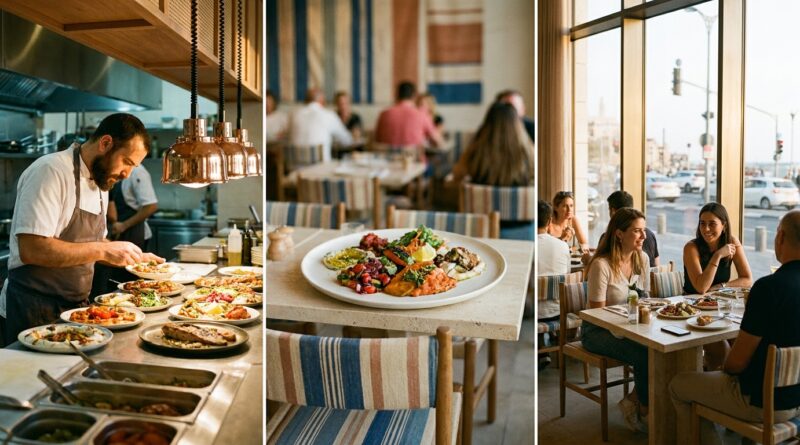
Israel’s New Hotel-Restaurant Wave: The Tel Aviv and Jerusalem Dining Rooms Locals Are Checking Into Just For Dinner
You’ve probably had this feeling lately. Every “new” restaurant starts to blur into the next one. Same small plates. Same chef’s counter. Same soundtrack trying very hard to tell you the place matters. If you are trying to find something that actually feels fresh in Israel right now, that gets tiring fast. It is even more frustrating when the most interesting openings are not where people usually look.
That is why the new hotel restaurants in Tel Aviv and Jerusalem are worth paying attention to. Some of the smartest dining rooms to open or quietly reboot in the last few weeks are tucked inside boutique hotels, and many locals still do not realize you can simply book a table and walk in. For visitors, this setup solves a few problems at once. You get a more comfortable entry point, usually tighter security, and a dining room that often feels calmer than the city outside. For locals, it is becoming the move for birthdays, date nights and those evenings when you want something new without gambling on pure hype.
⚡ In a Hurry? Key Takeaways
- The most interesting new hotel restaurants in Tel Aviv and Jerusalem are giving diners something many standalone spots are not, a fresh setting, stronger sense of comfort, and menus that still feel ambitious.
- Before booking another buzzy street-level place, check boutique hotel dining rooms directly. Many welcome outside guests and are easier to get into.
- For both tourists and locals, hotel restaurants can offer a useful mix of safety, service and a more relaxed night out without losing the feel of real local food culture.
Why hotel dining rooms suddenly feel more interesting
For years, hotel restaurants in Israel had a branding problem. People assumed they were built for tourists, overpriced, or too polished to be fun. That is changing.
The new wave is different. In both Tel Aviv and Jerusalem, boutique hotels are using their restaurants as actual destinations, not side facilities for overnight guests. That means sharper kitchens, stronger wine lists, better design and a lot more confidence.
There is also a practical reason this is happening now. Diners want comfort. They want a place that feels looked after. They want a good room, sensible service and less chaos at the door. A hotel can offer all of that without making dinner feel stiff.
What makes these places feel new, not just expensive
They have a built-in atmosphere
A good hotel restaurant begins with one major advantage. The room already matters. There is a lobby, a courtyard, a rooftop, a garden terrace, or a beautifully restored old building doing half the work before the first plate lands.
That does not sound like a small thing. It matters because so many restaurant openings now lean heavily on menu language and social media buzz. Hotel dining rooms can skip some of that performance. They feel complete from day one.
The kitchens have more freedom
Many boutique hotel restaurants are not trying to turn tables at breakneck speed. That can lead to more thoughtful cooking. Chefs often have room to play with seasonal menus, wine pairing, breakfast-for-dinner ideas, Jerusalem pantry touches, or seafood and produce-forward plates that do not fit a louder mainstream concept.
The result is not always formal. In fact, the best of these rooms often feel intimate and easy. That is part of the appeal.
They solve the “big night out” problem
Sometimes you do not want a tiny counter seat and a 9:45 reservation. You want a proper evening. Somewhere to sit back. Somewhere your out-of-town friends will enjoy. Somewhere your parents will not hate. Hotel restaurants are quietly becoming the answer.
Tel Aviv: what to look for right now
In Tel Aviv, the appeal is usually one of two things. Either the hotel restaurant gives you a calmer, more tucked-away version of the city, or it turns up the glamour in a way that still feels current.
Look for openings and kitchen relaunches in smaller design hotels, especially around Lev Ha’Ir, Rothschild, the beachfront edges, and Jaffa. These are the places most likely to blur the line between destination restaurant and hotel amenity.
The smart move is to ignore whether the hotel itself sounds fancy and focus on the kitchen. Ask simple questions. Is there a new chef? Was the menu redone recently? Are locals actually booking it for dinner, not just brunch? Does the room have a point of view?
If the answer is yes, it is probably worth your time.
What Tel Aviv hotel restaurants tend to do well
They are often strongest at mood. Think low lighting, smart cocktail programs, seafood, vegetable-led plates, and a room where you can hear the person across from you. The best ones feel like an escape from Tel Aviv without feeling disconnected from it.
Jerusalem: why the hotel setting makes even more sense
Jerusalem has always had a different dining rhythm. Nights can feel slower, more deliberate and more place-driven. That makes hotel restaurants especially interesting there.
In the capital, a boutique hotel dining room can use architecture, stone courtyards, old-city views and local produce in a way that feels natural rather than staged. When it works, you get a meal that feels tied to Jerusalem itself, not imported from a global restaurant template.
There is also a comfort factor. For visitors trying to balance exploration with a sense of ease, hotel restaurants can be a very sensible choice. The setting is often easier to navigate, and the experience is more predictable in a good way.
What Jerusalem hotel restaurants tend to do well
They often shine with regional cooking, strong breakfasts that turn into worthy dinner menus, and dining rooms where the surroundings are a real part of the meal. A restored villa, a stone terrace or a hidden courtyard can make dinner feel memorable before the first course arrives.
How to spot a hotel restaurant that is actually worth booking
Not every hotel dining room is part of this wave. Some are still exactly what people fear. Fine-looking, forgettable and mostly built for guests who are too tired to go elsewhere.
Here is the quick filter.
Check whether locals are mentioned
If a place is only described as convenient for hotel guests, that tells you something. If local diners are filling the room, that tells you more.
Look for a chef story, but not too much of one
You want evidence of a serious kitchen. You do not need a manifesto. A recent chef appointment, a menu reset or a seasonal approach is usually enough.
Scan photos of the room, not just the plates
When a restaurant is hidden inside a hotel, the atmosphere is part of the value. If the room looks thoughtful, comfortable and alive, that is a very good sign.
Call and ask if outside diners are welcome
This sounds obvious, but many people still assume hotel restaurants are private. Most are not. A quick call can also tell you whether the staff treats the dining room like a real restaurant or an afterthought.
Why this matters for travelers right now
Visitors to Israel are trying to solve a tricky equation. They want somewhere that feels local and exciting, but they also want ease, comfort and a setting that feels a little more secure. Hotel restaurants answer that better than many trend-driven spots do.
You still get a sense of place. You can still eat creatively. But you are doing it in an environment that is usually more controlled, easier to find and less stressful to enter.
For plenty of travelers, that is not a compromise. It is the sweet spot.
Why locals are making the switch for certain nights
Locals have not stopped loving neighborhood places. They are just getting more selective about where they spend serious money.
When the goal is a proper night out, intimate hotel restaurants are increasingly attractive. They feel new without being chaotic. They can be romantic without being cheesy. And they often offer the kind of polished service that is hard to find at overhyped standalone openings.
If you are also rethinking where to eat earlier in the day, Israel’s New Chef-Led Lunch Spots: The Under‑The‑Radar Daytime Restaurants Local Food People Are Quietly Switching To is a useful companion read. The same idea applies. Some of the best meals right now are happening just outside the usual hype cycle.
Best strategy for booking the new hotel restaurants in Tel Aviv and Jerusalem
Start with the hotel’s own site or Instagram, not just a reservation platform. New openings and quiet relaunches often show up there first.
Then check three things. First, whether dinner is open to non-guests. Second, whether there is a chef or concept update in the last month or two. Third, whether the room is built for lingering, not just feeding people between check-in and bedtime.
If all three line up, you have probably found one of the more interesting tables in town.
At a Glance: Comparison
| Feature/Aspect | Details | Verdict |
|---|---|---|
| Atmosphere | Boutique hotel dining rooms often come with stronger design, quieter pacing and a more complete sense of occasion than many street-level openings. | A real advantage if you want dinner to feel special, not performative. |
| Food Style | Many new hotel restaurants are using chef-led menus, seasonal ingredients and more flexible concepts instead of generic “hotel food.” | Worth watching closely, especially for diners tired of copy-paste tasting menus. |
| Comfort and Security | Hotels often offer smoother entry, more attentive service and a setting that feels calmer for both visitors and locals. | One of the biggest reasons this trend matters right now. |
Conclusion
If you have been wondering what actually feels new in Israel’s restaurant scene, this is a good place to start. The new hotel restaurants in Tel Aviv and Jerusalem are not just backup options for travelers. They are becoming some of the most interesting tables in both cities. That matters right now. Visitors want safety, comfort and something that still feels like real Israel. Locals want big nights out that feel intimate, polished and a little more surprising. By following the freshest hotel openings and revamped kitchens, IsraRest helps cut through the usual review noise and point you toward places that still feel like discoveries, even for people who think they already know where everyone is eating.