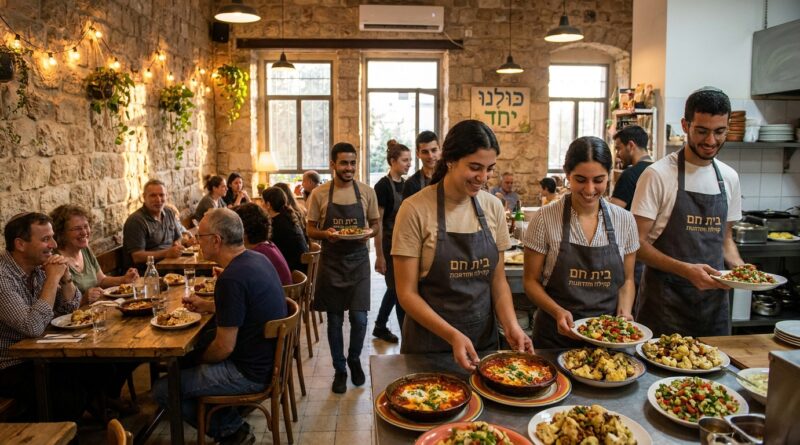
Israel’s New Social-Impact Restaurants: The Feel‑Good Openings Where Your Meal Actually Changes Lives
If you are tired of hearing about another “hot” opening in Tel Aviv that looks great on Instagram but feels exactly like the last five, you are not alone. Plenty of diners in Israel still want a fun night out, but they also want it to mean something. That is where the new social impact restaurants in Israel come in. These are places where the food has to stand on its own, but the bigger story matters too. One meal might support youth employment, keep a community kitchen alive, or help train people who usually get shut out of the hospitality world. In a country where prices keep rising and restaurants are under real pressure, that changes the whole calculation. Dinner stops being just another expense. It becomes a small but practical way to back something good, without giving up on flavor, atmosphere, or a proper dessert at the end.
⚡ In a Hurry? Key Takeaways
- New social impact restaurants in Israel let you eat well while supporting real local projects, not just good marketing.
- Before you book, check what the place actually funds or who it employs. The best spots are clear about their mission.
- You do not need to overpay or lower your standards. The strongest social-impact openings treat great food and real impact as equally important.
Why these openings feel different
The usual restaurant buzz can get exhausting. New tile work. New cocktail list. Same inflated bill. That is part of why social-impact dining is getting more attention right now.
People want more than novelty. They want a reason to choose one place over another, especially when a night out is expensive. If a restaurant can offer good food and help fund a community kitchen, train young workers, or create jobs for people who need a real start, that choice gets easier.
This is not about charity replacing quality. Quite the opposite. The new social impact restaurants in Israel only work if the meal is worth repeating. Nobody comes back for a noble cause and a bad main course.
What counts as a social-impact restaurant?
The label gets thrown around loosely, so it helps to be clear. A real social-impact restaurant or café usually does at least one of these things:
- Employs and trains at-risk youth or people facing barriers to work
- Runs a pay-it-forward or meal-support model
- Helps fund a nonprofit or community project
- Rescues and reimagines a local kitchen or food space that serves the public
- Builds its supply chain around underserved communities or local recovery efforts
The common thread is simple. The impact is built into the business, not tacked on as a once-a-year campaign.
What to look for before you book
1. A mission you can explain in one sentence
If the restaurant cannot clearly say how your meal helps, be a little cautious. The best places make it easy to understand. For example, “we train young adults for hospitality jobs,” or “a share of revenue keeps this community kitchen operating.” Clear beats vague every time.
2. Food that can stand on its own
Good intentions are not a substitute for a good meal. Look for menus that feel thought through, not symbolic. A strong social-impact place should still care about seasoning, service, and whether you would recommend it to a friend who knows nothing about the mission.
3. Honest pricing
Israelis are price-sensitive for good reason. If a place is doing good work but charging luxury prices for a mediocre experience, people will drift away. The best values-driven restaurants understand that impact is part of the experience, not an excuse for bad value.
4. Signs of staying power
One thing diners often miss is how fragile these businesses can be. That is why visibility matters. A full dining room does more than create buzz. It can keep training programs going and help a mission-driven business survive a rough season.
Where to watch this trend grow
Tel Aviv still gets most of the headlines, but this story is bigger than Tel Aviv. Jerusalem is seeing more places where community and hospitality are tightly linked. Beersheva is worth watching too, especially where local projects, education, and neighborhood renewal meet food.
That wider map matters. A social-impact café in Jerusalem may feel very different from a community-driven opening in the south. One might focus on youth employment. Another might preserve a kitchen that feeds locals during hard times and now operates as a stronger public-facing restaurant or café.
If you want a broader sense of how this movement is taking shape, Israel’s New Wave of Social-Impact Restaurants: Where Dining Out Actually Feeds Someone Else Too is a useful place to start. It captures the strange little tension many diners feel. You want a great dinner, and you also want your money to land somewhere that matters.
How to tell the real thing from feel-good branding
Not every restaurant with a heartwarming backstory is truly impact-driven. A few quick checks can save you from the polished-but-thin version.
Ask these questions
- Who benefits directly from the business?
- Is there a training program, hiring commitment, or revenue link to a cause?
- Do staff and menu materials explain the mission clearly?
- Does the concept sound sustainable, not just emotional?
If the answers are fuzzy, the impact may be more branding than substance. If they are specific, that is a good sign.
Why this matters more now
Israel’s hospitality industry is dealing with high costs, uneven demand, and a public that thinks twice before going out. At the same time, plenty of community programs are under strain. Social-impact restaurants sit right in the middle of that pressure.
They are not a magic fix. But they do offer something unusually practical. You are already going out for coffee, lunch, or dinner. Choosing a place with a real mission turns the same spending into a small act of support that can actually be tracked on the ground.
That is what makes this trend more than just a trend. It connects daily life to local resilience in a way people can feel immediately.
Best way to use this guide
Think of it less like a ranking and more like a smarter shortlist. When you are picking a place for a date, family meal, work lunch, or weekend coffee stop, check whether one of the new social impact restaurants in Israel fits the plan.
If it does, book it. Bring friends. Post about it if you genuinely liked it. These businesses do not just need compliments. They need seats filled, repeat customers, and word of mouth.
At a Glance: Comparison
| Feature/Aspect | Details | Verdict |
|---|---|---|
| Food quality | The strongest openings treat the menu seriously, not as a side note to the mission. | Non-negotiable. Impact only works long term if people want to come back. |
| Social mission | May include youth training, community kitchens, employment access, or direct meal support. | Most valuable when the mission is specific and easy to verify. |
| Value for diners | You pay for a real dining experience while also backing a useful local project. | A smart choice for diners who want their money to do a bit more. |
Conclusion
Going out to eat in Israel has become a more loaded decision than it used to be. Prices are up, openings blur together, and plenty of people want a night out that feels good in more than one way. That is why these new social impact restaurants in Israel matter. From Jerusalem to Beersheva, they give locals and travelers a live, practical way to find places where the food is strong and the mission is real. One booking might support youth employment, help protect a reimagined community kitchen, or keep a fragile values-driven business visible at exactly the right moment. This is not about chasing the next shiny concept. It is about filling seats in places that are trying to do something useful as well as delicious. If you are going to spend on dinner anyway, it is nice to know that the meal can satisfy your appetite and do a little good at the same time.