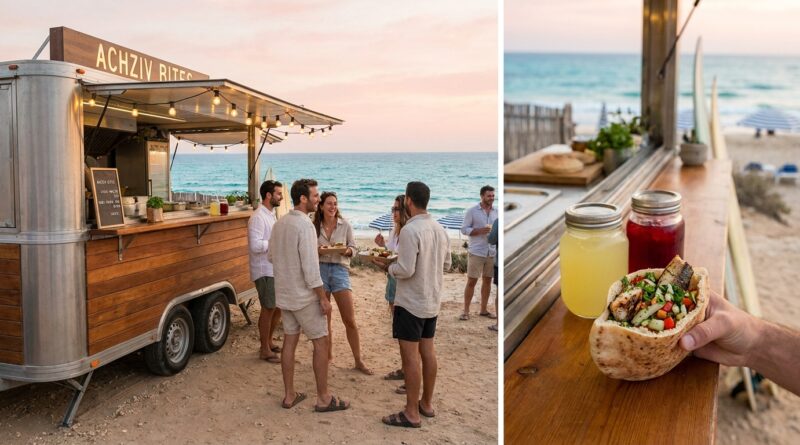
Israel’s New Beach Food Trucks: The Mobile Summer Restaurants Locals Are Chasing Before They Hit Every Coast
You know the drill. You finally make it to the beach, everyone is hungry, and the food choices are the same tired lineup you had last summer. Dry toasties, average chips, basic shawarma, and drinks that somehow cost as much as lunch in town. That is exactly why the first wave of new beach food trucks in Israel 2026 matters. Something is changing on the sand, quietly for now. At Achziv and along a few early coastal stops, mobile kitchens are starting to serve food that actually feels planned, chef-led, and worth getting in the car for. Not gimmicks. Real menus. The smart move this summer is going early, before the crowds catch on and before the best dishes get watered down or sold out by mid-afternoon. If you want the short version, these trucks are not replacing beach classics yet. They are raising the bar, and some of them may end up becoming the permanent restaurants everyone talks about next year.
⚡ In a Hurry? Key Takeaways
- The new beach food trucks in Israel 2026 are real, and the first serious ones are already appearing at Achziv and selected summer coastal events.
- Go early, check social pages the same day, and order the truck’s signature item first instead of defaulting to the safest menu choice.
- Expect better food than standard beach kiosks, but bring water, shade, and a backup plan because hours, stock, and parking can change fast.
Why locals are suddenly paying attention
For years, beach food in Israel has been more about convenience than excitement. You ate because you were there, not because the food itself was the destination. That is what makes this moment interesting.
The first new beach food trucks in Israel 2026 are not just vans selling fries with a cute logo. They are testing a different idea. Smaller menus. Faster prep. Better ingredients. Dishes designed to survive heat, wind, and sandy hands without turning into a mess.
That sounds simple. It is not. Beach service is hard. Good food that still works outdoors is even harder. The people getting attention right now seem to understand that.
What is actually showing up on the beaches
The first reports from the north point to Achziv as one of the earliest places where this shift is visible. That matters for two reasons. First, it gives food lovers a real location to watch, not just a trend forecast. Second, it sends attention and spending toward northern communities that badly need both.
The early trucks seem to fall into three groups.
1. Chef-driven trucks with a tight menu
These are the most exciting. Usually just a handful of items, done properly. Think grilled fish sandwiches, smarter burgers, loaded fries that feel like an actual dish, seasonal salads, and desserts that are more than freezer stock.
2. Known brands testing a mobile format
This is the sleeper story. A chain or established operator can use a truck to test what works before signing a lease on a permanent beachfront site. If a dish sells out all summer from a truck, that is useful data. It can become a kiosk, then a full restaurant.
3. Festival trucks hopping between beach events
These may not stay in one place long, but they are still worth tracking. The best ones often use festivals and promenades as trial runs. If crowds respond well, you will see them return to the coast again and again.
What is worth ordering, and what to skip
If you only remember one thing, make it this. Order the item the truck is built around.
Beach trucks that are good usually have one clear star. Maybe two. If the menu is broad, be careful. A truck that offers tacos, sushi, pasta, crepes, breakfast platters, and schnitzel probably is not doing all of them well on a hot beach service.
Best bets
Look for dishes that travel well from window to towel. Sandwiches with crisp fillings. Fish in soft bread with a sharp sauce. Smash burgers with one style done right. Cold noodles. Fried chicken with pickles. Soft serve or frozen desserts with simple toppings.
Be cautious with
Anything that depends on staying piping hot for ten minutes in the wind. Overloaded platters. Delicate pastry. Huge saucy dishes that are hard to carry. Beach food should be practical, not a balancing act.
How to tell if a beach truck is genuinely good
You do not need to be a food critic. A few easy checks tell you almost everything.
Watch the menu size
Shorter is better. Five to eight core items is a healthy sign.
Look at the queue, not just its length
A line full of locals ordering confidently is better than a long tourist line staring at the board for ten minutes.
Check the pass
If food comes out looking consistent, that means the operation is working. If every plate looks different, the truck may still be figuring itself out.
Notice the backup plan
Good operators think about shade, cold drinks, napkins, and speed. Beach dining is half logistics.
Where the early action is
Right now, Achziv is the name to watch first. It has the right mix of summer traffic, local curiosity, and the kind of scenic pull that makes a truck worth posting about. But the bigger story is movement. Some of these trucks are expected to rotate through festivals, promenades, and temporary beach activations over the coming weeks.
That means your best strategy is not just choosing a beach. It is checking the truck’s location on the day you go.
Smart planning tip
Before leaving home, check Instagram, Facebook, or the venue page that morning. Mobile kitchens can change hours because of wind, staffing, private events, or supply issues. A truck that was the talk of Friday can be gone by Sunday afternoon.
Why this could matter beyond one summer
This is not just about grabbing a better lunch in flip-flops. Mobile kitchens are becoming one of the most interesting testing grounds in the Israeli restaurant scene.
A truck is cheaper to launch than a full restaurant. It can move to where the people are. It can test a menu live. It can learn fast. That makes it perfect for young chefs, recovering hospitality groups, and established names that want proof before spending big.
So yes, the food is the fun part. But the bigger point is that these beach trucks may be the start of some of Israel’s most talked-about restaurant openings in 2026 and beyond.
How to get the most value from the trip
If you are making a day of it, a little planning helps.
Go before peak lunch if you can
Arriving around 11:30 or just after 12:00 usually means easier parking, shorter lines, and a fuller menu.
Share and sample
If two or three people are eating, order different signature dishes and split them. Trucks are new. This is the best way to learn what is worth a second visit.
Bring cashless payment and patience
Most trucks will take cards or phone payment, but mobile signal and beach service can still slow things down.
Do not expect city pricing
Some items will still feel expensive. Beach operations cost more. The question is not whether it is cheap. The question is whether it is noticeably better than the kiosk food you are used to.
Who should make the drive first
If you live in the north, this is an easy yes. You are getting an early look at a format that could spread fast. If you are visiting from central Israel, it makes sense if you pair it with a beach day, a coastal walk, or a weekend stop.
If your only goal is a bargain meal, this may not be your thing. If your goal is trying what could become the next big restaurant names before everyone else hears about them, this is exactly the right moment.
At a Glance: Comparison
| Feature/Aspect | Details | Verdict |
|---|---|---|
| Food quality | Early chef-led trucks appear to offer tighter menus, fresher prep, and more thought than standard beach kiosks. | Promising, especially if you order the signature dish. |
| Convenience | Still easy to grab and eat casually, but hours and locations may shift with events and weather. | Good, but check same-day updates before driving. |
| Value for money | Prices may be above old-school snack stands, yet the jump in quality can make the spend feel fair. | Worth it if the food is distinct, less so for generic items. |
Conclusion
The best reason to care about the new beach food trucks in Israel 2026 is simple. They are happening now, not someday. The first units are already serving on Achziv, more are expected to move between summer festivals and promenades, and most people still do not realize the beach food scene is starting to change under their feet. That gives locals and visitors a real chance to support northern communities, eat well before queues and prices climb, and spot which chefs or brands may turn a mobile kitchen into tomorrow’s permanent hit. For once, the smart beach move is not settling for whatever is closest to your towel. It is choosing the truck that is actually trying to do something better, and getting there before everyone else catches on.