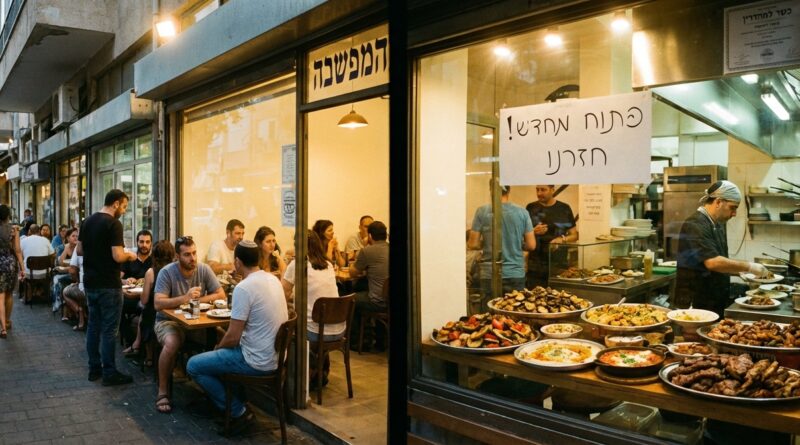
Israel’s Kosher Comeback Story: Inside One Lev’s Surprise Re‑Opening And What It Signals For The Country’s Next Wave Of Restaurants
Trying to keep track of Israel’s restaurant scene right now can feel ridiculous. A place is “opening” on Instagram, “closed for now” on Google, and somehow already full of diners by the weekend. If you care about kosher food, it gets even messier. Certification changes, war-time pauses, soft launches, management swaps, and rebrands all get lumped together as a “comeback.” That is why the One Lev kosher restaurant reopening in Israel matters. It is not just another nice dining update. It is a useful test case for how to read the country’s next wave of restaurant relaunches. One Lev’s return has drawn attention because it pairs a well-known name with a serious kosher move tied to RCBC supervision, and that instantly raises real questions. Is this the same restaurant or a new version? Is the food actually changing? And does this signal something bigger? Short answer. Yes, it probably does.
⚡ In a Hurry? Key Takeaways
- One Lev’s reopening looks important because it is not just a door-unlocking moment. The kosher certification shift and relaunch positioning suggest a more serious reset.
- Before booking any “reopened” restaurant in Israel, check three things: current hashgacha, current chef or ownership, and whether the menu is actually different.
- For diners, certification drama can be annoying, but it can also be a clue. Sometimes the restaurants that survive the mess come back sharper, clearer, and more worth your money.
Why this reopening has people paying attention
The buzz around One Lev is not just nostalgia. Israel has had a stretch where restaurants disappeared quietly, reopened with little warning, or came back in a very different form than diners expected. So when a known name returns with kosher credentials getting headline treatment, people notice.
That is especially true for travelers who plan meals weeks ahead and for locals who are tired of hearing about a place after the first reservations are already gone. In that climate, One Lev feels like more than a single reopening. It feels like a signal.
The signal is this. Serious kosher restaurants are not only trying to survive. Some are using this moment to reset their identity, clean up operations, and come back with a clearer pitch to diners.
What the RCBC move likely means in plain English
For non-specialists, certification news can sound like inside baseball. But it affects real things that diners care about. Menu planning. Kitchen routines. Who the restaurant is trying to attract. Whether observant guests will trust it for business dinners, date nights, or family celebrations.
It is about trust, not just labels
If a restaurant highlights a new or notable kosher framework, it usually wants the market to understand that something structural has changed. Not just the logo on the certificate. The standards, oversight, and audience may be changing too.
In One Lev’s case, the RCBC connection gives the reopening a kind of seriousness. It tells diners this is not meant to be a vague “we’re back-ish” social media post. It is being presented as a version of the restaurant that wants credibility with kosher diners who pay attention.
It can also mean a wider customer base
Restaurants do not make certification changes for fun. It takes work, and often money. So when a relaunch puts that front and center, it often means the owners believe there is real demand for a place that feels both contemporary and reliably kosher.
That matches a broader shift in Israel. Diners increasingly want food that feels current and ambitious, without having to settle for stale hotel-lobby energy. We have been seeing that pattern in spots covered in Israel’s New Kosher Cool: The Surprise Openings Quietly Making Religious Foodies Freak Out Right Now, where kosher is no longer the compromise option. It is the draw.
Is this really the same One Lev?
This is the question diners should always ask. Reopening does not always mean restoration. Sometimes it means a familiar name sitting on top of a new business model.
When you hear “One Lev is back,” break it into parts:
1. Same name
A well-known name brings instant attention. That helps bookings and press. But names can survive bigger internal changes than people realize.
2. Maybe new operating logic
If the certification setup, kitchen flow, service style, or target customer has shifted, then the experience may be meaningfully different, even if the branding still feels familiar.
3. Possibly a smarter relaunch
The best reopenings do not try to pretend nothing happened. They use the old reputation, but they also fix what was weak. Better hospitality. Sharper menu editing. Clearer kosher identity. More realistic pricing. Those are the signs to watch.
So yes, One Lev may carry the emotional weight of a comeback. But the useful question for readers is not “Is it back?” It is “Back as what?”
What makes this part of a bigger Israeli restaurant story
Israel’s food scene has been dealing with disruption on every level. Security concerns, staffing issues, tourism swings, supply costs, and changed dining habits have all hit hard. In that kind of market, restaurant reopenings become a window into what owners think diners want now.
And what many seem to think is this. Diners want confidence.
Not hype. Not mystery. Confidence.
Confidence that the place is actually open. Confidence that the kosher status is clear. Confidence that the menu has a point of view. Confidence that the service will not feel like a soft launch still pretending to be a finished product.
That is why One Lev matters beyond its own tables. If this relaunch lands well, it supports the idea that Israel’s next restaurant chapter, especially in kosher dining, will be built by places that come back more disciplined than before.
How to read every “reopening” announcement from now on
If you are planning a trip or just trying to avoid wasting a night out, use One Lev as your checklist model.
Check the supervision first
Do not rely on old reviews or listing sites. Certification can change faster than websites update. Look for the restaurant’s current official posts or direct confirmation when possible.
Check whether the menu is actually new
A real relaunch often comes with a trimmed menu, a more focused concept, or a new chef direction. If all the language is about “energy” and “experience” but nothing concrete is said about the food, stay cautious.
Check who is behind the comeback
Is ownership the same? Is management new? Is the kitchen team different? Diners often miss this, but it can tell you more than the reopening date.
Check if the place is solving a past problem
Every strong comeback has a reason to exist. Maybe the old version lacked clarity. Maybe it was not trusted by kosher diners. Maybe it needed a more modern identity. If the reopening clearly fixes something, that is a good sign.
What travelers and locals should do before booking
For travelers, the lesson is simple. Build flexibility into your food plans. Israel’s restaurant scene can change quickly, and “newly reopened” does not always mean fully settled.
For locals, this is the moment to reward places that are doing the hard work, not just posting glossy launch photos. The strongest reopenings are usually the ones that explain themselves clearly and then back it up on the plate.
If One Lev delivers on both fronts, it will not just be another comeback story. It will be proof that kosher restaurants in Israel can use a complicated moment to come back stronger, sharper, and more relevant than before.
At a Glance: Comparison
| Feature/Aspect | Details | Verdict |
|---|---|---|
| Reopening status | One Lev appears to be more than a simple return. The messaging suggests a structured relaunch with kosher credibility at the center. | Promising, but worth confirming details before booking. |
| Kosher significance | The RCBC angle matters because it signals oversight, audience targeting, and a serious attempt to earn trust from observant diners. | A meaningful upgrade if backed by consistent execution. |
| What it signals for Israel | This fits a wider pattern of post-war reopenings and revamps where restaurants use relaunches to sharpen identity and improve hospitality. | Good news for kosher diners looking for substance, not just PR noise. |
Conclusion
The One Lev kosher restaurant reopening in Israel stands out because it gives diners something scarce right now. A clearer way to judge what a comeback really means. The RCBC element is not just technical detail. It helps explain how kosher policy, restaurant identity, and customer trust are now tied together in a much more visible way. That gives readers clarity about what is actually new here, and how this reopening fits into the broader pattern of post-war resets across Israel’s kosher dining scene. More important, it gives confidence. If you are planning a trip, picking a place for a night out, or trying to sort genuine relaunches from pure marketing, One Lev is a useful playbook. Watch the certification, watch the menu, watch the operators, and watch whether the hospitality improves. That is how you spot the places turning religious politics and reopening drama into restaurants genuinely worth your time.