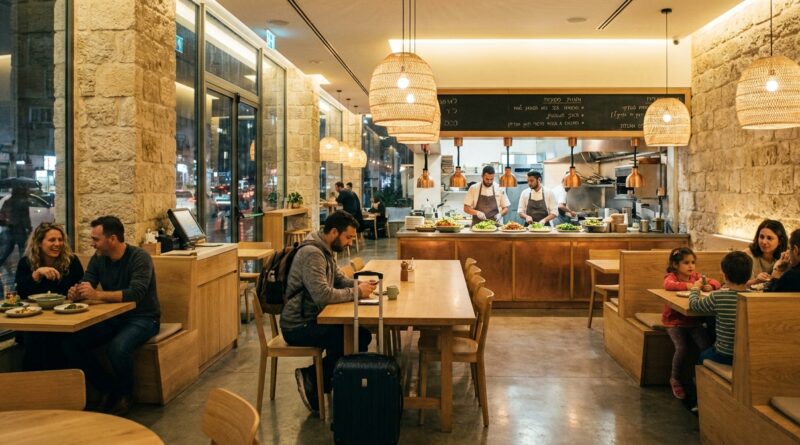
Israel’s New Hotel-Lobby Restaurants: The Under‑The‑Radar Openings Feeding Travelers When The City Sleeps
You land tired, hungry, and a little cranky. Maybe your flight was late. Maybe you got stuck on the train from the airport. Maybe it is Friday afternoon in Jerusalem and half the places you saved are closing, already closed, or booked solid. That is the part no glossy travel guide really helps with. They send everyone to the same famous names, and by the time you get there, you are standing in line wondering why finding one good meal became tonight’s full-time job.
That is why the best new hotel restaurants in Israel 2026 matter more than people think. A growing number of new hotel-lobby, hotel-rooftop, and mixed-use complex restaurants are quietly becoming the smartest answer for travelers and locals alike. They tend to keep friendlier hours, handle walk-ins better, sit close to where people actually sleep, and increasingly serve food worth going out of your way for. In Tel Aviv, Jerusalem, and resort areas, these openings are no longer sad backup plans. In many cases, they are the plan.
⚡ In a Hurry? Key Takeaways
- The best new hotel restaurants in Israel 2026 are often the easiest way to get a genuinely good meal during late arrivals, Shabbat limits, and packed dining hours.
- Start by checking newly opened hotel dining rooms, lobby bars, and mixed-use complexes within a 10-minute walk of your hotel before chasing big-name hotspots across town.
- These places can offer better reliability and reservation odds, but always confirm kosher status, Shabbat hours, and kitchen closing times before you go.
Why hotel-lobby restaurants suddenly matter
For years, “hotel restaurant” was code for convenient but forgettable. Fine for breakfast. Fine if you were desperate. Not where locals chose to eat.
That is changing fast in Israel.
Operators have figured out something very simple. Travelers do not only want luxury. They want certainty. They want dinner after a delayed landing. They want lunch between meetings. They want a place that still feels alive on a Sunday night, a rainy Jerusalem evening, or a half-shut Friday.
So the new wave of hotel and complex-based restaurants is being built around real-life needs. Longer service windows. Stronger wine lists. Menus with some ambition. Spaces designed to pull in neighborhood diners, not just guests wearing room slippers.
For the IsraRest crowd, this is a useful shift. It means the under-the-radar option may also be the smartest one.
What makes these new openings different from old hotel dining
They are trying to win locals, not trap tourists
The biggest change is intent. Many newer hotel restaurants in Israel are not set up as “captive audience” dining rooms. They have street-facing entrances, standalone branding, and menus designed to compete with city restaurants.
That matters because when locals show up, standards usually rise. Service gets sharper. Prices make more sense. The food has to hold up on its own.
They often solve the awkward-hour problem
This is the real travel pain point. You do not always need the city’s hottest 8:30 reservation. Sometimes you need a very good plate of fish, a late burger, a proper salad, or something warm and reliable at 10:15 p.m.
Hotel-lobby kitchens and mixed-use complexes are often better at this than destination spots. They know guests arrive at odd times. They know conference schedules shift. They know people need food before check-in and after check-out.
Reservations are usually less brutal
You still need to book when a place gets buzz, but the competition is often lower than at the obvious chef-owned names everybody screenshots from social media.
If you love chasing special menus, it is still worth reading Israel’s New Chef-Run Tasting Counters: The One-Night-Only Menus You Have To Catch Before They Disappear. But for many travelers, especially after a long day, dependable beats dramatic.
Where this trend is strongest right now
Tel Aviv
Tel Aviv is the clearest example. New and refreshed hotels are treating restaurants as serious identity pieces, not side services. That means polished all-day dining, lobby bars with real cocktail programs, and chef-led menus that can handle breakfast meetings, afternoon coffee, and late dinners without feeling like three different businesses awkwardly stitched together.
The best picks tend to be in central districts where a hotel restaurant can attract both guests and neighborhood traffic. If a place is full of local diners at 9 p.m., that is a very good sign.
Jerusalem
Jerusalem has a different rhythm. Here, hotel and complex dining can be even more useful because of Shabbat patterns, holiday timing, and the fact that visitors often stay near the Old City, Mamilla, or central corridors where not everything keeps equal hours.
A well-run hotel restaurant in Jerusalem can be the difference between a relaxed evening and a long hungry walk to a place that stopped seating 20 minutes ago.
Mixed-use developments and lifestyle complexes
Not every good “hotel-adjacent” meal is technically inside a hotel lobby. Some of the smartest openings are in modern complexes that combine hospitality, offices, shopping, and public space. These spots often have built-in foot traffic and longer daily operating hours, which helps them stay practical for travelers.
Think of them as the middle ground between destination dining and pure convenience.
How to spot a good one before you waste a meal
Check the entrance
If the restaurant has a clear street entrance and its own identity, that is usually promising. It means management wants outside diners, not just hotel guests.
Look at the hours, not just the photos
A beautiful dining room means very little if the kitchen closes exactly when you arrive. Look for full service hours, bar menu hours, and whether the place operates differently on Fridays, Saturdays, and holidays.
Read reviews for locals, not just tourists
If Hebrew-language reviews mention repeat visits, business lunches, or neighborhood brunches, that is useful. It suggests the restaurant has life beyond the hotel crowd.
Watch for menu focus
A menu that tries to be sushi, steakhouse, bakery, vegan cafe, and Mediterranean grill all at once can be a warning sign. The better new hotel restaurants usually know what they are. Maybe they are strong on seafood. Maybe they lean Levantine. Maybe they do excellent all-day Israeli brasserie food. Focus is your friend.
When these restaurants are the best choice
Late arrivals
If you are landing late at Ben Gurion and heading straight into Tel Aviv or Jerusalem, your smartest first move is often the strongest kitchen within or beside your hotel, not a cross-city taxi ride in search of a place that may stop seating before you get there.
Shabbat and holiday windows
This is where planning matters most. Some hotel restaurants stay active in ways independent spots do not. Others shift to special service formats. Either way, they are often more predictable than trying your luck with random street-level options.
After long day trips
Come back from the Dead Sea, Galilee, Acre, or a full day walking Jerusalem, and your standards change a little. You still want a good meal. You just do not want it to require another hour of logistics.
That is the sweet spot for these newer openings.
What to ask before you book
Ask a few boring questions. They save a lot of disappointment.
- Is the full menu available all evening, or does it switch to bar food later?
- Do non-hotel guests need a reservation?
- Is the restaurant kosher, and if so, what kind?
- What happens on Friday night and Saturday?
- Is there valet or easy parking if you are arriving by car?
- Can they seat solo diners comfortably without sticking them near the service station?
This is especially helpful in Jerusalem, where assumptions about hours and kosher rules can leave visitors hungry faster than they expect.
Why this matters beyond convenience
There is a bigger story here. These restaurants are part of how Israeli hospitality is adjusting to uneven tourism, changing local habits, and higher expectations from both travelers and residents.
Hotels and developers are starting to understand that food is not just an amenity. It is part of the trip. Sometimes it is the part people remember most.
That shift creates better options for everyone. Travelers get dependable, interesting meals without the usual stress. Locals get new kitchens worth trying. Operators get more flexible business models instead of depending only on overnight guests.
Smart strategy for eating well on the road in Israel
If you want one practical rule, use this one.
Book one “big” meal if that matters to you. Then keep two strong hotel or complex-based backup options near where you are staying.
That gives you range. You can still chase the famous reservation. But if your day slips, if plans change, or if you simply do not feel like trekking across the city, you already know where to go.
This is not settling. In 2026, in many parts of Israel, it is just eating smarter.
At a Glance: Comparison
| Feature/Aspect | Details | Verdict |
|---|---|---|
| Hours and flexibility | New hotel and complex restaurants often serve across wider time windows, with bar or reduced menus after peak dinner hours. | Best for late check-ins, awkward arrivals, and tired travelers. |
| Reservation difficulty | Usually easier to book than the city’s most hyped independent spots, especially on short notice. | A smart backup that often becomes the better main plan. |
| Food quality and atmosphere | The newer wave is more chef-driven, design-aware, and local-facing than old-school hotel dining. | Worth seeking out, not just using in an emergency. |
Conclusion
Israel’s new hotel-lobby and hotel-adjacent restaurants are filling a gap travelers know too well. They give you real options when the obvious places are full, closed, too far away, or simply too much effort after a long day. The best new hotel restaurants in Israel 2026 are not just more convenient. They are often more thoughtful about how people actually eat while traveling. Flexible hours, easier reservations, and stronger menus in overlooked spaces can turn a stressful evening into a genuinely memorable meal. For IsraRest readers, that means less guessing and fewer disappointing fallback dinners. It also means supporting some of the country’s newest kitchens while tourism rebuilds unevenly and operators test smarter, guest-first ideas. Next time the city feels shut, crowded, or impossible, do not ignore the lobby, the rooftop, or the mixed-use complex next door. That quiet opening may be exactly the meal you needed.