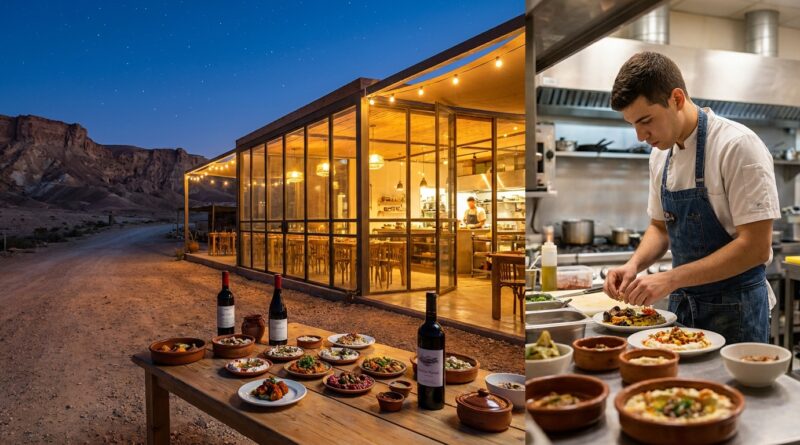
Israel’s New Desert Dining Wave: The Remote Negev Restaurants Food People Are Quietly Road‑Tripping For
You know the feeling. You finally get a night free in Israel, open your phone to book somewhere good, and it is the same story again. Tel Aviv is packed. Jerusalem is expensive. Every recommendation sounds copied from the same group chat. If you are already driving south for Ramon Crater, Sde Boker or Timna, gambling on a random roadside dinner does not feel smart either. A vacation night is worth more than that. The good news is the Negev is no longer just a place to pass through hungry. Some of the most interesting restaurant moves in Israel are happening quietly in the desert, where city chefs priced out of the center and younger cooks looking for room to try new ideas are setting up shop. The result is better than “surprisingly good for the desert.” In several cases, it is destination dining. If you are searching for the best new restaurants Negev desert 2026, this is where to start.
⚡ In a Hurry? Key Takeaways
- The Negev now has several genuinely worthwhile destination restaurants, especially around Mitzpe Ramon, Sde Boker and the Timna route.
- Book ahead, confirm opening nights, and pair dinner with your overnight stop. Desert restaurants often keep shorter, more flexible schedules than city spots.
- You will often get better value, easier parking and a more memorable setting than in Tel Aviv, but you should still check road conditions, kosher status and late-night driving plans.
Why the Negev is suddenly worth your appetite
There are a few reasons this shift is happening now.
First, rent. Running a serious restaurant in central Israel is brutally expensive. In the south, a chef can take more risks, use a bigger space, and build something that is not crushed on day one by overhead.
Second, ingredients. The Negev has always had more produce, dairy, herbs, dates, wine and small growers than many travelers realize. What changed is that more chefs are treating those ingredients as the main event, not a rustic side note.
Third, diners are ready. People are tired of overpaying for the same menu format in the same neighborhoods. A desert trip already feels like an escape. Add a thoughtful meal, and the whole drive starts making sense.
What makes a Negev restaurant worth the detour
Not every pretty place in the desert is a serious food stop. When you are deciding whether to reserve, look for a few signs.
A chef with a clear point of view
You want more than shakshuka with a view. The best new places have a style. That might mean wood fire cooking, modern Israeli plates, desert herbs used with purpose, or a menu built around local farms.
A short menu that sounds intentional
Big menus in remote places can be a warning sign. A tighter list usually means fresher food and a kitchen that knows exactly what it wants to do.
Hours that match real life
This matters more than people admit. Some desert restaurants are amazing but open only a few evenings a week, or close early, or shift hours with the season. Call. Message. Confirm. Do not trust a listing from six months ago.
The areas to focus on
Mitzpe Ramon
This is the safest bet if you want the strongest mix of scenery, overnight options and restaurants trying to do something fresh. The town attracts hikers, cyclists, stargazers and boutique-hotel guests. That crowd supports better kitchens.
What to look for here: chef-led bistros, wine-friendly menus, long-fermented breads, open-fire cooking and modern desert hospitality that feels relaxed instead of stiff.
Sde Boker and the central Negev
This area works well for travelers who want a quieter stop. The food scene is smaller, but some of the most thoughtful places are here, often connected to farms, wineries, guesthouses or ecological tourism projects.
What to look for here: seasonal menus, local cheese, lamb, herbs, olive oil, dates and dishes that make sense for the climate rather than copying a city menu.
The Timna and Eilat road corridor
This is where expectations can be low, which is exactly why a good place feels like such a win. More operators now understand that travelers heading to or from Eilat want one memorable meal, not another forgettable pit stop.
What to look for here: polished service, strong lunch options, family-friendly menus that still have ambition, and places where the setting actually adds to the meal.
The kinds of restaurants food people are quietly seeking out
Small chef restaurants in boutique hotels
These are often the smartest bookings because the restaurant has a built-in audience but still needs to impress. You may find better wine lists, more stable service, and a meal that feels like a proper night out.
Farm-connected kitchens
These can be excellent if you want a stronger sense of place. The best ones are not just “local” on paper. You taste it in the tomatoes, goat cheeses, herbs, breads and olive oils.
Fire-based desert cooking
This style fits the region naturally. Charred vegetables, grilled fish, slow-cooked meats and simple plates done with care often work better in the Negev than menus trying too hard to be fancy.
How to book without wasting your night
This is the practical part, and it matters.
Check Instagram, then verify directly
Many remote places update social media faster than map apps. But still send a message or call. Desert hospitality can be flexible. Sometimes that is charming. Sometimes that means you arrive to a private event or a kitchen that closed early.
Build dinner around sleep, not the other way around
If you are drinking wine or just do not want to drive dark roads after a long day, book your room first and your restaurant second. In the Negev, this simple step improves the whole trip.
Ask three questions before reserving
What nights are you open? Is the full menu available that night? Is anything sold out or fixed menu only? Those questions save a lot of disappointment.
What prices are really like
Do not expect “cheap because desert.” The best places know what they are doing and price accordingly. But value is often better than in the center.
You are more likely to get generous space, easier reservations, less parking drama and a setting you could never replicate in the city. That matters. A NIS 220 dinner that includes a sunset view over the crater and no table-turn pressure can feel like a bargain compared with a rushed NIS 260 meal in Tel Aviv.
What to order when you want the place at its best
Go where the kitchen has home-field advantage.
- Local breads, dips and spreads
- Seasonal vegetables cooked over fire
- Goat and sheep dairy from southern producers
- Fish specials, if the restaurant has a strong seafood program and clear sourcing
- Lamb, if it is a house specialty
- Date-based desserts, local wines and herb-forward cocktails
If a menu is trying to do sushi, pasta, burgers and “Asian tapas” all at once, keep your expectations low.
A few smart red flags to watch for
Scenery doing all the work
A beautiful deck is nice. It is not dinner. If every review talks about the view and barely mentions the food, pay attention.
Menus that sound imported from Rothschild Boulevard
The most exciting desert restaurants usually feel rooted in where they are. If the whole thing reads like a generic city copy, it may not be the breakthrough you were hoping for.
No one mentions consistency
New restaurants can be exciting and uneven at the same time. Look for signs that more than one diner had a strong meal, not just one viral post from opening week.
Who should make the trip
If you are the type who gets genuine joy from finding a place before everyone else starts posting it, this is your moment. The Negev is especially good for couples, small groups of food-curious friends, and families who want one “grown-up” meal on a nature-heavy trip.
If you want polished city luxury with zero unpredictability, keep your expectations realistic. Part of the charm here is that the experience can feel more personal, less standardized and occasionally a little rough around the edges.
The simple game plan for a great desert food stop
Use this formula and you will avoid most mistakes.
- Pick your overnight base first. Mitzpe Ramon is easiest.
- Choose one restaurant with a clear identity, not five backup maybes.
- Reserve ahead and confirm the same day.
- Arrive before dark if you can. The setting is part of the experience.
- Order local. Let the kitchen show you why being in the south matters.
At a Glance: Comparison
| Feature/Aspect | Details | Verdict |
|---|---|---|
| Food originality | More chefs are building menus around desert produce, fire cooking and small southern suppliers instead of repeating city trends. | Best reason to go now |
| Price and value | Prices are not low, but you usually get more space, easier access and a more memorable setting than in Tel Aviv or Jerusalem. | Often better value overall |
| Planning difficulty | Remote locations, changing hours and limited seating mean you need to confirm details directly before going. | Worth it if you plan ahead |
Conclusion
The easiest dining move in Israel is still to repeat the same center-country reservations everyone already knows. It is also the least interesting one. Right now, some of Israel’s most exciting openings are happening quietly in the south, where displaced city chefs and ambitious young cooks are betting on cheaper rents, local produce and travelers who want something new. If you are looking for the best new restaurants Negev desert 2026, the real win is not just finding a good meal. It is beating the crowds, backing risk-taking restaurateurs outside the center, and turning a basic drive to Mitzpe Ramon, Sde Boker or Timna into a night you actually remember. That is a much better story than another gas-station sandwich and a long drive home.