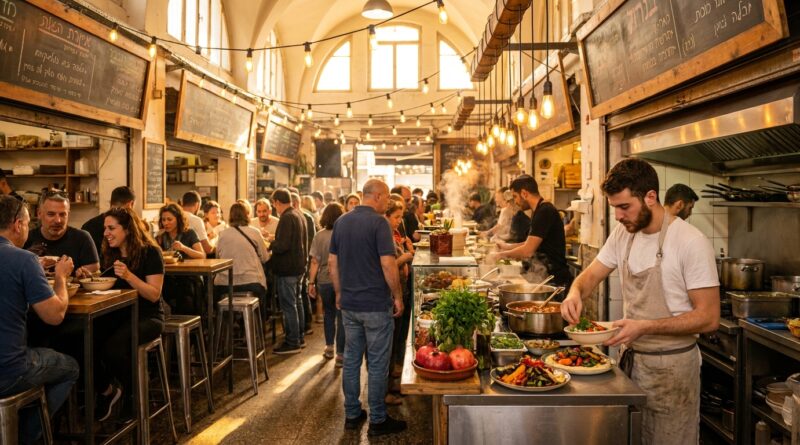
Israel’s New Market Counter Revolution: The Tiny Stands Serving Some Of The Country’s Best Food
You can get tired fast of reading about impossible reservations, tasting menus, and dining rooms that feel built more for Instagram than dinner. Most people do not want a three-week plan and a scary bill. They want something simple. Walk in, order, eat brilliantly. That is why the most interesting food story in Israel right now is not only happening in polished restaurants. It is happening at tiny counters inside markets and food halls, where cooks are opening with lower overhead, tighter menus, and a lot more freedom. These spots are nimble. They can test one perfect sandwich, one great stew, one knockout pastry, and build a crowd without the full machinery of a big restaurant. For anyone searching for new market food stalls in israel 2026, this is where the excitement really is. Better still, these places need local support now, and your next lunch can actually help keep them going.
⚡ In a Hurry? Key Takeaways
- Israel’s best new casual eating is increasingly happening at small market counters, not only in formal restaurants.
- Go early, ask vendors what opened in the last few months, and be willing to order the one dish the stall is built around.
- These spots often offer better value, faster service, and a direct way to support independent cooks during a shaky period.
Why the counter is beating the dining room
There is a quiet counter revolution going on. It makes sense when you think about it.
A small stall is cheaper to open than a full restaurant. Fewer seats. Smaller staff. Tighter menu. Lower risk. That means talented cooks who might never sign a giant lease can still get into the game.
And the food often gets better because of those limits. A tiny stand cannot hide behind a huge menu. If it sells sabich, the sabich has to be great. If it does hand-pulled noodles, every bowl has to earn its place. Focus helps.
Markets also give these businesses something many street locations cannot. Built-in foot traffic. Curious eaters. A mix of office workers, neighborhood regulars, and people who came for produce and left with lunch.
That is why anyone tracking new market food stalls in israel 2026 should pay close attention to places like Tel Aviv’s markets, Jerusalem food clusters, and newer hall-style spaces that let small operators open fast and adapt even faster.
What makes these new stalls so exciting
They are chef-driven without the chef-restaurant baggage
You still get ambition. You still get personality. But you skip the host stand, the ceremony, and often a large chunk of the bill.
Some of these counters are side projects from known cooks. Others are first businesses from people who spent years working behind the scenes and are finally cooking their own food. That mix matters. It keeps the scene fresh.
They often serve the food people actually want to eat right now
This is not food made to impress investors. It is food made to survive repeated lunch visits.
That means bold sandwiches, rice bowls, grilled skewers, pastries worth carrying home, soups with depth, and regional dishes that can be served fast but still feel personal.
You can see the same appetite for focused, specific flavors in other corners of the scene too. If you have noticed Tel Aviv diners chasing sharper, more niche cravings, the rise of stalls fits perfectly with that shift. A good example is Israel’s New Wave Of Korean Kitchens: Where Tel Aviv Locals Are Sneaking Off For Bibimbap And Soju Nights, which shows how local diners are moving beyond the usual staples and rewarding places that do one thing very well.
They can change quickly
A restaurant may need months to rethink itself. A stall can swap a menu, add a special, or tighten service in a week. In a period shaped by economic pressure and security worries, that flexibility is not just nice. It is survival.
Where to look for the best new market food stalls in Israel 2026
The first rule is simple. Stop looking only at big names.
Instead, look at the places where people already shop and snack. The best counters tend to appear in active market ecosystems because they benefit from natural traffic and lower-barrier setups.
Urban markets
Traditional city markets remain the obvious hunting ground. They offer the old Israeli market energy people love, but now mixed with younger food businesses that treat a tiny footprint like an advantage.
Look for the stalls with short menus, visible prep, and a line of locals who seem to know exactly what they came for.
Modern food halls
These can be less romantic than a classic shuk, but they are becoming important incubators. They let smaller brands test demand without opening a full independent location.
If one stand is always sold out of its special by 2 p.m., pay attention. That usually tells you more than any press release.
Neighborhood mini-markets and mixed-use spaces
Not every exciting opening lands in the most famous market. Some of the smartest new counters are appearing in smaller neighborhood clusters where rent is softer and local loyalty builds quickly.
These are often the places tourists miss first and locals discover first.
How to spot a stall worth your time
You do not need insider access. You just need a few habits.
1. Check how many items are on the menu
If the menu is short and confident, that is usually a good sign. Six great items beat 26 average ones.
2. Watch what the staff is doing
Busy but calm is ideal. If the team is moving with rhythm, the operation probably has its act together.
3. Ask one question
Ask, “What opened recently around here?” Market vendors know everything. Better than social media, honestly.
4. Follow the repeat customers
A tourist line can mean hype. A line of nearby workers means the food delivers again and again.
5. Order the signature first
Do not get cute on your first visit. Eat the dish the stall is clearly built around.
Why these openings matter beyond lunch
This is not only about finding a good bite.
Small market stalls are one of the clearest signs that Israel’s food culture is still alive, still adapting, and still producing talent even when conditions are tough. In a shaky economy, opening anything food-related takes nerve. Opening something good takes even more.
When people show up for these counters, they are not just rewarding convenience. They are funding experimentation. They are helping cooks stay independent. They are keeping neighborhoods lively.
That matters because food scenes do not survive on headlines alone. They survive on weekday customers.
Best strategy for readers right now
If you want to eat well and support the right places, keep it practical.
Go sooner, not later
These stalls can change hours, sell out early, or close for a day without much warning. If a place sounds good, do not save it for next month.
Choose lunch over peak dinner
Lunch is where many market counters shine. The food is fresh, lines move faster, and you get a clearer sense of who the regulars are.
Spend broadly
Instead of one giant dinner bill, spread that money across two or three independent counters over a week or two. You will eat more interestingly, and your support will reach more people.
Share the places that are actually open
One of the biggest reader frustrations right now is outdated food coverage. If you find a counter that is open, thriving, and worth the trip, tell people. Reliable word of mouth is gold.
At a Glance: Comparison
| Feature/Aspect | Details | Verdict |
|---|---|---|
| Price and value | Small stalls usually have lower overhead and tighter menus, which often means stronger food at a friendlier price. | Excellent for regular eating, not just special occasions. |
| Access and convenience | You can often walk in, eat quickly, and avoid the reservation game that defines bigger name restaurants. | A major win for spontaneous diners. |
| Support for local food culture | Money goes directly toward independent cooks and new businesses trying to survive and grow in a difficult climate. | One of the most direct and hopeful ways to help the scene. |
Conclusion
The smart money, and often the best lunch, is in the markets right now. If you are tired of hype and just want remarkable food that feels alive, personal, and within reach, start with the counters. This is exactly why tracking new market food stalls in israel 2026 matters. Big international outlets often miss these fast-moving, hyper-local openings, even though they are the places feeding real communities right now. By paying attention to them, and by showing up hungry, IsraRest readers can do something genuinely useful. You get an excellent meal. Small cooks get real business. And Israel’s food culture gets the kind of support it actually needs, not someday, but today.