Israel’s New Hotel Restaurant Wave: The Kosher Luxury Dining Rooms Tel Aviv Foodies Are Quietly Booking First
You are not imagining it. Everyone keeps saying Israel’s restaurant scene is under pressure, yet the tables you actually want in Tel Aviv and Jerusalem still disappear fast. That gap is the real story. Some of the most exciting kitchens right now are not opening behind flashy street fronts. They are opening inside hotels, often with serious chefs, polished service, and kosher menus that feel current rather than obligatory. Locals have started to catch on, but many travelers still walk past these dining rooms assuming they are for tourists in bathrobes. That is a mistake. The best new hotel restaurants in Tel Aviv 2026 are not fallback options. They are where ambitious operators can survive, where chefs get steadier backing, and where diners can still find a meal that feels fresh, thoughtful, and worth dressing up for. If you know which hotel restaurants are destination spots and which are just convenient, you can book much smarter.
⚡ In a Hurry? Key Takeaways
- The best new hotel restaurants in Tel Aviv 2026 are increasingly some of the city’s strongest tables, especially for upscale kosher dining.
- Book hotel restaurants the same way you would a big-name street restaurant. Check the chef, ask where locals sit, and reserve early for Thursday nights and post-Shabbat slots.
- Hotel backing can mean better consistency and longer life, but not every dining room is special. Look for places with a clear culinary point of view, not just a pretty lobby.
Why hotel restaurants are suddenly where the action is
For years, “hotel restaurant” sounded like code for expensive and forgettable. Nice room. Safe menu. Maybe a sea view if you were lucky.
That old rule does not work anymore. In Israel, and especially around Tel Aviv and Jaffa, hotels have become one of the few places where ambitious restaurants can open with a little breathing room. Rent is brutal. Independent openings are risky. Staff costs are real. Add a shaky market, and many chef-driven places struggle before they even settle in.
Hotels solve part of that problem. They offer a built-in space, a steadier financial base, and a flow of guests that helps fill seats on weaker nights. For diners, the result can be surprisingly good. Better kitchens. Better design. More confidence in the menu.
This matters even more in kosher dining. High-end kosher restaurants used to feel boxed in by old expectations. Today, a new wave of hotel dining rooms is proving that kosher can still be bold, seasonal, stylish, and very much part of the wider Tel Aviv conversation.
What makes a hotel restaurant worth booking
Not every restaurant with a concierge downstairs is a destination. Some are still exactly what you fear. Pleasant, polished, and instantly forgettable.
The good ones usually share a few signs.
A real chef identity
You want a menu that feels like somebody actually cares. Is there a point of view? Does the cooking reflect the chef, the season, the city, or the local market? If the menu reads like it could be anywhere from Herzliya to Heathrow, move on.
A room locals actually use
The strongest hotel restaurants are not just filled with guests wearing conference badges. They pull in Tel Aviv diners, date-night couples, and the kind of regulars who know what they are ordering before they sit down.
Kosher that feels natural, not dutiful
This is a big one. A lot of high-end kosher rooms used to overcompensate by trying too hard. The new standouts are calmer. They cook with confidence. They let produce, fish, technique, and smart wine pairings do the work.
A mood beyond the lobby
You should feel like you arrived somewhere, not like you stopped halfway to the elevators. The best places create a separate identity through lighting, music, pacing, and service.
Why kosher luxury is having a real moment
Part of the current wave is practical. Hotels often need kosher options for guests, events, and broader market appeal. But the more interesting part is cultural. Chefs are finally treating kosher rules as a design brief rather than a limitation.
That shift has produced more creative fish menus, smarter vegetable cooking, better pareve desserts, and tasting experiences that do not feel like compromise. In Tel Aviv, where diners can be skeptical fast, that is not a small thing.
It also helps that many diners now want a polished night out that still works for mixed groups. One person keeps kosher. One person wants natural wine. One person just wants the room to feel special. A great hotel restaurant can do all three at once.
How to spot the best new hotel restaurants in Tel Aviv 2026
If you are trying to separate the true standouts from the merely convenient, use this checklist.
Look past the hotel brand
A fancy property does not guarantee a memorable meal. Sometimes the smaller boutique hotel has the sharper kitchen, because it is trying harder to build a local following.
Read the menu before you read the room description
If the restaurant website leads with “Mediterranean experience” and “elevated ambiance” but tells you almost nothing about the food, be suspicious. Great restaurants usually want to show you what they cook.
Check whether the chef is doing events or collaborations
If a hotel restaurant is taking part in guest-chef dinners, citywide food events, or crossover evenings, that usually means the team wants to be part of the real restaurant scene. That is a good sign. If you like that kind of movement, it is worth also reading Israel’s New Chef Swaps: The Pop-Up Nights Letting You Taste Tel Aviv In Haifa And Jerusalem In One Week, because these chef exchanges often reveal which kitchens are earning respect from their peers.
Ask one simple question when booking
“Where do locals usually prefer to sit?”
If the answer is immediate and specific, that tells you the staff knows the restaurant has a life beyond hotel guests. If they seem confused, that tells you something too.
What kinds of hotel dining rooms are doing best right now
You can roughly split the new wave into three groups.
1. The polished kosher flagship
These are the headline-makers. Often in luxury hotels. Usually beautiful. Strong wine list. Sharp service. Menus built around fish, premium vegetables, or carefully handled meat within kosher rules. These are your birthday, business dinner, and “we actually got a babysitter” places.
2. The design-forward Jaffa room
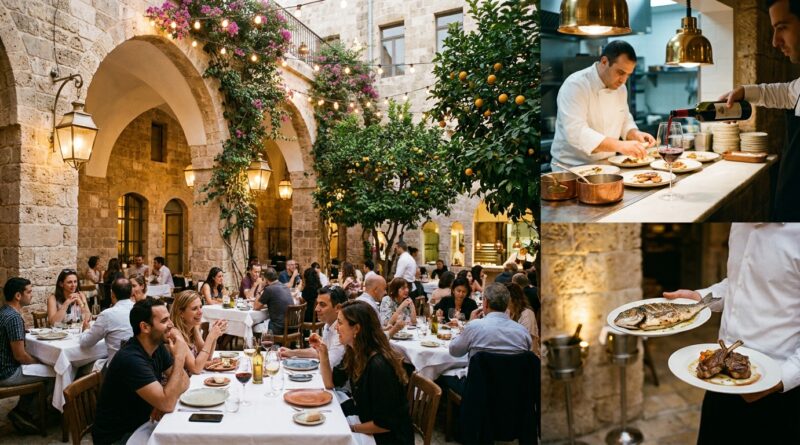
These lean heavily on atmosphere. Historic building, restored stone, courtyard seating, low lights, maybe a bar that pulls in neighborhood people before dinner. When done right, they feel less like a hotel meal and more like a proper urban night out.
3. The chef’s side-door project
This is the sleeper category. A serious chef uses a hotel setting to try something tighter, smaller, or more stable than a big independent launch. These places can be some of the smartest bookings in town because they still feel a bit hidden.
Practical booking advice so you do not miss out
If a place is good, the secret does not stay secret for long.
Book the nights locals want
Thursday is obvious. Saturday night is often strong too, especially in Tel Aviv. If you want the room at its liveliest, those are usually the targets.
Go earlier in a restaurant’s life cycle
There is a sweet spot with new hotel restaurants. Once locals notice them, prime slots vanish fast. Try to book in the first few months after buzz starts building, not after every food account has posted the same dessert.
Use lunch strategically
Lunch can be the smartest way into a harder reservation. You often get the same kitchen, more breathing room, and a better sense of whether the place is truly about food or just evening glamour.
Do not assume hotel guests get the best tables
Sometimes they do. Sometimes the restaurant protects its strongest tables for regulars and local bookings. If the dining room matters to you, ask directly.
What travelers get wrong about these places
The biggest mistake is writing them off as generic before even checking. The second biggest is choosing only by address.
If you are visiting Israel and want one meal that really feels plugged into the current scene, a strong hotel restaurant may now be safer than chasing the newest independent opening. Independent places can be wonderful, but they can also be unstable, inconsistent, or impossible to book at the last minute.
Hotel-backed restaurants, especially the better kosher ones, often have more staying power. That means a better shot at good service, a menu that is still being refined, and a room that feels cared for.
What locals get wrong
Locals often assume they know the city and therefore do not need to check inside hotels. Fair enough. For a long time, that instinct was right.
Now it can make you miss some of the most interesting openings. There is also a strange bias that if a restaurant sits behind a reception desk, it cannot be cool enough for a real night out. Also wrong.
Some of the best meals now come from exactly these spaces, because chefs can focus on cooking rather than fighting every basic business pressure at once.
At a Glance: Comparison
| Feature/Aspect | Details | Verdict |
|---|---|---|
| Chef ambition | The best hotel openings now feature clear culinary identity, sharper seasonal menus, and serious kosher creativity. | Often excellent, but only if the restaurant has a chef-led concept rather than a generic all-day menu. |
| Booking strategy | Prime evening slots can go quickly once locals catch on. Lunch and early reservations are often easier ways in. | Worth booking early, especially for Thursday, Saturday night, and new kosher luxury rooms. |
| Value for diners | Hotel backing can mean steadier service, stronger wine programs, and a better chance the restaurant survives long enough to mature. | A smart pick for both travelers and locals, as long as you choose destination restaurants rather than lobby add-ons. |
Conclusion
The quiet truth is that some of Israel’s most compelling new meals are happening in places many diners still skip by habit. That is good news if you know where to look. The new wave of hotel-based restaurants, especially high-end kosher spots, gives locals and travelers a better shot at cutting-edge cooking at a time when independent openings can feel fragile and short-lived. Pick carefully, book early, and judge the kitchen, not the lobby. Do that, and what could have been another generic hotel dinner turns into exactly what you hoped for in the first place, a night that feels distinctly Tel Aviv, Jaffa, or Jerusalem, with a serious chef quietly doing some of the city’s best work.