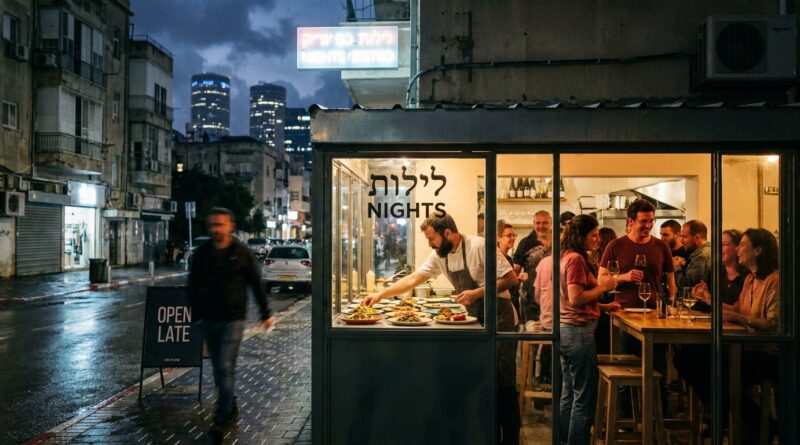
Israel’s New Night-Shift Kitchens: The Late‑Late Restaurants Quietly Rewriting Tel Aviv Dining
You know the routine. Your flight lands late, your meeting runs long, or the humidity finally eases at 10:45 p.m., and only then do you feel like sitting down for a proper meal. Then Tel Aviv pulls the rug. The hot reservations were all for 8:00. The serious kitchens did their last call ages ago. Now you are standing on a sidewalk, phone in hand, trying to decide whether shawarma, pizza by the slice, or sad hotel room service counts as dinner. It is a real frustration, especially in a city that sells itself on food. The good news is that a small but growing group of operators has spotted the gap. They are extending kitchen hours, building true second seatings, and treating the post-23:00 crowd like actual diners, not leftovers from the night. If you want late night restaurants Tel Aviv new openings worth planning around, this is where the story gets interesting.
⚡ In a Hurry? Key Takeaways
- Tel Aviv is slowly building a real late-night dining tier, with bars, chef-driven kitchens, and second-seating spots serving serious food after 23:00.
- Check kitchen-closing times, not venue-closing times, and book the late seating directly by phone, Instagram, or WhatsApp when possible.
- Late-night quality can be excellent, but menus are often shorter and hours can change fast, so always confirm before you go.
Why late-night dining suddenly matters again
For years, Tel Aviv had a strange blind spot. It could do breakfast. It could do beach lunch. It could absolutely do packed prime-time dinners. But after 10:30 or 11:00 p.m., the choices dropped off fast unless you were happy with bar snacks or street food.
That no longer fits how people actually live. Flights from Europe land late. Tech and media jobs stretch long into the evening. Summer heat pushes social life deeper into the night. Plenty of locals do not even want to sit down to dinner before 9:30.
So a new kind of restaurant rhythm is starting to show up. Not everywhere. Not consistently. But enough to matter. The shift is less about giant all-night dining rooms and more about clever formats: bars with proper cooks, restaurants adding a true second wave of service, and compact kitchens that stay sharp later because they run smaller menus.
What these new late-shift kitchens look like
Bars with serious food, not just backup food
This is probably the most important change. A lot of the best post-23:00 eating now happens in places that look like drinking spots first. The difference is in the kitchen. Instead of fries, sliders, and a token plate of crudo, you get food that feels composed, thought-through, and worth leaving home for.
For diners, that means you need to stop asking, “Is it a restaurant?” and start asking, “Is the kitchen still cooking properly at 11:30?” Those are not the same question.
The second seating is back
Some operators have realized there is money and goodwill in the late crowd. Rather than stretching the first dinner service until everyone is miserable, they split the night. Early tables turn over. A later seating starts with fresh energy, a focused menu, and staff who know they are serving a real audience, not stragglers.
That matters more than it sounds. A true second seating means the kitchen is still organized. You are not ordering from a half-shut line while the dishwasher is already humming in the back.
Smaller menus, better odds
The best late-night openings tend to trim the menu after a certain hour. That is not a downgrade. Usually it is the opposite. A shorter list means the kitchen can keep quality steady deep into the night. If you see a venue promising its full menu until 1:00 a.m., be a little cautious. If you see a tight midnight menu built around dishes that travel well from line to table, that is often a better sign.
How to spot a reliable late-night restaurant in Tel Aviv
If you are trying to build an actual night around dinner, not just hope for the best, use this checklist.
Look for the words “kitchen open until”
Many places stay open late but stop cooking early. Their social pages may say “open until 1:00” while the kitchen wrapped at 10:45. Always look for a separate kitchen time.
Check the latest tagged posts, not just the homepage
Instagram often tells the real story. Recent tagged photos and Stories can show whether people are actually eating proper plates at midnight or just nursing cocktails with olives.
Message the venue directly
In Tel Aviv, this is often the fastest route to the truth. A short WhatsApp or Instagram message asking, “If we arrive at 23:30, will the full late menu still be available?” can save you a wasted taxi ride.
Watch for soft openings and schedule drift
Many late night restaurants Tel Aviv new openings are still experimenting. Hours may change based on staffing, demand, and even the weather. Treat published hours as a draft until you confirm same-day.
Who benefits most from this shift
The obvious winners are hungry locals who are tired of racing the clock. But visitors may benefit even more. If you land at Ben Gurion and reach your hotel too late for standard service, a reliable late-shift restaurant can rescue your first night in the city.
Business travelers also get a better option than eating in between meetings or settling for delivery alone in a room. And for groups, the new late service culture makes Tel Aviv feel more like the city people imagine before they arrive. Spontaneous, social, and still awake after dark.
The economic story behind the trend
This change is not happening just because chefs suddenly became nocturnal. It is also a response to pressure. Rising costs, tighter margins, and intense competition mean restaurants need to find customers where they actually are. If the 7:30 slot is crowded and expensive to chase, the 11:15 slot starts to look like opportunity.
Smaller operators can be especially good at this. They are often quicker to test unusual hours, special late menus, and hybrid bar-restaurant formats. In a way, it echoes what is happening in other parts of Israel’s more flexible food scene, including Israel’s New Food-Truck Courts: The Open-Air Micro-Restaurants Changing How We Eat Out, where lower-overhead formats are giving diners more room to eat on their own schedule.
How to build a smart post-23:00 food plan
Do not rely on listicles alone
A lot of “best late night” roundups are outdated the minute they are published. Kitchens shorten hours quietly. Chefs move. Concepts change. Use articles as a starting point, then verify directly.
Choose neighborhoods with backup options
If your first choice is full or closes early, you want nearby fallbacks. Areas with a mix of bars, bistros, and compact chef-led spots give you better odds than a one-destination trip across town.
Eat your biggest meal late, on purpose
This sounds simple, but many travelers still try to force an early European dinner rhythm onto Tel Aviv. If your day naturally runs late, plan around that. Have a lighter snack at 7:00. Book dinner for 11:00. You will fit the city better and probably enjoy it more.
Be flexible about format
Your best meal after midnight may not come in a white-tablecloth room. It may come from a moody wine bar with six great hot dishes, or a compact kitchen tucked behind a cocktail counter. If the food is thoughtful and the kitchen is fully alive, count it.
What to expect when you get there
Do not expect every late-night spot to feel identical to prime-time dinner service. The room may be louder. Lighting may be lower. The menu may be tighter. Some tables will be there for drinks first, food second.
But that is not necessarily a compromise. Often it creates a more relaxed, less rushed night. Staff can be more candid about what is best. Diners are not flipping tables on a strict two-hour clock. And if the venue has built the late shift properly, the food can feel surprisingly focused.
The risks and limitations
It is still early. This is not yet a citywide guarantee. Some late-hour experiments will fade. Others will cut back in winter or midweek. Staffing remains a challenge, and quality can slip if operators stretch too far.
That means the safest mindset is “promising trend,” not “problem solved.” The late-night dining map in Tel Aviv is better than it was, but it still rewards people who plan just a little.
At a Glance: Comparison
| Feature/Aspect | Details | Verdict |
|---|---|---|
| Bars with late kitchens | Usually the strongest option after 23:00, with shorter but better-curated menus and more reliable energy late into the night. | Best bet for quality plus flexibility. |
| Traditional restaurants adding second seating | Great when done properly, but you need to confirm that the late seating is a real service, not just leftovers from the first wave. | Excellent if confirmed in advance. |
| Fast food and delivery fallback | Easy to find and often open, but rarely gives the full Tel Aviv dining experience travelers and locals are looking for. | Useful backup, not the goal. |
Conclusion
Tel Aviv still has work to do if it wants its nightlife and its dining culture to truly match up after 22:30. But the city is no longer leaving late eaters completely stranded. A new crop of late-shift restaurants, bars with serious kitchens, and smarter second-seat concepts is starting to fill the gap. That is good for locals who are tired of timing their lives around early last calls. It is good for visitors who want more than room service and frustration. And it is good for small operators willing to bet that the city’s best dinner hours might actually start when older restaurant logic says the night should be winding down. With a bit of planning, you can now build a real post-23:00 food itinerary instead of scrolling delivery apps and settling. In Tel Aviv, that counts as progress.