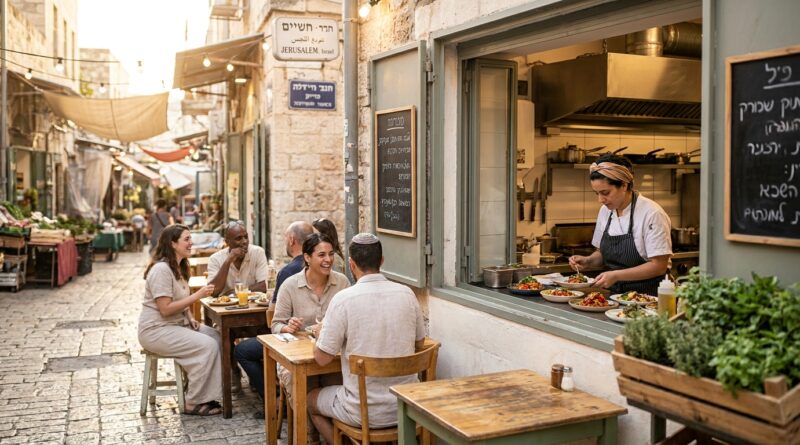
Israel’s New Shuk-Adjacent Stars: The Tiny Side-Street Restaurants Food People Are Ducking Into Before The Crowds Notice
You know the drill. You head to Carmel, Machane Yehuda, or Talpiot hungry and optimistic, then spend half the night circling the same famous counters with everyone else. The food can still be great, but the feeling of discovery is gone fast when you are standing in a line of tourists, delivery drivers, and three people filming their drinks. If you are hunting for new restaurants near shuk in Tel Aviv and Jerusalem 2026 style, the smarter move right now is simple. Don’t go deeper into the market. Step just outside it. A block or two off the main drag, a small wave of side-street openings is giving locals what the big-name spots no longer always can. Better odds of getting seated, chefs still cooking with urgency, and menus that feel like someone is trying to win you over, not cash in on a queue. That is where the most fun tables are right now.
⚡ In a Hurry? Key Takeaways
- The best new market-area meals in 2026 are often just outside the main shuk lanes, not inside them.
- Show up one street over, book early if you can, and target small kitchens doing short menus and first or second dinner seatings.
- You will usually get better value, shorter waits, and a more local crowd, but check opening days and kosher status before going.
Why the side streets are where the action is now
The big markets still matter. They set the pace, bring the foot traffic, and give chefs a built-in audience. But success has a side effect. Once a place inside the shuk gets famous, the room changes. The menu can get safer. The line gets longer. The crowd gets less local.
Meanwhile, nearby side streets are picking up the energy that used to define the markets themselves. Lower rent than prime corners. Fewer tourists wandering in by accident. More room for a chef to try something specific. That is a good recipe for a strong first year.
If you liked the shift toward smaller, sharper food experiences, it fits nicely with Israel’s New Market Counter Revolution: The Tiny Stands Serving Some Of The Country’s Best Food. The same appetite is driving these side-street dining rooms. People want serious food without the performance of a hard-to-get table.
What to look for in a side-street shuk-adjacent restaurant
Short menus are usually a good sign
If a new place has 11 mains, 9 starters, sushi, pasta, and tacos, be careful. The best small openings near the markets are usually doing fewer things, better. Think six to ten dishes, seasonal produce, one or two signatures, and a wine list that makes sense for the room.
Look for the second street, not the first
The first street off the shuk often fills up with spillover hype. The second street is where things get interesting. It is close enough to catch market energy, but far enough to build its own crowd.
Watch the seating style
Tiny open kitchens, sidewalk tables, and counter seating usually mean you can still get in on a weeknight. Fifty-seat rooms with a polished reservations system tend to get discovered very quickly.
Tel Aviv: where to duck out from Carmel
Around Carmel, the trick is not to compete with the center of the market at peak hours. Instead, scan the side lanes and edges where chefs are opening compact places with sharper identities. The strongest newcomers tend to fall into three categories.
1. The produce-first bistro
This is the place buying from the market in the morning and writing half the menu around what looked best that day. You will see grilled fish with green almonds, labneh with herbs and roasted peppers, maybe one excellent schnitzel or a smart pasta. It feels casual, but the cooking is serious.
Why it works near Carmel: the chef gets market access without needing to fight for a stall inside the shuk. You get the freshness, minus the elbowing.
2. The late-night small plate room
These are made for people who arrive after 9 p.m., when the market itself starts thinning out. Expect natural wine, a short chalkboard menu, and dishes built for sharing. This is often the best move if you want the mood of Tel Aviv without committing to a loud flagship restaurant.
3. The chef who left a famous kitchen
One of the most reliable 2026 patterns is the young chef or sous chef leaving a known dining room and opening something small near a high-traffic market zone. These places often have the best ratio of ambition to price. They are still trying to impress every single table.
For Tel Aviv, your smartest play is to eat either early, around 6:30 to 7:15, or late, after 9:15. The dead zone in the middle is when everyone else has the same idea.
Jerusalem: the best new energy is just beyond Machane Yehuda
Machane Yehuda is still one of the country’s great food neighborhoods, but it can feel oddly repetitive if you go often. The names are familiar. The routes are familiar. The waits are very familiar.
The better move now is to use the market as your landmark, not your destination. Around the surrounding streets, small Jerusalem restaurants are opening with more confidence than before. Less gimmick. More point of view.
1. The modern Jerusalem grill spot
This is not your standard skewer joint. It is usually a tiny room working with charcoal, pickles, beautiful tahini, warm laffa, and maybe one or two cuts or kebabs done extremely well. It feels local because it is. The city knows this style deeply, and when a new chef gets it right, people notice fast.
2. The baker-chef crossover restaurant
Jerusalem is especially good at places where the pastry and bread program matter as much as the savory menu. Near the market, that can mean laminated breads, stuffed buns, excellent dips, and seasonal plates that borrow from both bakery and bistro thinking.
3. The calm room for actual conversation
This matters more than people admit. One reason side-street restaurants near Machane Yehuda are winning right now is simple. You can hear the person across from you. For a lot of diners in 2026, that alone is worth leaving the main market strip.
Haifa’s Talpiot deserves the same side-step treatment
Talpiot is not always the first market area visitors think of, but food people have been tracking its growth for a while. The same pattern applies here too. Once the obvious places fill up, the better evening can start just around the corner.
Near Talpiot, keep an eye on chef-run neighborhood spots that combine market produce with a more relaxed Haifa rhythm. The value tends to be strong, the rooms less performative, and the service more grounded. If Tel Aviv can feel restless and Jerusalem can feel booked out, Haifa often feels like the sweet spot.
How to actually find the right place before it blows up
Check when it opened
The sweet spot is usually the first two to eight months. New enough to still care obsessively. Established enough to have fixed the obvious opening-week problems.
Read the menu, not just the photos
Instagram makes every tomato look important. Menus tell you if the kitchen has a brain. Look for focus, seasonality, and reasonable pricing.
Call like a normal person
It sounds old-fashioned, but for tiny places near the shuk, a quick call can save your night. You can ask if they take walk-ins, when it is quietest, whether the full menu is served late, and if there is outdoor seating.
Notice who is tagging the place
If every post is from travel influencers, you may already be late. If local cooks, wine people, and neighborhood regulars are showing up, that is a better sign.
When to go, what to spend, and what to avoid
Best times
Weeknights are your friend. Sunday through Tuesday can be ideal. Thursday is often chaos, even for still-under-the-radar spots.
Expected prices
One reason these restaurants are worth your time is value. You are often paying less than the market-famous spots for food that is every bit as thoughtful. Not cheap, necessarily. Just fairer.
Common mistakes
Do not assume every good place has a slick booking page. Do not arrive in a group of eight without warning. And do not confuse “empty at 7 p.m.” with “bad.” A lot of great side-street places start slow, then fill in a rush.
What makes these places better than another “best shuk” list
Most generic market guides keep sending everyone to the same names. That is useful once. Then it becomes a traffic report. A real guide for new restaurants near shuk in Tel Aviv and Jerusalem 2026 should do something else. It should help you eat well this week, not just admire a list of places that peaked six months ago.
That means looking for kitchens just outside the obvious zone. Rooms with openings. Menus with momentum. Owners who still care whether table four had a good time. That is where the fun is.
At a Glance: Comparison
| Feature/Aspect | Details | Verdict |
|---|---|---|
| Inside the main shuk | Big energy, famous names, heavier queues, more tourist traffic, less spontaneity | Still worth it sometimes, but no longer the easiest way to discover something new |
| One to two streets outside | Newer kitchens, shorter waits, more local crowd, often better chef-to-price ratio | Best bet right now for fresh finds near Carmel, Machane Yehuda, and Talpiot |
| Booking and timing | Early or late seatings work best, weekday visits help, phone calls still matter for tiny rooms | A little planning goes a long way and can save you a wasted night |
Conclusion
Right now, with Israel’s most famous markets more crowded than ever, the smartest diners are making a very small change with a big payoff. They are walking a block or two outward. That is where the best new tables often are. Not hidden exactly, but not yet overrun either. If you want better odds of a seat, less time in line, and a stronger chance of finding a kitchen that still feels hungry, side-street restaurants near the shuk are the move. It is a very 2026 kind of dining habit. Strong food, less scene, better curation, and more support for small ambitious places before hype flattens them. So yes, keep the markets in your plans. Just stop assuming the best meal is in the busiest lane.