Tel Aviv’s New Hidden Hotel Restaurants: The Under‑the‑Radar Openings Food People Are Whispering About
You know the drill. Someone swears they found one of the best new hotel restaurants in Tel Aviv, you get excited, then hit the booking page and see nothing until next month. Or worse, you show up and realize it is the same over-photographed room every English roundup has been pushing for weeks. That is exactly why the smarter move right now is hotel dining rooms that opened quietly, changed chefs, or flipped concepts without a huge PR blast. They are small, stylish, and still a little loose around the edges in the best way. More important, many have bar seats for walk-ins, set menus that are still priced like they are trying to win you over, and service teams that are happy to actually explain the menu. If you want a tonight plan, not a fantasy reservation, this mini-circuit is where to start. Think one early drink, one real dinner, one late-night final plate. All within the city’s current buzz zone, before everyone else catches on.
⚡ In a Hurry? Key Takeaways
- The best new hotel restaurants in Tel Aviv right now are the quieter openings and recent concept flips, especially those with bar seating and short tasting menus.
- For tonight, start around 7:00 at a hotel bar, move to dinner around 8:15, then finish with a late plate or dessert stop after 10:00 when the rooms feel fuller.
- You will usually get the best value at the bar or prix-fixe menu, and you can avoid reservation stress if you go on a weeknight before peak hours.
Why hotel restaurants are suddenly the smart play
Tel Aviv is in one of those familiar phases where the loudest restaurant news is not always the most useful restaurant news. The city is buzzing, but a lot of that buzz is trapped inside impossible booking systems, tiny dining rooms, and tables held for regulars.
Hotel restaurants are sneaking around that problem. Not the giant breakfast-buffet kind. The newer, design-driven rooms with separate identities, chef-led menus, and bars that function like actual neighborhood dining spots.
That is the sweet spot now. These places are new enough that the menu still feels sharp, the staff still cares about every plate, and the price has not fully caught up with the ambition.
If this sounds familiar, it is part of the same shift we have been seeing across the city. People want excellent food without planning their week around it. That is also why pieces like Israel’s New Neighborhood Chef Cafés: The All‑Day Spots Quietly Replacing Fancy Reservations are landing right now. The mood is clear. Good food, less drama.
The tonight-ready mini-circuit
If your goal is to feel ahead of the curve, do not camp out in one place all night. Do a three-stop circuit. You will see the rooms at their best, avoid the table bottleneck, and get a much better sense of where you actually want to come back for a full meal.
Stop 1. Start at the bar, not the dining room
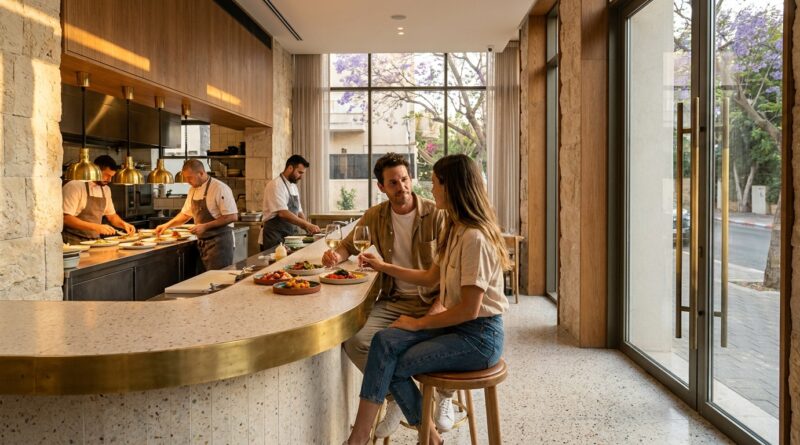
Your first stop should be the smallest and newest-feeling room of the three. Look for a hotel restaurant with a separate street entrance, a compact marble or wood bar, and a menu built around snacks, crudo, one standout vegetable dish, and a short wine list with natural and local bottles.
This is where you order lightly. One drink. Two plates. Something raw or cured if the kitchen handles fish well, plus one warm plate that tells you whether the chef knows how to season.
The trick is timing. Get there around 7:00 or 7:15. Too early and the room feels sleepy. Too late and the bar stools fill with people waiting for tables.
What to order here: a cold first bite, house bread if it is baked in-house, and the signature cocktail if the list is short. Short lists are usually a good sign. It means someone edited them.
Stop 2. Make the main dinner your middle stop
Your second stop is the anchor. This is where the real meal happens. Among the new hotel restaurants in Tel Aviv, the best middle stop is usually the one with a focused prix-fixe or a concise chef menu instead of a giant all-purpose list.
Why? Because a short menu in a newly opened room often means the kitchen is still cooking the food it believes in, not the food it thinks tourists expect.
Walk in around 8:15 or 8:30 and ask for bar seating first. Say you are happy with the counter or any cancellation. You would be surprised how often that works in hotel restaurants, especially when the host knows you are flexible and not trying to stage a negotiation.
What to order here: the prix-fixe if it exists and looks balanced, one fish course, one meat or pasta course, and whatever dessert the staff says has been selling out. If everyone points to the same dish without hesitation, listen.
Stop 3. End where the room wakes up late
Your last stop should be the place that feels best after 10:00. Some hotel dining rooms are dead early and great late. Music comes up a little. The bar finally fills. Locals drift in after their first dinner elsewhere.
This is not where you need a huge meal. Go for a final glass, dessert, or one indulgent plate. Fried something. A late pasta. A soft-serve situation if the hotel is trying to be playful. The point is to finish in the room that actually has energy at that hour.
What to order here: one rich plate to share, a final cocktail or digestif, and dessert only if the room has a clear pastry identity. If dessert feels like an afterthought, skip it and keep moving.
How to spot the right places before everyone else does
The best under-the-radar hotel restaurants usually share a few tells.
They do not look like hotel restaurants
If you walk in and it feels more like a compact city bistro than a lobby annex, that is a good sign. Separate branding helps. So does a room where locals clearly use the bar without dragging luggage behind them.
The menu is short and a little opinionated
You want focus. Eight to twelve savory dishes is often plenty. If the place is trying to be seafood bar, steakhouse, brunch café, and cocktail den all at once, be careful.
The staff gives real guidance
When a room has opened recently or changed concept, the front-of-house team usually still has some pride about explaining it. Ask what is new, what changed, and what they would eat on their break. If you get a specific answer, good. If you get a shrug, move on.
The value is in the fixed menu or bar seats
This is where a lot of people miss the deal. Early on, some of the new hotel restaurants in Tel Aviv are effectively underpricing themselves to build a crowd. That usually shows up in a set menu, happy-hour adjacency, or a few very generous bar dishes.
What locals are whispering about right now
Not one single blockbuster opening. A cluster. That is the story.
Several small hotel dining rooms have either opened in the last few weeks or quietly replaced their original concept with something more focused. Instead of trying to be “fine dining,” they are landing in a more useful place. Stylish but not stiff. Chef-driven but not exhausting. Good enough for a date, easy enough for a spontaneous Tuesday.
That matters because it changes how you plan a night out. You are no longer chasing one impossible table. You are building a route through rooms that still have room for actual people.
Practical booking strategy if you hate booking
First, call. Do not just use the app. Newer hotel restaurants often hold a few seats differently than standalone places do, especially bar seats.
Second, ask the right question. Not “Do you have a table?” Ask, “Is the bar open for walk-ins around 8?” You are more likely to get a useful answer.
Third, go Wednesday or Thursday if you want atmosphere without full weekend chaos. Tuesday can be perfect for value. Sunday can be a secret if the room already has local traction.
And if your whole objection is that you should not need this much strategy just to eat well, fair. That is exactly why this hotel mini-wave is refreshing.
What to order when you only get one shot
If you only have time for one of these places, do not overcomplicate it.
Order the thing the room seems built around. If it is a coastal-looking menu, start with fish and vegetables. If it leans European hotel dining room, go for the roast chicken, schnitzel twist, pasta, or a composed main with sauce work. If it has a Levantine angle, the grilled items and the share plates often show the chef’s hand best.
Avoid the safe fallback burger on a first visit unless the place is openly a bar-food specialist. In most new rooms, the burger is there to calm nervous guests, not to show off the kitchen.
At a Glance: Comparison
| Feature/Aspect | Details | Verdict |
|---|---|---|
| Best way in | Bar seating, early arrival, and a flexible walk-in attitude beat chasing prime-time tables online. | Most practical option tonight |
| Best value | Prix-fixe menus and shorter chef menus are often still underpriced compared with the city’s louder destinations. | Worth targeting first |
| Best timing | Start around 7:00 for easy entry, eat your main meal by 8:30, and end after 10:00 when the livelier rooms come alive. | Ideal for a three-stop evening |
Conclusion
If you have been burned by overhyped openings, this is the better play. Tel Aviv’s post-holiday restaurant energy is not just sitting in the obvious places. It is gathering in small hotel dining rooms that opened quietly or got sharper without much noise, and many of them still feel accessible. That is the value right now. You can actually go. You can often get a bar seat. You can eat a serious meal at a price that still feels sane. More than that, you can turn it into a real, tonight-ready plan. Start with drinks and snacks in one room, do your full dinner in the next, then finish late where the crowd finally settles in. For IsraRest readers, that means a way back to feeling early, not late. Ahead of the curve, not trapped behind it. And yes, ideally there before TikTok gets there first.